Nikhil Kamath, Yuval Noah Harari discuss fragile global order, trust crisis at Davos| Business News

A discussion between Zerodha co-founder Nikhil Kamath and historian-author Yuval Noah Harari at the World Economic Forum in Davos focused on the weakening of global institutional trust and the growing fragility of the international order, according to a press release issued on the conversation. The conversation was part of Nikhil Kamath’s ‘People by WTF’ series Recorded on the sidelines of the Davos summit, the exchange examined how global cooperation can endure amid rising geopolitical tensions, polarization, and skepticism toward democratic and financial institutions. The conversation forms part of Kamath’s “People by WTF” podcast series. Harari said that large-scale human cooperation is built primarily on shared belief in institutions and common narratives rather than force. Financial systems, nation states, and legal frameworks function because of collective trust, he noted, warning that when this trust erodes, predictability and stability decline. He also cautioned against the shift from institution-driven governance to personality-driven politics, arguing that democratic resilience depends not only on elections but also on confidence in processes, shared facts, and institutional continuity. Artificial intelligence was another key theme, with the discussion highlighting risks around AI-generated information and its potential impact on governance and public truth. Kamath drew a parallel between markets and geopolitics, saying both are ultimately sustained by confidence. The full episode has been released online.
India’s moment to re-engineer AI for human impact, writes IIT-K director ahead of Delhi summit| Technology News

The India AI Impact Summit 2026 arrives at a rare inflection point. Artificial Intelligence (AI) has crossed the threshold from promise to pervasiveness, yet the questions before us are no longer just about what AI can do; but for whom, at what cost, and with what accountability. An AI data labeller working on her computer in Ranchi. India, which will host an international AI summit this month, has ambitious plans in the tech sector. (Photo: Representative/AFP ) By hosting the world’s first major global AI summit in the Global South, India is not merely convening a conversation; it is reframing the grammar of AI itself: from scale to significance, from benchmarks to human benefit. Anchored in the three Sutras—People, Planet, Progress — and operationalised through seven Chakras spanning human capital, inclusion, safe AI, science, sustainability, and economic growth, the summit signals a decisive shift. This is not an AI showcase driven by computational bravado alone. It is a blueprint for AI as a development instrument, designed to work under real-world constraints of data sparsity, infrastructure asymmetry, linguistic diversity, and affordability. Why India’s AI path matters to the world India’s AI journey is structurally different from that of advanced economies. Our scale is vast, our margins thin, and our diversity unparalleled. These constraints force innovation to be frugal, interpretable, multilingual, and robust. In effect, India is stress-testing AI under the toughest possible conditions. Solutions that succeed here, across rural healthcare, agriculture, governance, and education, are inherently global, portable to other regions of the Global South and beyond. The AI Summit’s emphasis on translating global principles of responsible AI into practical, interoperable governance frameworks is particularly timely. Trustworthy AI cannot remain a theoretical construct embedded in policy documents; it must be engineered into algorithms, datasets, validation pipelines, and deployment protocols. This is where academia has a pivotal role, not as passive commentators, but as system architects of credibility. Medical Technologies: From Precision to Access My work, for instance, in applied AI for medical technologies sits precisely at this intersection of rigor and relevance. In resource-constrained healthcare systems, the central challenge is not accuracy alone, but deployability at scale. An AI model that performs well in a tertiary hospital but fails in a district clinic or in an extreme resource-constrained setting, due to poor imaging quality or missing metadata, is not innovation; it is exclusion. Over the past decade, our research has focused on physics-informed and data-efficient AI models for diagnostics; systems that embed domain knowledge of physiology, fluid dynamics; and transport phenomena into learning architectures. This approach reduces dependence on massive labelled datasets and enhances interpretability, robustness, and regulatory confidence. In applications ranging from low-cost respiratory diagnostics to AI-assisted imaging and point-of-care screening tools, the goal has been consistent: clinical-grade intelligence at population-scale affordability. The Summit’s strong focus on AI in healthcare — spanning remote diagnostics, medical imaging, disease forecasting, and personalized therapies — resonates deeply with this philosophy. India’s healthcare AI must be judged not by leader board metrics, but by metrics of access: reduced time-to-diagnosis, lower cost per test, and measurable improvements in outcomes across underserved populations. Academia as the trust rngine of AI One of the most consequential, yet under-discussed, themes of the Summit is the Chakra of Science. AI is rapidly reshaping how discovery itself is conducted, but access to compute, data, and reproducibility remains deeply unequal. Indian academia must step forward as a neutral, trusted intermediary, curating open datasets, validating algorithms across demographics, and training a new generation fluent in both AI and ethics. Institutions like IIT Kharagpur are already evolving into living laboratories where AI research, startups, public platforms, and policy co-design coexist. This convergence is essential. Trustworthy AI ecosystems cannot be assembled sequentially; they must be co-created, from whiteboard to the ward, from code to community. Summit to systemic change What distinguishes the India AI Impact Summit is its insistence on outcomes. Regional AI conferences, global impact challenges such as ‘AI for All’ and ‘AI by Her’; youth initiatives like ‘YUVAi’, and the ‘AI Compendium’ collectively ensure that ideas do not dissipate after plenaries — that they compound into pipelines. The deeper message is clear: India does not seek to dominate AI by owning the largest models, but by shaping the most meaningful ones. Models that are energy-aware, bias-audited, regulation-ready, and socially embedded. As we move toward 2047, the centenary of Independence, India’s AI leadership will be defined not by technological sovereignty alone, but by moral and developmental credibility. If we succeed, AI will no longer be seen as an abstract force to be regulated after the fact, but as a public-good infrastructure, engineered with intent, deployed with empathy, and governed with wisdom. The India AI Impact Summit 2026 is thus not an event. It is a statement: that the future of AI will be written not only in lines of code, but in lives improved. — (Views expressed are personal. The author, Suman Chakraborty, is director of Indian Institute of Technology (IIT), Kharagpur. Professor Chakraborty is a globally renowned academician and a distinguished faculty member from the Department of Mechanical Engineering at IIT Kharagpur. Recipient of several prestigious national and international honours, his work on the intersection of fluid mechanics, biomedical engineering, and technology-driven societal applications has earned him particular recognition.)
U.S. futures edge up as public holidays dim trading| Business News
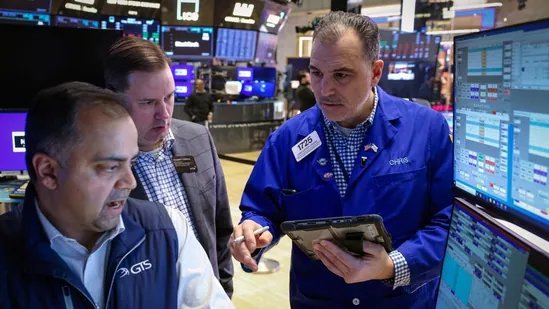
Global stock markets and U.S. futures largely edged higher as traders in parts of Asia, the U.S. and Canada take a breath for public holidays. U.S. equity and bond markets shuttered for Presidents Day, though futures tied to equities rose in early European trade. Lunar New Year celebrations closed trading floors in mainland China and South Korea. The dollar rose slightly but remained within its recent range in holiday-thinned trade. Friday’s soft U.S. inflation print helped push gold back above $5,000 an ounce, while oil traded flat as geopolitical risks linger. Investors are looking ahead to the publication of Federal Reserve meeting minutes on Wednesday followed by advance U.S. fourth-quarter gross domestic product figures and PCE inflation data on Friday. —Futures tied to major U.S. indexes were up early on Presidents Day morning. Both the Dow Jones Industrial Average and the S&P 500 were up 0.4% premarket, while futures for the tech-heavy Nasdaq were up 0.35%. The Nasdaq is currently on its longest closing streak since May 2022, with the index’s fall to Friday’s close marking five consecutive losing weeks. —Asian equities were mixed, with Japan’s stocks giving up early-morning gains after fourth-quarter GDP data showed a modest rebound, fueling concerns over potential interest-rate hikes. The Nikkei 225 ended 0.2% lower, dragged down by banking shares, though SoftBank Group closed up 6.8%. Elsewhere, Hong Kong’s Hang Seng Index rose 0.5% at midday, before closing early on the eve of Lunar New Year. Major regional markets, including mainland China and South Korea, remained closed for the holiday. Chinese equity markets will remain closed through Monday Feb. 23. —Europe’s blue-chip indexes started the week up as defense stocks gained and financial stocks rebounded after slipping Friday. The FTSE 100 nudged up 0.2% in London, with NatWest Group up 3.8% while Barclays gained 2.4%. Banks pushed the Spanish IBEX 35 up 0.9%, with Santander climbing 2.5% and defense-tech company Indra Sistemas up 2.25%. Italy’s FTSE MIB rose 0.6% on bank gains. Unicredit—the index’s largest constituent—rose 2%. The French CAC 40 was up 0.3% as luxury stocks rallied alongside banks. Luxuries bellwether LVMH climbed 1.9%. Germany’s DAX rose 0.35%, led by a 2.2% rise for Deutsche Bank. Software company Scout24—up 1.8%—was among a clutch of software stocks to rally at market open. —The dollar rose slightly but remained within its recent range in holiday-thinned trade. Ahead of U.S. inflation and growth data due later this week, markets will be looking for clues on the timing of the next interest-rate cut by the Fed in the wake of last week’s strong U.S. jobs data and lower-than-expected inflation data. The DXY dollar index rose 0.1% to 96.967. The European Central Bank’s move to boost the euro’s global role is positive for the single currency, ING’s Francesco Pesole said in a note. The exchange rate is “strictly tied to capital rotation from the U.S. to Europe,” Pesole said. The euro traded flat at $1.1863. —Eurozone government bond yields edged lower in early trade, awaiting fresh drivers. As well as closed U.S. markets, there is no eurozone government bond supply and the data calendar is thin. “Bunds may take a breather amid stabilizing risk sentiment and the U.S. holiday, but the constructive duration backdrop is likely to extend ahead of the data reality check on Friday,” Commerzbank’s Rainer Guntermann said in a note. On Friday, flash estimate French, German and eurozone purchasing manager indices will be released for February. The 10-year German Bund yield edged down 0.7 basis points to 2.750%, while the 10-year French OAT yield fell 1.3 basis points to 3.331%, according to LSEG data. In Japan, the current Japanese government bond curve is no longer embedding any “country risk premium,” Goldman Sachs analysts said in a note. The 10- to 30-year segment is now back to fair value, while the two- to 10-year curve is only 10-15 bps steeper than fair, they said. “The resolution of uncertainty [in the recent Lower House election] in itself was likely sufficient in removing some long-end risk premium,” they said. —Bitcoin edged lower as investors remained reluctant to push the crypto currency much higher amid fears about the potential artificial-intelligence disruption. Bitcoin fell 0.3% to $68,688, LSEG data showed. —Oil prices were broadly unchanged in early morning European trade. Brent crude traded flat at $67.75 a barrel, while WTI rose 0.1% to $62.44 a barrel. A large risk premium is still priced into the market given uncertainty over U.S.-Iran tensions, ING analysts Warren Patterson and Ewa Manthey wrote in a note. President Trump’s comments that regime change would be the best outcome for Iran will add to concerns, they wrote. However, peace talks between Ukraine and Russia seem more de-escalatory and could remove some of oil’s risk premium, the analysts said. Should the risk premium reduce, it will allow more bearish oil fundamentals to take center stage and push prices lower, they said. —Gold traded back above $5,000 a troy ounce after getting a boost from weaker-than-expected U.S. inflation data. This raises the likelihood of near-term Federal Reserve rate cuts, ANZ analysts wrote. Lower borrowing costs typically support non-yielding assets like gold. Swap traders are pricing in about 50% chance of a third rate cut by December, they added. Rate cuts will support inflows into the precious metal, while geopolitical and economic uncertainties will fuel additional demand, they said. In New York, gold futures were down 0.4% at $5,024 a troy ounce. Write to Barcelona Editors at barcelonaeditors@dowjones.com
The importance of ‘restoration benefit’ in your health insurance policy| Business News

The beauty of an unlimited buffet is that you can refill your plate with food servings as many times as you wish after finishing each serve. What if the same thing applies to your health insurance cover? Yes, in a health insurance policy, the restoration benefit does that. It replenishes your health insurance cover after the initial cover has been exhausted from earlier claim(s). In this article, we will understand what the restoration benefit is, how it works, and why you should have it in your health insurance policy. The restoration benefit replenishes your exhausted health insurance coverage. What is the restoration benefit? The restoration benefit replenishes your health insurance cover after it has been exhausted by hospitalisation claim(s). In a health policy without the restoration benefit, the cover is restored at the start of the next policy year. However, in a health policy with a restoration benefit, the cover is restored in the same policy year once the initial cover has been exhausted due to previous claims. The restoration benefit is referred to by various names, such as restoration, refill, replenishment, recharge, reinstatement, reset, etc. The restoration benefit acts like a backup. It kicks in once the initial cover has been used up. For example, Rajesh has a health insurance policy with a sum assured of Rs. 5 lakhs. He is hospitalised and makes a claim of Rs. 5 lakhs, using up the entire cover. The restoration benefit reinstates Rajesh’s health insurance cover to Rs. 5 lakhs. During the same policy year, Rajesh is hospitalised again, and the bill is Rs. 3 lakhs. Rajesh’s claim was paid from the reinstated Rs. 5 lakhs cover. Some health insurance plans have the restoration benefit in-built, while some offer it as an optional rider or add-on. What is the need for the restoration benefit? In India, medical inflation has been growing faster than the general inflation rate, mostly in double digits, year after year. Hence, if you don’t take an adequate amount of health insurance cover, a single hospitalisation claim can consume the entire or most of your cover. What if there is another hospitalisation event in the same year, and you run out of your health insurance cover? In the absence of the restoration benefit, you will have to pay the bill amount from your own pocket. If the hospital bill is high, it can disrupt your financial planning journey and set you back by a few years or more. For some people, the impact can be severe, wiping out all the savings and investments. The worst that can happen, a person is left with no savings and has to take a personal loan to pay the partial or entire hospital bill. However, with the restoration benefit, you can avoid the financial difficulties outlined above. The restoration benefit replenishes your exhausted health insurance coverage. In the event of multiple hospitalisations and initial cover being exhausted, the health insurance cover will still pay from the restored cover. Types of restoration Not all health insurance plans with the restoration benefit offer it the same way. The restoration benefit can be structured in different ways. Hence, it is important to read the policy wording to understand how the restoration benefit is being offered for that particular health insurance product. Some ways in which the restoration benefit is offered include the following A. Once a year or unlimited times: Some health insurance plans offer the restoration benefit only once in a policy year. On the other hand, some plans offer it unlimited times during the policy year. Plans that offer unlimited restoration provide better value than plans with restoration once a year. However, the premium for plans with unlimited restoration will be higher than those with restoration once a year. B. Applies to the same illness or a different illness: Some health insurance plans allow the use of the restoration benefit for a different or unrelated illness. For example, suppose a person is hospitalised due to Tuberculosis (TB). Let us assume the cover got exhausted for the current hospitalisation bill settlement, and the restoration benefit has kicked in. In this case, if the person gets hospitalised again during the same policy year due to TB, they cannot avail the restoration benefit. However, if the person is hospitalised again during the same policy year due to an unrelated or different illness (other than TB in this case), they can avail of the restoration benefit. Some health insurance plans allow the restoration benefit to be used for the same illness. Suppose a person is hospitalised due to TB. Let us assume the cover got exhausted for the current hospitalisation bill settlement, and the restoration benefit has kicked in. In this case, if the person is hospitalised again during the same policy year due to TB, they can still avail the restoration benefit. Health insurance plans that allow the use of the restoration benefit for the same illness provide better value than those that allow use for a different illness. C. When does it apply — full or partial cover exhaustion: In some health insurance plans, the restoration benefit kicks in only after the entire health insurance cover has been exhausted. For example, suppose a person has a health insurance cover of Rs. 5 lakhs. In this case, the restoration benefit will kick in only after the entire Rs. 5 lakhs cover is exhausted. In some health insurance plans, the restoration benefit kicks in even if the health insurance cover is partially used up. For example, suppose a person has a health insurance cover of Rs. 5 lakhs. The person is hospitalised, and the bill is Rs. 1 lakh. In this case, the restoration benefit will kick in, and the policy sum assured will be reinstated from Rs. 4 lakhs to Rs. 5 lakhs. Health insurance plans with a restoration benefit for partial cover exhaustion offer better value than those with a restoration benefit for full exhaustion. In the above section, we discussed the different types of
The rationale for investing in Nexus Select Trust REIT| Business News

If you live in a big city like Mumbai, Bengaluru, Chennai, New Delhi, or Hyderabad, you are likely to have been to a Nexus Mall. You may be a regular visitor to a Nexus Mall as a customer. But, did you know you can be an investor in the Nexus Select Trust REIT, and participate in India’s retail consumption growth story and benefit from it? In this article, we will understand what the Nexus Select Trust REIT is, its growth, its share performance, and whether you should invest in it. A shopping mall in New Delhi. (Reuters) What is the Nexus Select Trust REIT? The Nexus Select Trust is India’s first publicly listed retail real estate investment trust (REIT). It has a portfolio of 19 malls spread across 15 cities. The list of malls includes: West Region: Nexus Ahmedabad One, Treasure Island (Indore), Nexus Indore Central, Nexus Seawoods (Navi Mumbai), Nexus Westend Complex (Pune) East Region: East Region Nexus Esplanade (Bhubaneshwar) South Region: Nexus Whitefield (Bengaluru), Nexus Koramangala (Bengaluru), Nexus Shantiniketan (Bengaluru), Fiza by Nexus (Mangaluru), Nexus Vijaya Complex (Chennai), Nexus Hyderabad, Nexus Vega City (Bengaluru), Nexus Centre City (Mysuru) North Region: Nexus Amritsar, Nexus Select CityWalk (New Delhi), MBD Complex (Ludhiana), Nexus Elante Complex (Chandigarh), Nexus Celebration (Udaipur) The malls have a gross leasable area of 10.6 million square feet. Apart from the malls mentioned above, the REIT also operates the Hyatt Regency Hotel in Chandigarh and Westend Offices (commercial office space) in Pune. Nexus Select Trust began operations in 2015 with 2 malls: Nexus Ahmedabad One and Nexus Amritsar. Over the years, it has grown its portfolio with the acquisition of various malls. Nexus Select Trust’s business model involves the plug-and-play approach: Acquire the asset (mall) Upgrade it through strategic capex Reposition it by premiumising the brand offering Focus on innovative activations and marketing outreach Optimise cost by implementing best practices Increase rental yield and improve overall profitability Financial performance In February, Nexus Select Trust reported its FY 2026 third-quarter financial results, with 15% year-on-year growth in its Net Operating Income (NOI) at Rs. 4.5 billion (Rs. 3.9 billion in Q3 FY 2025). Nexus Select Trust has a strong leased occupancy with 97% space in the malls leased out to tenants. It acquired two malls in 2025 (Nexus Vega City and Nexus MBD Neopolis) that are performing well. To continue growing its portfolio, Nexus Select Trust continues to evaluate various malls for acquisition. It has a robust pipeline of more than 10 assets across 8 states for potential acquisitions. Share price performance Nexus Select Trust REIT got listed on the stock exchanges (BSE and NSE) on 19th May 2023. The shares were offered with an issue price of Rs. 100 per unit. As of 9th February 2026, the share price closed at Rs. 160. Thus, it has delivered an absolute return of 60% to its shareholders since its listing. Distributions As per SEBI Regulations, REITs must distribute at least 90% of their Net Distributable Cash Flows (NDCF) as distributions to their shareholders. Some investors refer to the distributions as dividends. With its FY 2026 Q3 financial results, Nexus Select Trust declared a distribution of Rs. 3,586 million (Rs. 2.367 per unit), its highest quarterly distribution since listing. In the current quarter, it distributed 100% of its NDCF as distribution to shareholders. At the start of the financial year 2025 – 26, Nexus Select Trust guided for a distribution per unit (DPU) of Rs. 9.10–Rs. 9.20, a 10% year-on-year growth. So far in FY 2025 – 26, it has made distributions of Rs. 6.80 per unit and has said it is on track to meet the annual guidance. Financial Year Distribution per unit (DPU) FY 2024 Rs. 7.07 FY 2025 Rs. 8.356 FY 2026 (9 months) Rs. 6.795 Total distribution Rs. 22.221 If we add the Rs. 22.22 DPU to the share price gain of Rs. 60, the total return comes to 82%. Nexus Select Trust’s Vision 2030 During its ‘Capital Markets Day’ in May 2025, Nexus Select Trust outlined its Vision 2030 plan to double the mall portfolio by 2030 by expanding the number of malls to 30-35. The expanded malls portfolio will double the existing Net Operating Income (NOI). It is enhancing category depth in jewellery, beauty, food & beverage, and experiential retail. As of February 2026, Nexus Select Trust has a robust pipeline of 11 assets (malls) for inorganic growth through potential acquisitions. Four retail assets covering 2 million square feet area are currently under due diligence. Should you invest in Nexus Select Trust shares? Before considering investing in Nexus Select Trust REIT or any other REIT, you should be aware of specific SEBI guidelines. As per these guidelines, a REIT must: Invest a minimum of 80% of its funds in completed, income-generating assets. It leads to predictable and stable cash flows. Distribute a minimum of 90% of net distributable cash flows (NDCF) semi-annually. Nexus Select Trust REIT has been following the above SEBI guidelines. They have been making quarterly distributions to shareholders. Over the last 10 quarters (as of February 2026), it has maintained a 100% NDCF payout ratio to its shareholders. Nexus Select Trust has low leverage with an 18% Loan-to-Value (LTV) and a strong AAA/Stable credit rating. It has close to USD 1 billion of debt headroom, making it well-positioned to execute the next phase of its inorganic growth strategy. As of September 2025, the net asset value (NAV) is Rs. 159 per unit. The current share price is Rs. 160 per unit. So, the share price is trading near the NAV per unit. The management has said they are on track to meet the FY 2025-26 DPU guidance of Rs. 9.10–Rs. 9.20 per unit. At a share price of Rs. 160, the dividend yield works comes to 5.7%. As mentioned earlier, Nexus Select Trust has outlined Vision 2030 of doubling the number of malls and Net Operating Income (NOI). If it is able to achieve it in a sustainable and profitable
What explains the spike in bond yields despite 125 bps in RBI repo rate cuts| Business News

In December 2025, India’s Monetary Policy Committee cut the Repo Rate by 25 basis points. RBI Governor Sanjay Malhotra referred to India’s macroeconomic situation as a rare Goldilocks period, with low inflation at 2.2% and GDP growth at 8%. However, the Government is getting limited benefit from the Goldilocks period, as the yields on Government bonds (G-secs) have not moved down in sync with the RBI repo rate cuts. In this article, we will understand why G-secs yields have risen in the recent months despite the RBI repo rate cuts. A customer holds ₹100 notes near a roadside currency exchange stall in New Delhi. (Reuters) RBI repo rate cuts in 2025 The RBI started the current interest rate-cutting cycle in February 2025 with a 25-basis points cut in the Repo Rate from 6.50% to 6.25%. Since then, the RBI has cut the Repo Rate multiple times, bringing it down to the current level of 5.25% (February 2026). Over the last one year, while the RBI cut the Repo Rate by 125 basis points from the peak, the yields on G-secs have not moved in tandem. (Source: https://tradingeconomics.com/india/government-bond-yield) The above chart shows that yields on the 10-year G-secsfell in the first half of 2025, along with the Repo Rate cuts. The 10-year bond yields fell from levels of around 6.74% in February 2025 to around 6.24% in June 2025. In the June 2025 MPC meeting, the RBI cut the Repo Rate by 50 basis points to 5.50% and changed the policy stance from ‘accommodative’ to ‘neutral’. Since June 2025, yields on 10-year G-secs have changed direction and started going up. From June 2025, the 10-year G-sec yields have climbed from levels of around 6.24% to the current (February 2026) level of around 6.75%. So, the entire yield decline has reversed, and gone back to where it was a year back in February 2025. Why have the 10-year G-sec yields risen? In the earlier section, we saw how the 10-year G-sec yields have risen in the last few months. Now, let us understand the reasons for the rise in yields. 1. Change in MPC stance in June 2025 The MPC changed its monetary policy stance from ‘accommodative’ to ‘neutral’ in June 2025. The markets interpreted that as the RBI will go for a long pause, with the probability of any future rate cuts low and inflation data dependent. As a result, the G-secs bond yields rose by 10-12 basis points in a couple of days, post the MPC meeting. 2. US tariffs on Indian goods in August 2025 In August 2025, the US Government imposed 50% tariffs on Indian goods. First, a 25% reciprocal tariff was imposed, and later an additional 25% penalty tariff was imposed for Russian crude oil purchases. The tariffs led to the Indian Rupee depreciating against the US Dollar. As a result, Foreign Portfolio Investors (FPIs) sold Indian G-secs, to cut losses, resulting from the Indian Rupee depreciation. FPI selling of G-secs has pushed down prices and increased yields. 3. GST rates rationalisation in September 2025 In August 2025, in his Independence Day speech, Prime Minister Narendra Modi announced next-generation reforms, including the rationalisation of GST rates. Post the announcement, the GST Council announced the GST rate reduction on many goods and services from 12% to 5%, and nil rate (0%) on some, effective from 22nd September 2025. While the GST rate cuts benefitted customers, markets feared that the rate cuts will lower the Government’s GST collections. The bond markets feared that lower tax collections would increase the fiscal deficit and that the Government may borrow more. As a result, the G-secs yields went up. 4. India;s inclusion Bloomberg Bond Index delayed The Indian G-secs were expected to be included in the Bloomberg Global Aggregate Bond Index. However, in January 2026, Bloomberg announced the decision has been delayed due to operational and market-infrastructure issues. It said the decision will be reviewed and an update will be provided by mid-2026. The inclusion of G-secs in the global bond index would have steadily brought in billions of US Dollars in Indian G-secs steadily over the months. However, the delay spooked sentiment, leading to a rise in G-sec yields. 5. Higher Government borrowing in Budget 2026 On 1st February, the Finance Minister, Nirmala Sitharaman, presented Budget 2026. For FY 2026-27, the Government’s gross market borrowings are estimated at Rs. 17.20 lakh crores, and net market borrowing from G-sec bonds is estimated at Rs. 11.70 lakh crores. The borrowing numbers are higher than market estimates. On Budget Day, the bond markets were closed as it was a Sunday. However, on Monday, bond yields spiked following the Government’s budget announcement of the borrowing planning for 2026-27. 6. MPC announcement in February 2026 In its February 2026 meeting, the MPC left the Repo Rate unchanged at 5.25% and the ‘neutral’ policy stance. The RBI upped the FY 2026 GDP growth forecast to 7.4%. The inflation forecast for Q1 FY 2027 has been raised from earlier 3.9% to 4.0%, and for Q2 FY 2027 from earlier 4.0% to 4.2%. The increase in inflation forecast to 4% and above, which is close to the RBI’s target, reduces the probability of future Repo Rate cuts. As a result, the bond yields hardened post the MPC monetary policy announcement. Where are G-sec yields headed? During the course of FY 2026-27, the bond markets will keep a close watch on how the Central Government proceeds with its borrowing program. The markets will also track the issuances of State Development Loans (SDLs) by various State Governments. A higher supply of G-secs from the Central Government and SDLs from the State Governments than market expectations will keep yields at higher levels or push them further higher. On the other hand, lower bond issuances by Central and State Governments, liquidity management measures by RBI, a Repo Rate cut by RBI, inclusion of Indian G-secs in global bond indices, an increase in FPI investments in Indian G-secs, etc., can bring down yields.
Volatility, trade shifts and the case for bonds in your 2026 portfolio| Business News

As we head into 2026, one thing is clear for investors: the world is entering a phase of realignment. Global trade equations are shifting, supply chains are being reworked, and geopolitical priorities are evolving faster than markets can price in. While these changes open up long-term opportunities for India, they also make the near-term investment landscape far more volatile and unpredictable. The mistake many investors make is treating their entire portfolio as one bucket. (Jiraaf) This is precisely why bonds deserve a sharper focus in the investment playbook for 2026. Volatility is the new normal Global markets are currently grappling with uncertainty stemming from changing trade dynamics. Countries are moving away from over-dependence on a single trading partner and towards diversified, regional supply chains. Tariff structures, export incentives, and trade barriers are all being reassessed. These transitions rarely happen smoothly. For India, this phase comes with optimism and noise. The much-awaited India–US trade deal and the mammoth India–EU trade agreement has the potential to significantly reshape India’s export landscape, manufacturing base, and global economic integration. Over the long run, these deals could enhance competitiveness, attract capital, and strengthen India’s position in global value chains. However, trade agreements are not overnight triggers. They take years to negotiate fully, ratify, implement, and translate into actual corporate earnings and economic growth. Markets, on the other hand, react instantly to headlines, expectations, and disappointments. This mismatch is one of the biggest reasons why Indian equity markets remain volatile despite positive long-term developments. Why Equities Feel Unsettled Despite Good News Indian equities are currently caught in a strange crosscurrent. On one side, there is optimism about India’s growth story, demographic dividend, and rising global relevance. On the other side, there is uncertainty around global demand, currency movements, interest rates, and the pace at which trade benefits will materialize. For retail investors, this environment can feel confusing. Good news does not always lead to steady market gains. In fact, markets often turn volatile when expectations run ahead of reality. This is not a sign that long-term growth is broken. It is simply how transition phases behave. The mistake many investors make is treating their entire portfolio as one bucket. In volatile phases, this approach exposes short-term goals to unnecessary risk and emotional stress. Time Horizon is the Most Underrated Strategy One of the most important principles retail investors should adopt in 2026 is portfolio segregation based on time horizons. Not all money should chase growth, and not all money should play safe. Each rupee must have a role. Short-term and medium-term goals, such as buying a car, funding a child’s education in the next few years, building an emergency fund, or planning a down payment, require predictability. These goals cannot afford market swings driven by global trade headlines or policy uncertainty. This is where stable, predictable asset classes come in. The Role of Bonds and Fixed Income in 2026 For short and medium-term corpus, instruments such as fixed deposits and corporate bonds play a critical role. They offer visibility on returns, regular income, and capital protection when held appropriately. In a volatile equity environment, this stability becomes invaluable. Corporate bonds, especially investment-grade bonds, allow investors to earn better yields than traditional savings instruments while still maintaining a fixed-income structure. They remove day-to-day market noise from the portfolio and ensure that essential goals are met on time. Platforms such as SEBI-registered online bond platforms have made this asset class more accessible to retail investors. With lower minimum investment amounts, transparent disclosures, and a wide range of issuers, bonds are no longer reserved for institutions or high-net-worth individuals. Subtle shifts like these are changing how Indians think about fixed income, and platforms like Jiraaf. are part of this broader democratization. By allocating short and medium-term money to bonds and similar instruments, investors create a buffer in their portfolio. This ensures that near-term needs are met without disturbing long-term investments during market corrections. Let Long-Term Money Do the Heavy Lifting While bonds bring stability, equities remain essential for long-term wealth creation. Goals that are more than five years away, such as retirement or long-term wealth accumulation, can comfortably ride through periods of volatility. Equities benefit from economic growth, corporate earnings expansion, and productivity gains that trade deals aim to unlock over time. Short-term market fluctuations, driven by negotiations or global uncertainty, have limited impact when the investment horizon is long enough. By separating long-term capital from short-term needs, investors avoid panic-driven decisions. They do not have to sell equities at the wrong time to fund near-term expenses. This discipline alone can significantly improve long-term outcomes. A Balanced Playbook for an Uncertain World The investment playbook for 2026 is not about choosing between bonds and equities. It is about using both wisely. Global trade realignment will continue to create headlines, volatility, and opportunities. India stands to gain structurally, but the journey will not be linear. Bonds provide calm in the chaos. They bring predictability, income, and confidence that short-term goals are protected. Equities, on the other hand, fuel long-term growth and wealth creation. For retail investors navigating an increasingly complex global environment, this balance is not optional. It is essential. In a world where change is constant, the smartest strategy is one that aligns money with time, risk, and purpose. Note to the Reader: This article is part of Hindustan Times’ promotional consumer connect initiative and is independently created by the brand. Hindustan Times assumes no editorial responsibility for the content.
BSE, Angel One, MCX shares tumble after RBI action against leveraged trading| Business News
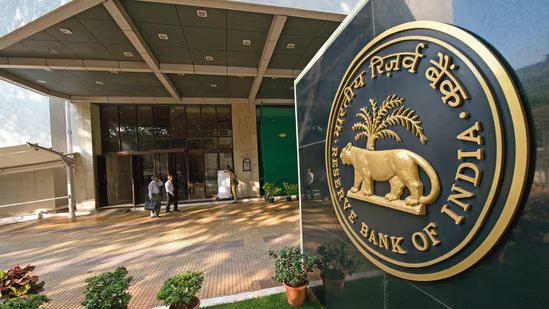
India’s $5.2-trillion stock market has had a soft start to the year, and it could face further pressure as new regulatory measures to moderate trading activity add to existing concerns about corporate profit growth and foreign flows. The Reserve Bank of India wants to protect banks’ balance sheets from rising stock market volatility. (Reuters) Late Friday, the Reserve Bank of India tightened rules on bank loans to proprietary traders and stock brokers, a move that may curb leveraged trading. Earlier this month, taxes on equity derivatives were raised, unsettling markets, and the market regulator later hiked margins for a popular trading strategy. Together, these measures come just as a US trade deal had begun to lift sentiment. The market has been trying to recover from its weakest start to a year in a decade, with investors already concerned about modest earnings growth, a rout in software services stocks and relatively high valuations. The authorities are “attempting to de-risk the system, so no undue excesses are built and even if there are accidents, there are no large ramifications,” said Jimeet Modi, chief executive of Mumbai-based Samco Group. “There will be short term impact but in the long-term, the blow-up risk goes down.” Shares of capital market-related stocks slumped on Monday. BSE Ltd. fell as much as 9.9%, while Angel One Ltd.’s shares tumbled 9.5%. MCX Ltd.’s shares slipped 7.4%. The stock benchmark NSE Nifty 50 Index rose 0.2% at 10:34 am local time. The National Stock Exchange of India Ltd., the country’s top stock exchange, will likely bear the burnt of the RBI’s move, as sliding trading volumes weigh on profitability just as the company prepares to go public after a decade-long wait. The bourse reported a 37% decline in profit in the December quarter, while revenue slid 10% from a year earlier. Smaller brokerages and proprietary trading houses, which run on wafer-thin margins, will feel impact. Larger broking firms are likely to turn to alternative funding channels, creating faster growth opportunities in structured products and lending solutions for wealth managers, Citigroup Inc. analysts Dipanjan Ghosh and Kunal Shah said in a note. Still, for the central bank, the measures signal its intent to protect banks’ balance sheets from rising stock market volatility globally driven by geopolitical tensions and evolving impact of artificial intelligence on businesses. The tightening is “a prudent step toward reinforcing systemic stability,” said Ajay Kejriwal, executive director at Choice International Ltd., a Mumbai-based brokerage. “For the broader broking ecosystem, the impact remains largely contained.”
Intel’s Santhosh Viswanathan on semiconductors, India’s materiality| Business News
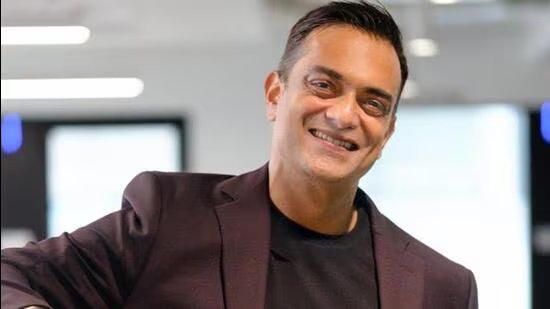
For Intel, 37 years in India have coincided with several pivotal technology shifts. Santhosh Viswanathan, Vice President and Managing Director for the India Region at Intel Corporation, isn’t one to dwell on past laurels, but does recognise a key role the tech giant played sometimes visibly and often behind the scenes. At the India AI Impact Summit 2026, Viswanathan tells HT that India finds itself at a pivotal moment, needing to define itself as a material market with data centre infrastructure, AI for masses, and PC penetration. Viswanathan argues that while the West is pursuing a capital-intensive race toward frontier models. (Official photo) “It’s not one moment in these four decades, but multiple ones contribute to what Intel is in India,” says Viswanathan, noting PC, mobility, wireless connectivity and digital payments, as key milestones. His larger point is about “invisible infrastructure”, the kind that powers UPI at scale, and that approach should shape AI’s next phase. Applied to education, AI can meaningfully repair what he sees as a structurally broken system. Viswanathan argues that while the West is pursuing a capital-intensive race toward frontier models and “super-intelligence,” India should not attempt to compete directly. Instead, the key is a “horizontal layer”, bringing AI to the masses through scalable applications. Sovereign models for languages and cultural nuance will matter, but so will keeping inference costs low. Intel’s AI PCs, with the latest Panther Lake and Wildcat Lake chips, enable local processing, reducing dependence on costly cloud compute and protecting privacy in use cases such as education. Materiality and semiconductors “India must be material to the tech world, because it means that the market shouldn’t just be large in size, but also in terms of the quality of business,” insists Viswanathan, further explaining that while India generates almost 20% of the world’s data, it hosts only 2% of total server capacity. That mismatch, he argues, is the clearest symptom of India not yet being “material”, and thereby losing a potential lever of tech sovereignty. In December, Tata Group and Intel Corporation announced a strategic partnership focusing on consumer and enterprise hardware, as well as semiconductor manufacturing.“Semiconductor is a long journey,” he says. Though Viswanathan doesn’t share numbers underlining this partnership, he insists that’ll “be an outcome of the relationship,” not the starting point. The focus is to support India’s semiconductor journey, including advanced packaging, while building India-centric products and infrastructure across telecom networks, servers, and affordable AI PCs. “Before investments, intent is the keyword. With CEO Lip-Bu Tan being here earlier, he signalled that India is an important market. We want to support key government priorities. If semiconductors is one, we can’t stand on the sidelines,” he says. Globally, data centre capacity remains concentrated. The US has 5,300 data centres with an installed capacity of 54 gigawatts, while China operates with 20 gigawatts, and Europe clocks 13 gigawatts. India currently has 1.6 gigawatts operational capacity, with a further 1.7 gigawatts expected to be ready by 2027. India is pushing to become a global data centre and AI hub, with the Union Budget 2026–27 proposing a tax holiday until 2047 for cloud providers using local facilities. Expansion though remains capital-intensive, costing around ₹40 crore per megawatt, and dependent on reliable power as well as water supply. Tata Group’s greenfield fabrication plant in Gujarat’s Dholera, has production capacity of 50,000 wafers every month. Viswanathan points to an already proven strength in talent, R&D and engineering. Next step is scale. India must find significance in servers, PCs and edge compute, large enough that global companies design specifically for it. It’s already happening, with smartphones and TVs. “Until that happens, India remains a paradox — a massive digital society sitting atop borrowed infrastructure,” he says. “Right to compute” argument A question Viswanathan asks, albeit not expecting a cogent answer for is — “why is our PC penetration less than 10%, versus China (60%), or the US (95%)?” He insists that beyond infrastructure, semiconductor and AI conversations, India’s AI future will be decided in classrooms. “Why is the computer still in labs? Key is to augment the teacher, not replace”, he wonders. Viswanathan’s frustration isn’t about technology, but more philosophical. “We cannot imagine a classroom without blackboards or textbooks. Yet, we accept classrooms without computers,” he laments. Can AI can meaningfully improve education? “Right to compute is must for this generation,” he says. AI assistants in education can help personalise delivery of lessons, help with revision, adapt explanations, translate concepts into familiar contexts, and extend learning beyond classrooms. This will require the use of technology in schools and at homes. Over the past year, Intel has worked with the government, introducing AI as a subject in more than 6,000 schools covering an estimated 1.6 million students, and also set up over 275 Intel Unnati AI Labs in colleges, focused on data centres, generative AI and data security. Viswanathan hopes the government can leverage APAAR ID (Automated Permanent Academic Account Registry) to help students buy or upgrade PCs every few years, potentially lowering tax burden to encourage adoption. “A phone is not tailored for education,” he insists. There is reason for optimism. India has already crossed the first wave of digital education — the video era. “Everyone’s watching a video on YouTube or an app, and making notes,” he says. The next shift, powered by education copilots, can move toward guided and personalised learning. “If 95% households can buy televisions, often large screens, affordability alone can’t be the whole explanation,” he remarks. This is a clear intent on Intel’s part, wanting to be part of the scaffolding that makes India’s next generation infrastructure stack.
Companies Are Replacing CEOs in Record Numbers—and They’re Getting Younger| Business News

Record CEO turnover at U.S. public companies has put the biggest class of incoming chief executives in years at the helm of massive enterprises—and the newcomers are younger and less experienced than before. From left, Walmart’s John Furner, Procter & Gamble’s Shailesh Jejurikar and Target’s Michael Fiddelke. About one CEO in nine was replaced last year across 1,500 of the biggest publicly traded companies, a new analysis finds. That is the highest rate since at least 2010, when the U.S. was emerging from the financial crisis. The pace doesn’t appear to be slowing. Dozens more companies brought in new CEOs in January or early February, including Walmart, Procter & Gamble and Lululemon Athletica. On a single day in early February, Disney, PayPal and HP announced new CEOs, and last week Kroger named a former Walmart executive to head the grocer. The result is a grand experiment in leadership as companies grapple with the swift rise of artificial intelligence, the unraveling of long-established trade practices and an unsettled economy and geopolitical order. “We’re in a new environment, and someone who’s going to replay the playbooks of the past is not necessarily right,” said James Citrin, head of the global CEO practice at executive-recruiting firm Spencer Stuart, which produced the report. “If the CEO doesn’t get momentum both internally with operating performance and also with investors, then boards are more impatient even than they were.” Many of the issues they face are a departure from conventional business challenges. Target CEO Michael Fiddelke took over at Target from 11-year veteran Brian Cornell this month. But he found himself posting a video message to employees days before, addressing federal immigration actions in the company’s hometown, Minneapolis. “This isn’t the first message I imagined I’d send,” he said. In the last quarter of 2025 alone, companies with a combined market capitalization of $1.3 trillion appointed or lost chiefs, including Verizon Communications and Yum Brands, the parent of fast-food chains KFC, Pizza Hut and Taco Bell. Companies adding or losing new leaders in early 2026 have a combined value of $2.2 trillion, with Walmart making up nearly half, according to a Wall Street Journal analysis of data from corporate-disclosure firm MyLogIQ. Some changes were long in the works. Warren Buffett turned Berkshire Hathaway over to Greg Abel on Jan. 1—a succession plan Buffett raised in 2021. Other changes were more sudden. CarMax ousted Bill Nash in November amid a slump in sales, ending his nine-year run. HP picked director Bruce Broussard as interim CEO after Enrique Lores stepped down to take the top job at PayPal next month. Biotech firm Codexis abruptly replaced its CEO of three years with its chief technical officer, Alison Moore, and cut 24% of its workforce at the same time. Especially in retail, the crosscurrents buffeting companies since the pandemic demand different approaches, said Adolfo Villagomez, who took the helm of 1-800-Flowers.com from its founder in May. “It’s a very different skill profile when you have growth as a tailwind versus when you have a lot of headwinds and you need to reinvent the company,” said Villagomez, who previously ran a residential rental company and held executive positions at Home Depot. “That’s why you see a lot of change.” There are signs this is more than the normal ebb and flow of executive reshuffling. Recent high-profile departures include long-tenured executives—including Walmart’s Doug McMillon after more than a decade and Buffett after six decades. But incumbent CEOs are generally stepping down sooner than they traditionally have. Meanwhile, incoming chiefs are younger and less experienced than previous crops of new leaders, Spencer Stuart found. Incoming CEOs averaged 54 years old, compared with nearly 56 for last year’s appointees. More than 80% of last year’s 168 incoming CEOs were first-timers, with no prior experience running public companies or other major stand-alone enterprises. Two thirds of them have never served on a corporate board before. Some, like Raymond James’s Paul Shoukry, are younger than their predecessors were when they got the top job. The financial-services firm promoted Shoukry, 42, from CFO to CEO last February. He succeeded Paul Reilly, who was 55 when he became CEO in 2010. Executives who haven’t run a stand-alone company aren’t necessarily untested. Josh D’Amaro, the 55-year-old Disney executive slated to take over from Bob Iger next month, has been running the company’s theme-park and cruise unit, with $36 billion in annual revenue and 185,000 employees worldwide. “Younger makes sense to me, given the changes in the world,” said Cindie Jamison, a longtime turnaround executive who sits on boards including Darden Restaurants and International Flavors & Fragrances. “Things are shifting and changing very dramatically and permanently and you want people who’ve been in the trenches facing these decisions.” When companies did bring in older and more experienced chiefs, it often reflected a scramble in tough circumstances. More companies chose a board member to run things day-to-day last year, usually a stopgap move that suggests succession hadn’t gone as planned, Spencer Stuart said. That includes 15% of incoming technology, media and telecom CEOs. New female CEOs grew scarcer last year. Just 9% of new appointments went to women, down from 15% a year earlier. Overall, about 9% of CEOs in the S&P 1500 are women, including 46 in the S&P 500, Spencer Stuart said. Write to Theo Francis at theo.francis@wsj.com