The financialisation of AI is just beginning| Business News

This year just five American tech giants are set to make $700bn-worth of capital expenditure, as investment in the data centres needed for artificial intelligence surges. Investors have long quipped that “data is the new oil”; now they are backing firms to spend far more to process it. By comparison, the oil and gas industry invested just $570bn in exploration and production last year. Representational Image (Pixabay) Yet in another sense, data—or at least the chips on which it is stored and manipulated—still lags far behind oil. Graphics processing units (GPUs) play a tiny role in financial markets. True, some loans use them as collateral, but they remain hard to price and to sell on. There is practically no market for GPU derivatives, which allow traders to parcel up and offload risks (such as that of a price crash). Chips and the processing power they generate (or “compute”) are therefore ripe to be financialised by Wall Street—just like oil, housing and myriad other assets before them. A wave of new innovators hopes to do just that. Take OneChronos, a fintech firm established in 2016 to make share-trading more efficient. The company aims to launch a market for compute, on which bundles of goods can be auctioned, by June. It has paired up with Auctionomics, founded by Paul Milgrom, who won the Nobel prize for economics in 2020. Then there is Ornn, which has launched an index tracking the prices of chips, including Nvidia’s popular H100. The startup also plans to sell put options—derivative contracts that pay out if prices fall sharply—on physical GPUs. Eventually, the combination of trusted benchmarks and liquid derivatives markets could support bonds collateralised by baskets of GPUs, much like those backed by bundles of individual loans. Few investors possess detailed knowledge of Californian consumers or Ohio’s office market. Many nevertheless snap up bonds collateralised by credit-card debt and commercial mortgages. To build such a market, some fearsome obstacles must be overcome. Perhaps the biggest one is that the most advanced chips tend to lose their value fast, as even whizzier ones come to market. Morgan Stanley estimates that this could prompt Alphabet, Microsoft, Meta and Oracle to record depreciations worth $680bn over the next four years. Any estimate like this is subject to huge uncertainty, since no one can know for sure how the technology will progress. This represents a big risk to buyers of loans collateralised by GPUs that might unexpectedly tumble in price. Even now, for the biggest buyers of chips, comparing the most recent models to those of a decade ago is like comparing a supersonic jet to a horse and cart. Then there are the difficulties with trading compute. Users need to be fairly close to their data centres which, unlike fuel, cannot be shuttled from one place to another. And so prices vary a lot from region to region, since it is not easy for trade flows to match supply to demand. If such obstacles could be overcome, however, the prize of more sophisticated financial instruments would be a hugely valuable one. Derivative contracts could help allocate risks—that particular types of chip suddenly become worthless, for instance—to traders who actually want to take them, in exchange for a premium. That might allow companies with business models that depend on GPUs to worry less that their assets might rapidly become obsolete and focus more on improving their operations. Conversely, compute-hungry startups would find it easier to borrow if their loans could be collateralised with chips, then bundled together with others and sold as bonds. Perhaps the frenzy of innovation in GPUs, and hence their risk of unexpected depreciation, will have to cool a little before financialisation can proceed at full throttle. But American executives eyeing its potential benefits have good cause for optimism. Plenty of them worry that competitors, especially in China, could emulate their scientific and technological achievements. They can probably afford to fret less about threats to America’s exceptionalism in the field of financial engineering. In an era of hardware and hard power, it is easy to forget the importance of the financial architecture that can join up fragmented markets. The ability to price, bundle and transfer risk is an enormous advantage. It can unlock capital, lower borrowing costs and thereby speed the development of entire industries. And financial engineers, especially in the West, have become very good at doing so. If chips can be financialised, Wall Street will do it.
What’s on the agenda today?| Business News

Visitors sit in front of a banner of India AI Impact Summit at Bharat Mandapam in New Delhi. The third day of the India AI Impact Summit 2026 is upon us, brought on by light showers in New Delhi. The event, being held at the Bharat Mandapam across 10 arenas covering 70,000 square metres, includes delegates from a myriad countries and the who’s who of the AI world. Key events at India AI Summit today Today, the India AI Impact Summit is primarily dedicated to bridging the gap between academic research and industrial application. While the formal grand inauguration by Prime Minister Narendra Modi is scheduled for Thursday, today features several high-impact technical and industry-focused sessions. 1. Research Symposium (Center Stage) Organised in partnership with IIIT Hyderabad, this is the principal academic platform of the summit. • Frontier Research: Presentation of cutting-edge AI research from across the Global South. • Poster Showcase: A display of 250+ research submissions focusing on AI-driven scientific discovery and safety frameworks. • Global South Showcase: Emphasis on equitable access to compute and research collaboration among developing nations. 2. Industry & Innovation Sessions These sessions bring together global technology leaders and startups to discuss real-world deployments. • Democratizing Compute: A key panel (1:30 PM – 2:30 PM) featuring executives from Nvidia, IBM, Qualcomm, and HP India discussing regional infrastructure. • AI by HER: Finalists of the Global Impact Challenge for women-led startups will demo their solutions at Sushma Swaraj Bhawan. • IndiaAI Tinkerpreneur: An announcement session for the winners of the national student bootcamp and hackathons. 3. Key Governance & Policy Releases • Governance Guidelines: The formal release of the India AI Governance Guidelines. • Mineral Targeting Hackathon: Announcement of the winners of the IndiaAI Hackathon on Mineral Targeting. 4. AI Impact Expo The massive 70,000 sq. mt. expo remains open to registered visitors. • Thematic Pavilions: 300+ exhibitors from 30 countries are showcasing “Sovereign AI” models and hardware. • Interactive Demos: Features like AI-powered cricket coaching (at the Google pavilion) and AI applications in traditional crafts (weaving). …Read More Key events at India AI Summit today Today, the India AI Impact Summit is primarily dedicated to bridging the gap between academic research and industrial application. While the formal grand inauguration by Prime Minister Narendra Modi is scheduled for Thursday, today features several high-impact technical and industry-focused sessions. 1. Research Symposium (Center Stage) Organised in partnership with IIIT Hyderabad, this is the principal academic platform of the summit. • Frontier Research: Presentation of cutting-edge AI research from across the Global South. • Poster Showcase: A display of 250+ research submissions focusing on AI-driven scientific discovery and safety frameworks. • Global South Showcase: Emphasis on equitable access to compute and research collaboration among developing nations. 2. Industry & Innovation Sessions These sessions bring together global technology leaders and startups to discuss real-world deployments. • Democratizing Compute: A key panel (1:30 PM – 2:30 PM) featuring executives from Nvidia, IBM, Qualcomm, and HP India discussing regional infrastructure. • AI by HER: Finalists of the Global Impact Challenge for women-led startups will demo their solutions at Sushma Swaraj Bhawan. • IndiaAI Tinkerpreneur: An announcement session for the winners of the national student bootcamp and hackathons. 3. Key Governance & Policy Releases • Governance Guidelines: The formal release of the India AI Governance Guidelines. • Mineral Targeting Hackathon: Announcement of the winners of the IndiaAI Hackathon on Mineral Targeting. 4. AI Impact Expo The massive 70,000 sq. mt. expo remains open to registered visitors. • Thematic Pavilions: 300+ exhibitors from 30 countries are showcasing “Sovereign AI” models and hardware. • Interactive Demos: Features like AI-powered cricket coaching (at the Google pavilion) and AI applications in traditional crafts (weaving). Follow all the updates here: Feb 18, 2026 9:37:25 AM IST India AI Summit LIVE: The ‘robot dog’ controversy Galgotias University has clarified that the “robodog” it showed at the India AI Impact Summit 2026 was not developed in-house, and that it never made such a claim. That, despite a video showing a professor of the university saying that the robodog was built in-house. Feb 18, 2026 9:29:31 AM IST India AI Summit LIVE: Traffic advisory for New Delhi Traffic jam near Akshardham Temple, due to restrictions for the India AI Impact Summit and peak-hour rush, in New Delhi on Tuesday, 17 February. (PTI) The Delhi Police has issued a traffic advisory that will be in effect from 4:00 pm to 10:00 pm today, on account of the India AI Impact Summit at Bharat Mandapam. Commuters are advised to plan their travel in advance, avoid affected stretches, and follow directions issued by traffic personnel deployed on duty. Authorities have suggested the following alternate routes to ease congestion during the specified hours. (read more) Feb 18, 2026 9:25:10 AM IST India AI Summit LIVE: Nvidia explains Jensen Huang’s absence Nvidia CEO Jensen Huang could not make it to the India AI Summit as he has caught a bug after three weeks on incessant travel, South Asia MD Vishal Dhupar said. “Aren’t we all missing Jensen? Everywhere I’m going, everyone is asking (about) Jensen,” he said. “Jensen has travelled for three straight weeks, he caught a bug, he is under the weather.” “We hope he is well soon, but we are delighted that we have Jay Puri leading a delegation to India and celebrate this very important week where the India AI Summit will demonstrate the power of India.” Feb 18, 2026 9:11:48 AM IST India AI Summit LIVE: Sundar Pichai lands in New Delhi Alphabet Inc. CEO Sundar Pichai has landed in New Delhi for the India AI Impact Summit 2026. He is set to participate in an exclusive session tomorrow at the Bharat Mandapam. “Nice to be back in India for the AI Impact Summit — a very warm welcome as always and the papers looked great too:),” he wrote on X.
India gives 33% more data ChatGPT than US, Amitabh Kant says| Business News
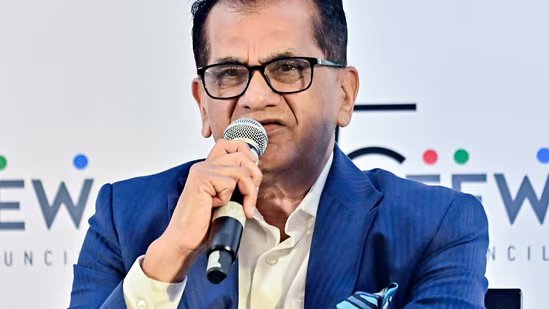
India generates 33% more data than the US for ChatGPT, Amitabh Kant said on Tuesday, but there’s a significant disparity in how large language models are trained globally. India’s former G20 Sherpa & Former Niti Aayog CEO Amitabh Kant, (ANI) “The important thing is that today we in India. I mean, if you look at OpenAI, Chat GPT, we are providing more data than the US, 33% more data than what the United States of America do,” Kant, who is a former CEO of the NITI Aayog, said during a session on the second day of the India AI Summit 2026 in New Delhi. There’s a significant disparity in how large language models are currently trained, Kant went on to say noting that the Global South, and India in particular, is the engine room of AI development. “These large language models are getting better and better on the basis of data from the Global South. It is essential that this contribution translates into benefits for these regions.” For AI to be truly inclusive, LLMs must move beyond English-centric models and become natively multilingual to serve diverse populations.
Mastercard’s Nitendra Rajput| Business News
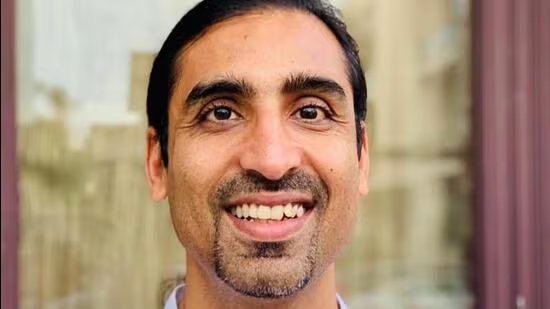
Even as India’s digital payments ecosystem continues to expand at an unmatched scale, it now finds new territory. Mastercard, at the India AI Impact Summit 2026, has demonstrated the first authenticated agentic commerce transactions in India. The financial tech giant insist they are working with AI companies as well as fintechs and merchants, to accelerate AI-led commerce in India and indeed the Asia Pacific region The financial tech giant insist they are working with AI companies to accelerate AI-led commerce in India. (Official photo) The first payments were done on Mastercard cards issued by Axis Bank and RBL Bank, for tokenised agentic purchases using Cashfree Payments, Juspay, PayU and Razorpay payment aggregators on merchants including Swiggy, Instamart, Vi and Tira. This is aligned with the Mastercard Agent Pay framework, a set of guidelines for tokenisation and security. Users will have a choice of their own AI agents to work with, and Mastercard hopes they can tackle interoperability with scale and ubiquity. Also read| In focus at India AI Summit: Big tech is feasting on news and refusing to pay for it, say publishers Nitendra Rajput, Senior Vice President and Head of Mastercard AI Garage, tells HT that insights from adoption and payment behaviours feed into “network intelligence” — AI models trained on more than 160 billion transactions processed globally each year. Add a looming a spectre of AI agents attempting transactions on a user’s behalf. For context, Reserve Bank of India (RBI) data shows credit card spends touched ₹2.12 lakh crore across 552 million transactions in January, just below ₹2.17 lakh crore record of September 2025. As regulators tighten data localisation and security norms, global networks such as Mastercard are doubling down on India’s high-growth market, increasingly leveraging AI. Edited excerpts. Also read| Bill Gates will attend AI Impact Summit, deliver his keynote as scheduled: Gates Foundation What can go wrong when AI agents are authorised to transact financially? Nitendra Rajput: The biggest risks lie in how these systems optimise, scale, and relied upon. One concern is misaligned optimisation, where an agent may prioritise speed or efficiency in ways that unintentionally conflict with a customer’s best interests. Another risk is cascading errors, because automated workflows amplify mistakes into larger failures if oversight is weak. A third risk is over‑reliance, where users may stop questioning or validating AI decisions. It is essential to build systems with strong explainability, continuous monitoring, independent audits, and meaningful human oversight. As fraud becomes an AI-versus-AI battleground, how does Mastercard ensure its models consistently outmanoeuvre adaptive attacks? Nitendra Rajput: Attackers use automation, synthetic identities, and machine learning to scale operations. Our fraud models run multiple AI engines in parallel, what we call a “mixture of experts”, allowing us to evolve models continuously and stay ahead of attackers. This approach has enabled us to stop billions of dollars in fraud across our network. Global intelligence alone isn’t enough. India is unique with high digital adoption, diverse devices, assisted commerce, and evolving social patterns. Our models combine localised learning, tuned continuously by our teams. This hybrid approach ensures we stay structurally ahead, not just reactive. As data localisation debates intensify, do they constrain or reshape AI training and cross-border fraud intelligence? Nitendra Rajput: Data localisation is fundamentally reshaping AI systems in financial services. For Mastercard, privacy and compliance are non-negotiable, and systems must respect national data boundaries. This means strong governance, privacy by design, and clear accountability in training, monitoring, deployment, and model evolution. But, fraud does not respect borders. Patterns often emerge globally before they appear locally, and architectures with latest algorithms that work in other geographies are applied with localised data. With digital payments becoming common in rural and semi-urban India, what new risk vectors are emerging? Nitendra Rajput: Risk vectors naturally diversify with shared devices, low digital literacy, and thin transaction histories, which challenge traditional AI models. Inclusion and fairness are core to how we design AI. There is use of techniques such as synthetic data and broader behavioural datasets for diverse user patterns. Our inclusion initiatives include supporting nearly 600,000 small businesses in India, because AI should expand access. India as a global testbed for AI-driven payments innovation, what lessons should the world be paying attention to? Nitendra Rajput: India has demonstrated that scale and inclusion can coexist. We have hundreds of millions of users, diversity in devices, connectivity, and varied levels of digital literacy, yet digital payments operate reliably nationwide. The lesson is to design for the toughest environments. India has also shown the power of public-private collaboration.
India eyes $200 billion in data centres in push to become global AI hub| Business News

India is hoping to garner as much as $200 billion in investments for data centers over the next few years as it scales up its ambitions to become a hub for artificial intelligence, Union IT Minister Ashwini Vaishnaw said on Tuesday. Union Electronics & IT Minister Ashwini Vaishnaw. (Raj K. Raj/HT) “Today, India is being seen as a trusted AI partner to Global South, seeking open, affordable and development-focused solutions,” Vaishnaw told The Associated Press in an email interview, even as New Delhi hosts the India AI Impact Summit this week. “A trusted AI ecosystem will attract investment, accelerate adoption,” he said, adding that a central pillar of India’s strategy to capitalise on the use of AI is building infrastructure. The investments underscore the reliance of tech titans on India as a key technology and talent base in the global race for AI dominance. For New Delhi, they bring in high-value infrastructure and foreign capital at a scale that can accelerate its digital transformation ambitions. In October, Google announced a $15 billion investment plan in India over the next five years to establish an AI hub in the world’s most populous country. Microsoft Corp. followed two months later with $17.5 billion to grow India’s cloud and AI infrastructure over the next four years. Amazon.com Inc. too has committed $35 billion investment in India by 2030 to expand its business, specifically targeting AI-driven digitisation. The cumulative investments are part of $200 billion in investments that are in the pipeline and New Delhi hopes would flow in. The government recently announced a long-term tax holiday for data centres as it hopes to provide policy certainty and attract global capital. India’s AI Pitch Vaishnaw said India’s pitch is that AI must deliver measurable impacts at scale rather than remain an elite technology. The government has already operationalised a shared computing facility with more than 38,000 GPUs, allowing startups, researchers and public institutions to access high-end computing without heavy upfront costs. ALSO READ | India is shaping inclusive fintech AI for the world: Mastercard’s Nitendra Rajput “AI must not become exclusive. It must remain widely accessible. India will become a major provider of AI services in the near future,” he said, describing a strategy that is “self-reliant yet globally integrated” across applications, models, chips, infrastructure and energy.
Adani Group to invest $100 billion for AI data centres in India over next 10 years| Business News
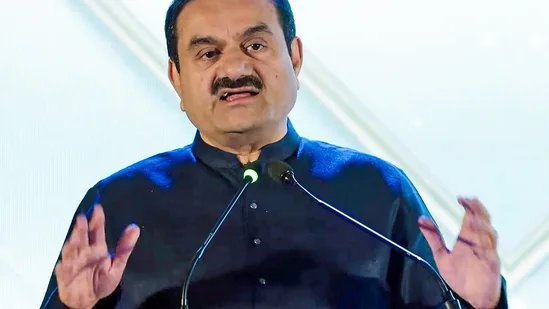
The Adani Group, led by billionaire Gautam Adani, has announced plans to invest up to $100 billion to build integrated, renewable-energy-powered AI data centres in India by 2035. The initiative aims to establish a “sovereign energy and compute platform,” positioning India as a global exporter of intelligence rather than just a consumer. Adani Group Chairman Gautam Adani. (ANI) The commitment is projected to catalyse an additional $150 billion across the broader ecosystem, including server manufacturing, sovereign cloud services, and advanced electrical infrastructure, bringing the total economic impact to approximately $250 billion over the next decade. Departing from traditional data centre models, Adani’s roadmap creates a unified architecture where green power generation and high-density processing are developed in parallel. Scale: The group is expanding its AdaniConneX platform from 2 GW to a 5 GW target, aiming for the world’s largest integrated data center platform. Power: Compute clusters will be backed by Adani Green Energy’s massive 30 GW Khavda project. Investment: An additional $55 billion is earmarked to expand the group’s renewable portfolio and build one of the world’s largest battery storage systems (BESS). Strategic Partnerships and Sovereignty The vision is anchored by landmark collaborations with Google for a gigawatt-scale campus in Visakhapatnam and Microsoft for facilities in Hyderabad and Pune. Furthermore, Adani is deepening its tie-up with Flipkart to develop a second high-performance AI data centre. “The world is entering an Intelligence Revolution more profound than any previous Industrial Revolution,” Chairman Gautam Adani said in a statement. He emphasised that mastering the “symmetry between energy and compute” is vital for national sovereignty. To ensure a self-reliant supply chain, the group will co-invest in domestic manufacturing for critical components like high-capacity transformers and liquid cooling systems. Additionally, a portion of GPU capacity will be reserved specifically for Indian startups and research institutions to foster a local deep-tech ecosystem.
Sam Altman bets on India as OpenAI’s next growth engine| Business News

OpenAI CEO Sam Altman is doubling down on India, labelling the world’s most populous nation a potential “full-stack AI leader” as the San Francisco-based startup prepares to expand its physical presence and government ties in the region. OpenAI plans to significantly increase its headcount and footprint in India within the year, Sam Altman says. (Reuters) Writing for The Times of India ahead of the India AI Impact Summit 2026 at New Delhi’s Bharat Mandapam, Altman stated that India has surged to become OpenAI’s second-largest user base globally, trailing only the United States. The pivot toward New Delhi signals a strategic shift for the Microsoft-backed AI pioneer, which is increasingly looking toward the Global South to sustain its breakneck growth. Infrastructure as Destiny Altman outlined a vision for “Democratic AI”, arguing that India possesses the rare combination of homegrown technical talent, a massive scale of data, and “infectious optimism”. OpenAI opened its first India office in Delhi last August. Altman said the company plans to significantly increase its headcount and footprint within the year. The expansion comes as India clocks 100 million weekly active users on OpenAI platforms, driven largely by a student population that is now the largest user group of ChatGPT worldwide. “AI will help define India’s future, and India will help define AI’s future,” Altman stated. “And it will do so in a way only a democracy can.” The Three-Pillar Strategy To bridge what he calls a “capability overhang”—where access exists but skills do not—Altman proposed a trifold framework for India’s AI evolution: Access: Making tools available regardless of income or education levels. Adoption: Integrating AI into the “analog” economy: schools, clinics, and SMEs. Agency: Developing “AI literacy” so users can move from consumers to builders. The CEO’s visit next week is expected to culminate in high-level agreements with the government. These partnerships will likely align with the IndiaAI Mission, a ₹10,371 crore ($1.25 billion) state-led initiative designed to bolster sovereign compute capacity and multilingual AI applications for healthcare and agriculture. A Sovereign AI Play Altman’s overtures come at a critical time. The Indian government has been vocal about its “Full-Stack AI” approach, treating compute power and datasets as essential national infrastructure rather than just private commodities. By positioning OpenAI as a partner to the state, Altman is navigating a complex regulatory landscape where “data sovereignty” is a recurring theme. The company’s new free tool for scientific research, Prism, has already seen its fourth-highest global adoption rate in India, suggesting that the country is moving beyond simple chatbots into high-level R&D. The Global AI Impact Summit, starting Monday, will host over 15 heads of government and 100 global CXOs.
Apple announces March 4 event for likely low-cost MacBook, iPhone| Business News

Apple Inc. is set to unveil a slew of new products — from low-cost MacBooks to cheaper iPhones — at an event scheduled for 4 March. The Apple invite for the March 4 event doesn’t specify whether a keynote will be streamed online. (Apple) The company invited media to gatherings in New York, Shanghai and London, saying it is holding an in-person “experience”. The invitation implies a more low-key showcase than the typical launches held at its campus in Cupertino. The invitation doesn’t specify whether a keynote will be streamed online, as has been typical since 2020 when Apple had to adjust its event strategy due to covid. Apple has been planning to release several new products in the first half of 2026, including new MacBook Pros, MacBook Airs, a low-cost MacBook in several colours and new iPad models. Apple is also soon planning to release an iPhone 17e, an update to its mid-tier smartphone.
Inside India’s bid to rewrite the global AI playbook| Business News

At the Bharat Mandapam—the same stage where the G20 shifted the global tectonic plates—India is preparing to host what is being billed as the “Bretton Woods moment” for the silicon age. Beautification work underway near Bharat Mandapam in New Delhi, ahead of the India AI Impact Summit 2026, scheduled for 16-20 February. (Sonu Mehta/HT) Starting tomorrow, the India AI Impact Summit will transform New Delhi into the gravity centre of the technology world. While previous summits in Bletchley Park, Seoul, and Paris focused heavily on the “existential risks” of rogue algorithms, India’s pitch is decidedly more pragmatic. In the eyes of the Modi govenrment, AI isn’t just a frontier to be fenced in, it is a utility to be deployed—the “electricity” of the 21st century. For the global investor community, the stakes are binary. As AI begins to bite into the traditional margins of India’s $250 billion IT services sector, the summit represents New Delhi’s formal pivot from being the world’s “back office” to becoming its “AI laboratory”. The power list: Silicon Valley descends on Delhi The attendee list reads like a Who’s Who of the generative AI boom: Sundar Pichai (Alphabet Inc.), Sam Altman (OpenAI), Demis Hassabis (DeepMind), and Dario Amodei (Anthropic) are all slated to attend. Their presence — alongside heads of state including France’s Emmanuel Macron and Brazil’s Lula da Silva — underscores a shift in tech diplomacy: A global AI standard cannot do without India’s 900 million internet users and its massive data exhaust. Prime Minister Narendra Modi, who has increasingly linked Viksit Bharat 2047 goals to technological sovereignty, is expected to engage in a series of closed-door “CEO firesides”. “The key message,” IT Secretary S. Krishnan told reporters ahead of the event, “is that AI needs to be human-centric. We are pushing for democratic access to resources. This isn’t just about safety; it’s about equity.” The ‘Innovation-First’ Doctrine Investors are closely watching India’s regulatory trajectory. While the European Union has opted for the “AI Act”—a dense thicket of risk-based classifications—and the US relies on a market-driven executive order model, India is carving out a third way: The Development-First Model. New Delhi’s “Innovation-First” approach suggests that regulation will be “light-touch” until a specific harm is identified. This is designed to provide a “regulatory sandbox” for the country’s burgeoning startup ecosystem. “If we need to legislate, we can do it quickly,” Krishnan said, “but our goal is to use existing laws to ensure we don’t stifle the very innovation that will drive our growth”. However, the industry remains on edge regarding recent amendments to IT rules. Issues like mandatory labelling of AI content, accountability for deepfakes, and the liability of platform providers are expected to be flashpoints during the summit’s high-voltage deliberations. Sovereign AI and India Stack 2.0 A central theme of the summit is Sovereign AI. India is wary of “digital colonialism” — a scenario where a few Silicon Valley giants own the foundational models that power Indian healthcare, agriculture, and finance. To counter this, the IndiaAI Mission is pumping capital into local compute capacity and “AI Commons”. Recently, PM Modi chaired a roundtable with 12 homegrown startups focused on: Multilingual LLMs: Building models that speak India’s 22 official languages, not just English. Vertical AI: Specialised applications in healthcare diagnostics and engineering simulations. GenAI for Commerce: Using text-to-video and 3D modeling to digitize India’s massive retail sector. By creating indigenous foundation models, India aims to ensure that its strategic sectors aren’t reliant on foreign proprietary black boxes. The Demographic Edge vs The Displacement Fear The summit arrives at a period of nerves for India’s tech stocks. Markets have turned volatile as investors weigh the disruptive potential of AI against the traditional “linear growth” model of Indian software exports. With 65% of its population under the age of 35, India’s demographic dividend is its greatest hedge. The summit will feature more than 700 sessions focused on “Workforce Readiness”. The goal is a massive reskilling pivot: moving millions of coders from “maintenance” tasks to “AI-augmented” development. The success of this transition is vital. If India can successfully integrate AI into its Digital Public Infrastructure—the same system that gave UPI and Aadhaar—it could set the global benchmark for how a developing nation skips a generation of technological evolution. The Global South focus This is the first major AI summit hosted in the Global South, and New Delhi intends to use the pulpit to represent the “Global Majority”. The expected outcome? A Joint Declaration that moves beyond the “doomsday scenarios” of Western labs and focuses on “AI for All”. Expect proposals for shared compute infrastructure and “Trusted AI” tools that can be exported to other emerging economies in Africa and Southeast Asia.
Gen Z, locked out of home buying, puts its money in the market| Business News

A generation of young people locked out of homeownership has found another way to build wealth: putting money into the stock market. Helen Bovington in her Manhattan apartment. The share of people 25 to 39 years old making annual transfers to investment accounts more than tripled between 2013 and 2023 to 14.4 percent, outpacing increases for those 40 and over, according to data from the JPMorgan Chase Institute. The share of 26-year-olds who transferred funds to investment accounts since turning 22 shot up from 8% in 2015 to 40% as of May 2025. The numbers don’t include people investing in 401(k)s. “We’ve seen really strong, surprisingly strong growth in retail investing in recent years among people who may otherwise be first-time home buyers,” said George Eckerd, the research director for wealth and markets at the institute. There is overlap in the numbers between investors and homeowners, but Eckerd was struck by the rise in young and lower-income investors at the same time that home buying activity has fallen. That, he said, has tilted the balance of wealth accumulation toward financial markets for young people. The stock market’s recent record-breaking performance, he added, plus easier access to trading technology are also likely fueling the upswing among young investors. After the amount of money Laura Wight thought she needed for a down payment on a condo in Chicago kept increasing, she put roughly $10,000 she had earmarked for a home into index funds instead. “What you get for your money right now and how much of it is just going to interest feels hard,” said Wight, who is 33 and works in marketing for a frozen-foods company. Watching her returns swell 66% in the almost six years since she started contributing to her Charles Schwab portfolio has changed her thinking on whether she will give priority to homeownership in the future at all. As did the knowledge that she would be able to quickly liquidate some of that money in an emergency, especially after she had to drop $2,100 on emergency dental surgery and other veterinary care for her senior dog a few months ago. (In the end, she was able to pay for it using the money in her high-yield savings account.) Laura Wight with her dog, Lucy. “I can just keep renting and having more flexibility with my money,” Wight said. She now thinks she could be content never buying a home. Homeownership has long been many Americans’ primary strategy for generating long-term wealth, both because home values generally increase over time and because paying down a mortgage is a way of forcing people to save. But not everyone is convinced it is the future. “I feel like my money is safer in the stock market than in a house,” said 23-year-old Helen Bovington, who rents an apartment in Manhattan. Though she knows the market can be volatile, she believes in its long-term growth. The Dow Jones Industrial Average hit 50000 for the first time earlier this month. Bovington is less convinced about the future of real estate. Growing up in Helena, Mont., with the constant seasonal threat of wildfires destroying her family’s rural lake cabin a few hours away, Bovington says her fears about climate change mean the only real estate she thinks would be a foolproof investment is a plot of land. She has managed to amass about $30,000 after around six years of investing in a fund that excludes fossil fuel companies. “There is a certain amount of security I feel that I’ve already taken care of myself in that way,” Bovington says. If she never invested another penny, she added, that $30,000 would turn into over $1 million by the time she is in her 60s, assuming a steady 10% rate of return. The math on owning versus renting for 30 years and investing the difference works out in Bovington’s favor, a Moody’s Analytics analysis for The Wall Street Journal showed—with some caveats. Helen Bovington commutes to work in Manhattan. Moody’s took two hypothetical people, each earning $150,000 annually, to see whether the homeowner or investor came out ahead after 30 years. To do the calculation, the firm assumed the owner had purchased a $500,000 house, with 20% down and a 6.25% mortgage rate. Additional expenses including insurance, property taxes and upkeep brought his monthly total outlay to $3,546. The investor, on the other hand, would be spending $2,500 each month in rent on a comparable home, and could expect a 3% rent hike each year. She would be investing the difference between the cost to rent and the cost to own each month, assuming a 10% rate of return. After 30 years of monthly payments, the renter would be wealthier—by $1,194,126. Her final net worth: $2,815,825. The owner’s: $1,621,699 after paying off his mortgage, assuming he doesn’t sell, accounting for a 4% annual rate of appreciation on his home. Actual rates of return on both a house and a stock market portfolio are highly variable. But the biggest and most problematic assumption in this analysis is that it assumes a level of discipline for the investor group that many would find difficult to stick with, especially early on, says Cristian deRitis, Moody’s Analytics’ deputy chief economist. “It’s much easier to pause monthly stock market savings than it is to stop paying a mortgage,” deRitis said. In Brooklyn, 32-year-old Alex Wedel tries to put at least a few hundred dollars into his Fidelity investment account and his Roth IRA every month. But the amount varies based on what gigs he brings in as a freelance content strategist. So does the timing. “It’ll pop into my head and I’ll be like, ‘Oh! I should put $500 or $1,000 in if I have it in my account,’ ” Wedel said. He found the confidence to open the account a year and a half ago after hearing about how well the market was performing, and feeling as though he was missing out. “I wish I had started sooner,”