Oppo Pad 5’s early yet restrained Android tablet bet, lands well enough| Business News
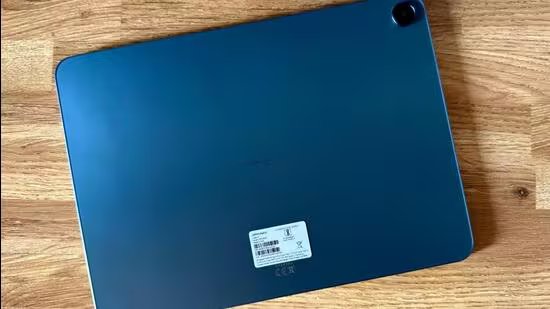
There is, increasingly so, a case for Android tablets. As entertainment hubs. As secondary work machines. Now even as primary work machines, though this holds true if your workflow fits within perceived boundaries of capabilities (it’s still a subjective hit or miss). The OPPO Pad 5 seems to be on absolutely the right track from the outset, which includes an affordable price positioning, an ecosystem play, and the promise that artificial intelligence (AI) will play a useful enough role in your work. While I wouldn’t recommend buying any device based on perceived AI promises, you should base your decision on the Oppo Pad 5’s hardware foundation, which is mostly on point. The choice of the MediaTek Dimensity 7300-Ultra is not entirely surprising, but there is come curiosity. (HT photo } Vishal Mathur) For starters, Oppo gained the first mover’s advantage in the early 2026 Android tablet battles, with the Xiaomi Pad 8 following soon after. Secondly, things have been kept simple yet versatile, with the Wi-Fi and 5G versions available (that’s something the otherwise impressive Xiaomi Pad 7 misses out). I’d recommend the 5G variant if the budget allows it, for you’ll realise the benefits of this convenience, inevitably when you start travelling more with the tablet. Prices start at ₹26,999 for the 8GB memory and 128GB storage variant with Wi-Fi only, while the 5G spec that also bumps up storage to 256GB will cost ₹32,999. One could disagree with the choice of 128GB as the base storage spec (it should have been 256GB ideally), but thanks to the AI slop filling our social media feeds, memory and storage prices are through the roof. Two key specifications really work in the Oppo Pad 5’s favour. The 12.1-inch display real estate is ideal for two windows side by side as you get some work done, working on spreadsheets, and finally once done for the day, it is immersive enough for catching up on TV shows or some sports highlights. This is a bright and vivid screen with 12-bit colour depth, and you’d appreciate the 7:5 aspect ratio which is a bit squarer than the typical 16:9, making it fit windows with PDF documents or books better. Brightness changes are flicker free, at least to the eyes as you use the tablet, and this screen simply works across usage scenarios. The other is the fact that the OPPO Pad 5 has a large 10,050mAh battery, which lasts close to 18 hours on a single charge. Considering this may not often be used as a primary laptop-replacement device for 9 hours a day straight, you will need to deploy the 33-watt charger only once every few days to juice this up completely. There are absolutely no complaints about this, especially considering the price point for the 5G option. The choice of the MediaTek Dimensity 7300-Ultra is not entirely surprising, but there is come curiosity. This chip is a couple of steps behind the Xiaomi Pad 7’s Qualcomm Snapdragon 7 Plus Gen 3 in terms of raw performance, and will certainly fall a further step behind the Snapdragon 8s Gen 4 that’ll power the upcoming Xiaomi Pad 8. This is not a good look in the face of direct competition, and this leads me to believe that you’ll soon start seeing significant market price corrections to tweak the perceived value. For specific workflows, this may struggle somewhat if your intended usage includes a fair bit of time on serious video editing apps, but the likes of Adobe Lightroom and Express should be fine on this. Of course any tablet being sold in this day and age must claim a number of AI insertions within the interface and the apps, with the OPPO Pad 5 being no different. Some stand out ones include an AI Writer, a translator, a voice recorder with transcription and of course, Google’s Gemini integrations. Oppo has integrated something called Circle to Note, which requires the Oppo Pencil 2R (that’s a separate accessory; ₹2,999) — highlight or mark any text on a web page, document or file and drag it into the notes app. This negates the need for cluttering the gallery with umpteen screenshots (often, one forgets particular relevance or context). Speaking of the gallery, that too has AI based clarity enhancer, unblur and reflection removal options, though mileage will vary depending on complexity of a photo. If you are buying an Android tablet in 2026 and want one that’ll competently handle documents, video calls, video streaming, reading and entertainment needs for frequent travel without introducing too many compromises, the Oppo Pad 5 deserves to be high on the shortlist. It does not win the raw-power argument, and serious creators may outgrow it sooner than they’d like. But the combination of a very good 12.1-inch display, dependable battery life and the availability of a 5G variant at this price gives it a real-world advantage that matters to a much larger demographic of potential buyers. Just that you may want to weigh the Xiaomi Pad 8 and how the Xiaomi Pad 7 pricing shapes up, before making a definitive decision.
Xiaomi X Pro QLED 75 is quite simply a TV flex that rivals cannot match| Business News
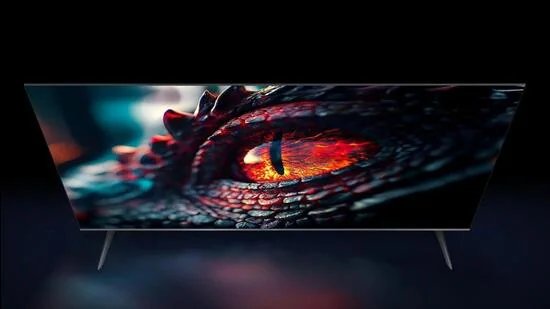
A few years ago, almost everyone who made a tech product of some sort thought it was easy to make good TVs and sell them at price tags that held a convincing ‘value’ argument. Search “4K TV”, adjust the price band to under ₹1,00,000 on Amazon or Flipkart, and you’ll witness an illustration. Turns out, it isn’t as easy as it sounds. Only a few have successfully found a workable recipe, and Xiaomi resoundingly leads that set with a very impressive X Pro QLED range. This ushered in a Filmmaker Mode, something similar to what Sony delivers on TVs that cost significantly more. Now, this portfolio gets widened with the addition of a 75-inch screen size. The Xiaomi X Pro QLED 75, now becomes the flagship TV for the company. (Vishal Mathur | HT Photo) The Xiaomi X Pro QLED 75, now becomes the flagship, taking over from the 65-inch ( ₹57,999) as well as 55-inch ( ₹39,999) options that are already on sale. This is the company’s largest QLED TV yet. Headline specs are the QLED (Quantum dot LED) display panel of course, support for Apple AirPlay 2 and Google Cast streaming standards, 34-watt speakers with Dolby Audio, and of course the Filmmaker Mode. To be fair, the price tag of ₹69,999 (before you factor in credit card or EMI discounts) for a screen size as large as this, underlines tremendous value. I could complain the table top stands don’t align with the premium-ness you’d associate with a TV of this size. From the get go, the Xiaomi X Pro QLED 75 looks part of the family, right down to how the table top stands position themselves and a continuity with the wireless remote. Power this on, and setup takes a few minutes with typical Google TV steps that must be navigated. For some reason, this TV feels snappier during the initial setup and subsequent app usage, contrasting with the sluggishness I’d noted when reviewing the 65-inch version last year. Attempts to optimise the hardware (the A55 quad core chip with 2GB memory) and software are greatly appreciated. Once you get to the Home Screen, is where the experiential brilliance really starts to unveil itself. The QLED panel and enhancement film which has a slight matte-ish thing about it, combine for excellent display quality which also holds its own when viewed at from an angle, or if there is a room light reflecting off the screen to an extent. Little things do matter. This is a bright panel, as well as one that reproduces vivid colours. Spend some time tweaking the picture parameters, and you can get this absolutely to your liking. I’m not a huge fan of the separated basic and advanced picture setting layout, but well, no important options seem to be missing. While this panel errs towards a softer picture look at default, adjusting the sharpness settings brings out just the right level of crispness and detailing you’d expect from a large screen 4K TV. The tuning seems even further improved in some ways, not just with more perceptibly precise dimming when that is required, and also in terms of picture crispness as well as details for lower quality content. Both aspects, the way they are currently, are incredibly useful for a genuinely large panel size where even the smallest of imperfections would otherwise loom large. Blacks are really deep, which helps with contrast and colour across the spectrum. In the time I spent which included a mix of Live cricket broadcasts in Full HD, Netflix and JioHotstar in 4K streaming (Dolby Vision and HDR10+ are supported), as well as gaming on the PlayStation, there wasn’t a single scenario or content type where the Xiaomi X Pro QLED 75 looked even remotely uncomfortable. Apart from the app sluggishness aspect which has now been resoundingly resolved, I had also pointed out with the 2025 TVs that sound could have and should have been better. Changes here, at least they certainly do feel like changes to an extent, are slightly positive — the built-in speakers which are rated at 34-watt, have now been tuned for perceptibly clear audio and less jarring sharpness. They can go really loud, without doubt, and are perhaps adequate for watching cricket matches or Formula 1 races. But for the regular movies and TV show binge sessions? Not so much, get a soundbar. At this point, I must note that this TV was perhaps ripe for a soundbar-esque speaker array, something Haier and OnePlus have done with success, previously. The Filmmaker mode, which really is the party piece of the X Pro QLED 75, is Xiaomi’s biggest flex in terms of how well it can get the very fine optimisation details absolutely spot on. Some movies you watch would demand you hand over the realtime post processing tasks to the TV to judge, including noise reduction, contrast and colour, to get the sort of experience the movie’s makers intended. The fact that Sony, and now Xiaomi have been able to consistently do this while everyone else is still trying to catch up, shows it isn’t an easy feat to achieve. I’ve said it before and I’ll say it again, not all TVs around the same price points, are equals. Xiaomi marked a big step forward with the 2025 X Pro QLED line-up, and this time around, the addition of the X Pro QLED 75 as the biggest QLED TV they’ve ever made, adds weight to an argument that they know what they’re doing. Everything else comes together very nicely around this anchor, including a QLED panel that has been beautifully optimised, improved performance, a vibrant set of functionality, and a remote layout that has finally grown on me. That said, I could perhaps keep complaining that the quality of the table top stand has taken a slight reversal, but is that perhaps because accountants stepped into the room, holding up the bill of materials?
World’s top-gaining stock is a Korean broker riding SpaceX IPO hype| Business News
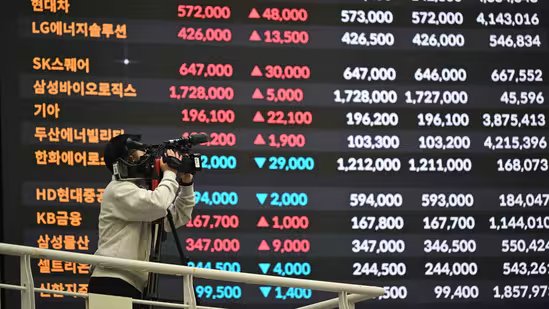
Mirae Asset Securities Co. shares have more than tripled this year as a proxy bet on Elon Musk’s SpaceX ahead of its potential blockbuster initial public offering. The KOSPI dashboard at the Korea Exchange in Seoul. (AFP) That makes the Seoul-based brokerage the top performer on MSCI Inc.’s broadest index of global stocks so far in 2026. It’s also risen the most among 2,245 stocks in Bloomberg’s World Index. Mirae Asset has invested a total of over $400 million in SpaceX and sister firm xAI, according to analyst reports. The surge in Mirae Asset’s stock shows how investors are scrambling to get exposure to the planned listing of the combined SpaceX and xAI, which is valued at $1.25 trillion. It also highlights continued gains in South Korean stocks on optimism over AI-driven chip demand and governance reforms under President Lee Jae Myung. Mirae Asset’s fundamentals are improving due to the strong Korean stock market, while its SpaceX stake provides an additional catalyst, “allowing investors to capture two sources of value simultaneously”, said Ha SeokKeun, chief investment officer at Eugene Asset Management Co. Brokers have been among the top performers this year on the Kospi, the world’s best-performing stock index, amid government efforts to raise equity valuations and attract retail investors. SK Securities Co. has also gained around 190% this year, while Hanwha Investment & Securities Co. has advanced nearly 100%. Mirae Asset has benefited from the “heavy exposure to space and AI names” in its $7.5 billion portfolio, according to NH Investment & Securities Co. analyst Yoon Yoodong. Its investments also include US-based Perplexity AI Inc. and Chinese drone-maker DJI Technology Co., she added. The firm’s results are improving as well. Mirae Asset’s brokerage revenue reached a new record in 2025, up 43% over the previous year, the company said in its earnings call last week. Still, some say the stock has gotten ahead of fundamentals, trading at 21 times forward earnings estimates, triple its five-year average. Kang Seunggun, an analyst at KB Securities Co., cautions that the stock’s valuations are stretched and the benefits of its high portfolio valuations are unclear. “Most of the earnings increase is unrealised gains at consolidated funds, limiting direct impact on standalone capital,” Kang wrote in a 9 February note. “Thus, we see greater uncertainty in translation of valuation gains to shareholder return.”
Apple Pay in India? iPhone maker in talks with banks to onboard UPI| Business News

Apple Inc. is in discussions with key banks and card networks in preparation to start Apple Pay in India, that too on UPI. Apple is known to take a cut of Apple Pay transactions. (Unsplash) The iPhone maker is in talks with ICICI Bank Ltd., HDFC Bank Ltd. and Axis Bank Ltd., as it aims to introduce its payment service in India around the middle of 2026, according to people with knowledge of the matter. The timeline remains fluid, but the talks indicate an approaching launch. Apple Pay in India is expected to support India’s state-backed Unified Payments Interface (UPI) alongside card-based payments. Discussions are on with Visa Inc. and Mastercard Inc., said the people on condition of anonymity. Apple declined to comment. The National Payments Corporation of India, which operates and manages UPI, didn’t respond to request for comment. Banks, and Mastercard and Visa didn’t immediately respond to requests for comment. Apple Pay in India The planned launch marks another step in Apple’s push to expand in the country of 1.4 billion people with a rapidly expanding middle class. While iPhone’s market share is still small in a region dominated by Android devices, Apple’s increased manufacturing and retail presence in India has helped it make inroads. Rival Alphabet Inc.’s Google Pay and Walmart Inc.’s PhonePe are among the global players already on UPI, alongside homegrown players like Paytm. In late 2025, the Reserve Bank of India set new rules that allow biometric authentication, such as fingerprint or facial recognition, for digital payments. Indian authentication mechanisms have previously largely relied on one-time passwords sent via text message. Apple Pay relies on Face ID or Touch ID to approve payments. UPI in India With more than 750 million smartphone users on cheap mobile data and a state-backed push, India is one of the world’s fastest-growing digital payments markets, serving as a potential gateway for Apple to grow services revenue in the region. The company is known to take a cut of Apple Pay transactions. Given the prevalence of mobile payments in the region, an Apple Pay launch could boost demand for its hardware. The feature is built into Apple Watches, iPhones, iPads and Macs. Apple has steadily increased its market share to about 10% of India’s smartphone sales, leaving it significant room for further growth. Apple in India Apple is also using India as a key production base to export iPhones to the US, diversifying its manufacturing footprint away from China. The move has helped shield customers in its home market from price markups due to President Donald Trump’s tariffs on China. At the same time, it’s rapidly expanding its retail presence in India. It opened its sixth store, a location in Mumbai, this week. Apple Chief Executive Officer Tim Cook has frequently said that India sales are growing quickly, making the market a key lever for its overall growth.
Xbox’s new CEO, nifty UltraProlink DriveLink, and UPI on PhonePe| Business News

Opening thoughts. Microsoft Corp. has a new CEO for the Xbox division—someone called Asha Sharma, who has (just in case you’d suspected this) zero previous experience in the gaming industry. XBox new CEO Asha Sharma. Sharma started out in marketing at Microsoft, then moved to operations at the home services startup Porch Group. Next, she ran Facebook Messenger at Meta Platforms Inc., served as COO of Instacart Inc. (coinciding with the IPO), and then returned to Microsoft to lead the CoreAI product. Two years later, she’s CEO of an $18 billion gaming division. She takes up the Xbox business when gaming revenue fell 9% last quarter, hardware sales fell 32%, Game Pass has flatlined after reaching the 34 million subscribers, and content+services revenue declined 5% over the holidays. This is perhaps her most challenging role yet, but it’s surely not off to a good start, as X users are up in arms claiming that she’s only started gaming this year using her publicly shared gamertag, and that her replies to X posts seem AI generated. Irrespective, nothing about Microsoft surprises me. Not one bit. EDITOR’S CORNER Cricket being the thing that keeps me sane on most days (at least till Formula 1 returns, then it’ll be that), I had to sit through UPI app Navi’s ads more than once, emphasising an essence of speed, perhaps in aspects of life where speed isn’t exactly a good fit. Anyway, that got me wondering about India’s UPI app landscape. PhonePe leads with 9,809.97 million transactions valued at ₹13,61,309.94 crore, while Google Pay (7,496.48 million at ₹9,57,752.89 crore) and distant Paytm (1,654.69 million at ₹1,76,846.14 crore) make for the three most popular UPI apps in India. I noticed Navi is just behind Paytm, clocking 678.28 million transactions valued at ₹35,928.62 crore. Month-on-month, that shows an upward trajectory in both volume and value. It must be noted that the trend is very much similar among the top players. UPI transactions have grown by leaps and bounds in India. (HT) As a consumer, the UPI space is bursting at its seams with choice. There’s BHIM, CRED, Amazon Pay, Mobikwik, Tata Pay, Kiwi, and Airtel Payments Bank, to name a few. There are some challenges, and the answers will depend on when someone decides to tackle them. Zero MDR, or Merchant Discount Rate: The policy of not charging transaction fees (on UPI via bank accounts, specifically) has accelerated adoption but stripped banks and fintechs of a sustainable revenue model. And speaking of high operational costs, maintaining a digital infrastructure for UPI costs banks an estimated ₹0.80 per transaction, which in a way disincentivises system upgrades for reliability. Fintech fatigue: Major players such as PhonePe have often cautioned that without a stable monetisation structure, the fintech ecosystem’s ability to invest in innovation and fraud prevention may be limited beyond a point. RuPay cards are unwelcome on UPI: In a stark contrast, the MDR on transactions made using RuPay credit cards on UPI, is between 1.1% and 1.9% per transaction above ₹2,000. This is supposed to be borne by the merchant, and that’s exactly why shopkeepers, businesses and establishments turn this off on their payment terminals. Having been used to a ‘free’ UPI, this change was always going to face resistance. RuPay’s challenge to Mastercard and Visa would stall if merchants don’t accept UPI payments from RuPay cards. TECH SPOTLIGHT UltraProlink DriveLink As essential as Apple CarPlay and Android Auto seem to be for in-car infotainment, not every car gets wireless connectivity for either platform. A USB cable is the only way in most cars, but the problem with that is dual-pronged—constant charging of the phone as long as it remains plugged, and the inconvenience of wired. Over the past few months, wireless adapters have emerged as viable options. Indian tech company UltraProlink (known for their impressive lineup of charging accessories, in particular), has launched its wireless adapter called DriveLink at ₹2,999. It joins something I already use—the Portronics Tune—as well as options from Ambrane, Lifelong, Zebronics and Ottocast. The most impressive thing about the DriveLink is its really compact size—no wider than a fingernail. The headline specs of the UltraProlink DriveLink are wireless CarPlay and Android Auto support, Bluetooth 5.4 and Wi-Fi 5.8 GHz. This is incredibly simple to set up, and the pairing process is a one-time task that takes less than a couple of minutes. Importantly enough, every time you start the car, wireless CarPlay or Android Auto are connected in less than a minute. No video streaming support, though, and that’s a plus—we anyway have enough fools driving distracted, while watching YouTube videos or JioHotstar shows on their aftermarket music systems. On the DriveLink, Music streaming quality betrays absolutely no loss in quality or fidelity, and crucially, there is absolutely no lag in operation or responsiveness within the CarPlay or Android Auto interfaces on the infotainment system’s touchscreen. What worries me about leaving an adapter connected after I’m out of the car is how soon it powers down. Safer side—physically remove it from the USB port, before leaving the vehicle, particularly if it’s for a few days at a stretch. Leaving the best for the last, the most impressive thing about the DriveLink is its really compact size—no wider than a fingernail. The Portronics Tune is much bigger, like a USB ‘pen drive’ from a few years ago. All in all, the UltraProlink DriveLink is a must-have accessory if your car has Apple CarPlay or Android Auto, but just wired by default. Looking at you, Hyundai, Kia and many others. SECOND THOUGHTS PhonePe’s update A few months ago, the Reserve Bank of India and the National Payments Corporation of India enabled biometric authentication for UPI payments. That allows a user to authenticate UPI transactions using their phone’s fingerprint sensor or facial recognition, instead of having to punch in the pin every time. This week, this two-factor authentication (2FA) has been adopted by PhonePe. PhonePe has enabled biometric payments on its UPI app. “By integrating
Noel Tata’s tough stance on Tata Sons IPO stalled chairman’s reappointment| Business News
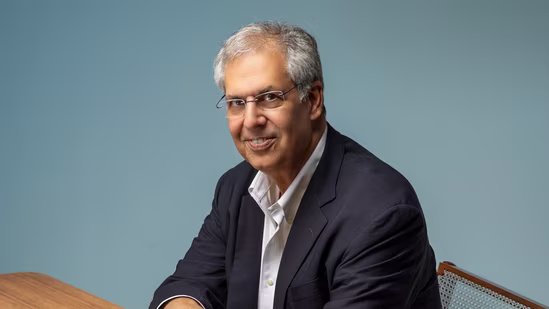
An early agenda item for Tata Sons Pvt.’s six board directors when they convened at 11:30 am on Tuesday at Bombay House—the group’s storied headquarters—was expected to be straightforward: approving a third term for Natarajan Chandrasekaran as chairman. Tata Trusts Chairman Noel Tata. As the first non-family, non-heir chairman at Tata Sons, Chandra faces mounting pressure from Noel—a Tata family scion intent on asserting greater influence over how the group is run. (PTI) Within two hours, the conversation had veered off course. What had looked like a done deal, with Tata Trusts itself recommending the reappointment just months ago, quickly unraveled. Noel Tata, the head of Tata Trusts, began pressing Chandra—as he’s widely known—with tough questions. Most critically, Noel sought assurances that the group’s holding company could avoid a public listing, people familiar with the matter said, asking not to be named as the discussions were private. Tata Trusts is a collective of 13 charities, which together control two-thirds of Tata Sons. Noel also laid down several conditions: restraining debt levels, stemming losses—especially at Air India, and reaching a swift settlement with Tata Sons’ largest minority shareholder—Shapoorji Pallonji Group, the people said. The SP Group, which owns about 18.4% stake, was locked in a corporate and legal battle with Tata Sons for years and is still looking to monetise a part of its stake. While some of Noel’s demands were negotiable, discussions hit a wall when Chandra said he could not guarantee a waiver from India’s banking regulator on the listing issue—since that decision lay outside his control, the people added. Preserve Stability By 3:30 pm in Mumbai, Chandra had left the board meeting. As he waded through a swarm of TV cameras outside Bombay House, he offered a brief response to questions about what transpired at the board meeting: “I recommended that it should be deferred.” By deferring a decision on his own reappointment, Chandra signalled that consensus between Tata Sons and Tata Trusts was essential to preserve stability at the salt-to-software conglomerate already battling headwinds in multiple sectors. It also reflected a hard-earned learning for the group after it was rocked by a scathing courtroom and boardroom battle in 2016. The group “has historically placed a premium on unanimity in key board decisions, and the absence of that consensus appears to be driving the deferral,” Utkarsh Sinha, managing director at boutique investment banking firm Bexley Advisors, told Bloomberg News. Chandra’s current terms runs until February 2027, ensuring no immediate leadership vacuum at the $180 billion Tata Group. Yet the day’s events had stoked the possibility that another power tussle may be brewing. As the first non-family, non-heir chairman at Tata Sons, Chandra faces mounting pressure from Noel—a Tata family scion intent on asserting greater influence over how the group is run. Representatives for Tata Trusts and Tata Sons did not immediately respond to an emailed request for comments. ‘Realigning Stakeholders’ “There are no credible successor names being floated at this stage,” Sinha said. “That suggests the delay is less about transition planning and more about aligning key stakeholders on capital structure, strategic priorities, and the pace of investment across new businesses.” If Chandra is eventually reappointed, it would provide continuity as the group pursues ambitious projects from semiconductors to mobile manufacturing. But Noel’s stance makes clear that the balance of power between the Tata Trusts and the holding company remains unsettled, reviving echoes of the board battles that shook the group a decade ago. In 2016, Tata Sons abruptly ousted then-chairman Cyrus Mistry. The move, orchestrated by Ratan Tata—the then head of Tata Trusts—shattered the group’s reputation for quiet consensus and turned its leadership transition into a public spectacle. Tata Trusts holds a 66% stake in the closely held Tata Sons, the holding company governing the group’s largest listed entities, including Tata Consultancy Services Ltd., Tata Steel Ltd., and Tata Motors Passenger Vehicles Ltd.—owner of Jaguar Land Rover. Tata Sons’ potential listing stems from a regulatory classification. In 2022, the Reserve Bank of India designated the company as an “upper-layer” non-banking financial institution—a category that requires firms to go public within three years to enhance transparency and governance. That meant a deadline of September 2025 for Tata Sons to list its shares. There has been no update from the RBI or Tata Sons on the state of play on this front. Despite the mandate, Tata Sons has made no immediate preparations for this share sale. Its leadership believes the regulator will extend the deadline, and after recent engagements with officials, expects formal communication from the RBI granting more time. Chandra has made clear that while he personally favours keeping Tata Sons private, he cannot offer an absolute guarantee. Should the RBI insist on a listing, compliance would take precedence over internal preferences, the people said, citing Chandra as having informed the directors. That uncertainty weighs heavily on the Shapoorji Pallonji Group. Any delay for a Tata Sons IPO effectively closes off a potential liquidity window for the debt-laden conglomerate, which has struggled with financial stress exacerbated by the pandemic. Its stake in Tata Sons remains illiquid, making a resolution critical to its debt-reduction plans. While Chandra enjoys strong support from the Indian government—earned through execution of high-stakes national projects such as semiconductor fabrication and mobile manufacturing—Noel Tata draws strength from a different source: the deep-rooted confidence and blessings of the Parsi community whose members have controlled the Tata Group since its inception in 1868. Appointed in 2017 to steady the ship after the ouster of Cyrus Mistry, Chandra has done more than just restore confidence. Under his leadership, revenue for the group’s 15 largest listed entities has nearly doubled while their profits have more than doubled. His tenure is also defined by high-stakes ambition, from launching India’s first homegrown semiconductor plant to navigating TCS through the volatile rise of AI to turning around the unprofitable carrier, Air India. “Nothing changes,” Chandra said on Tuesday, when asked about the immediate impact on Tata Group’s leadership, before his car
TCS is not afraid of AI, revenue cannibalisation, CEO Krithi Krithivasan says| Business News
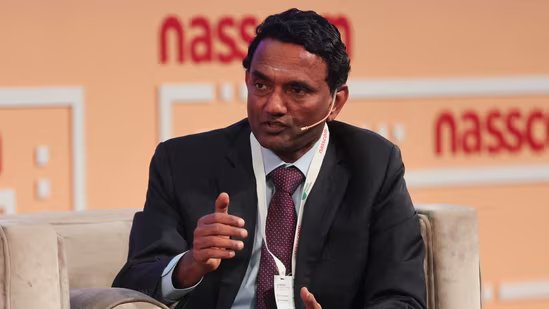
Tata Consultancy Services Ltd. is “not afraid” of AI or “revenue cannibalisation” due to AI tools used by clients. In fact, India’s largest IT services firm is pushing employees to use AI tools to deliver work faster and cheaper. TCS CEO Krithi Krithivasan at the Nasscom Technology and Leadership forum in Mumbai on Wednesday, 25 February 2026. (Reuters) “We are telling associates that if you find that you can do something faster, better, cheaper with AI, you should probably go and tell your customers (about that) even if it cannibalises revenue,” TCS CEO Krithi Krithivasan said at the Nasscom Technology and Leadership Forum in Mumbai. “We are not afraid this technology will take away our livelihood. We believe it’s going to open up more, so you enjoy the benefits the more you do, and not by resisting the change.” Krithivasan’s take on AI comes even as the Nifty IT index has declined nearly 21% in February so far, putting the gauge of India’s top IT stocks on track for the worst monthly performance in nearly 23 years.
Tata Sons defers vote on Chairman Chandra’s new term in sign of power tussle| Business News
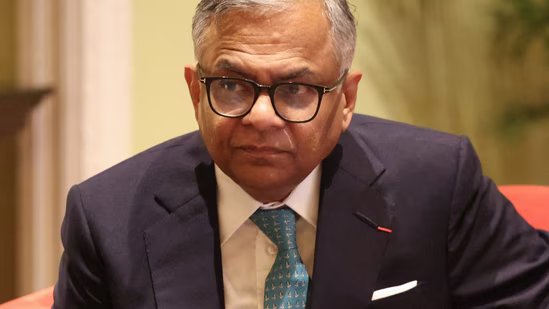
The board of Tata Sons Pvt. Ltd. deferred a decision on granting a third term to Chairman Natarajan Chandrasekaran, people familiar said, in the latest sign that another leadership tussle could be brewing at India’s oldest conglomerate. If Tata Sons Chairman Natarajan Chandrasekaran gets reappointed, it would provide leadership continuity for the group as it navigates headwinds across sectors. (AFP) The board of directors at Tata Group’s holding company discussed the reappointment in a meeting on Tuesday but did not take a final call as the current term runs till February next year, said the people, who asked not to be identified as the information is not yet public. The deferment follows a difference of opinion among board of directors regarding financial losses of certain business units, one person said. The Economic Times had reported this development earlier on Tuesday, days after the publication said Chandrasekaran was likely to get a third term. The decision signals another round of power struggle at the coffee-to-cars group that was shaken a decade back when its patriarch Ratan Tata came back from retirement to oust his successor Cyrus Mistry, triggering the country’s worst corporate battle. A spokesperson for Tata Sons did not immediately respond to an email seeking comment. Tata Group had a tumultuous time last year with multiple crises including a deadly Air India crash, a Jaguar Land Rover cyberattack, and renewed tensions at Tata Sons’ majority shareholder Tata Trusts, which is now led by Ratan’s half-brother Noel Tata. If the 62-year-old Chandrasekaran—the first non-family, non-heir chairman at Tata Sons—eventually gets reappointed, it would provide leadership continuity for the group as it navigates headwinds across sectors. For much of its 156-year history, Tata Group enjoyed unusually steady leadership, with chairmen drawn from within its trusted circle and transitions managed quietly. That calm was shattered in 2016, when Tata Sons abruptly ousted then-chairman Mistry in a boardroom coup led by Ratan Tata—a lifelong bachelor, who had no children to install in the role. The episode also raised questions about succession planning and the balance of power between Tata Sons and Tata Trusts, the charitable collective that controls two-thirds of the holding company. Chandra’s appointment in 2017 was meant to steady the ship and restore confidence. Under Chandra, Tata Group’s 15 largest listed companies almost doubled revenue and profits. His tenure has been defined by ambitious bets—from building India’s first homegrown semiconductor factory to steering cash-cow Tata Consultancy Services Ltd. through the disruption of artificial intelligence. The chairmanship decision will also show how Noel Tata is asserting himself after he took over Tata Trusts in 2024. Uncertainty is growing over how aggressively Noel plans to position himself and his children in the Tata power structure. His son, Neville, was appointed as a Tata Trusts trustee late last year while Mehli Mistry, an outspoken adversary, stepped down as a fellow trustee.
Money ‘will come back’: Haryana CM’s assurance after ₹590-cr ‘fraud’ in govt accounts at IDFC First Bank | Explained
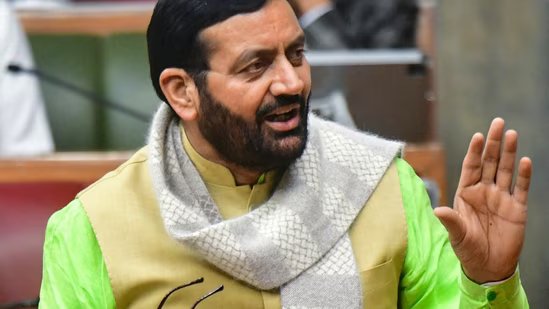
Haryana chief minister Nayab Singh Saini and Reserve Bank of India (RBI) governor Sanjay Malhotra on Monday gave assurances that the money is safe, after an alleged ₹590-crore fraud involving state government accounts came to light at IDFC First Bank. Haryana CM Nayab Singh Saini speaks during the ongoing budget session of the state assembly in Chandigarh on Monday, Feb 23, 2026. (PTI Photo) CM Saini told the Vidhan Sabha in Chandigarh that the money involved in the IDFC First Bank case “will definitely come back”. He also informed the House that the matter has been handed over to the Anti-Corruption Bureau (ACB) and the vigilance department, news agency PTI reported. He further noted that IDFC First Bank had communicated with the Securities and Exchange Board of India (SEBI) claiming an employee was responsible for the irregularities. In New Delhi, RBI governor Sanjay Malhotra said the central bank is “watching the development” surrounding the case but assured the public that “there is no systemic issue”. He clarified, thus, that the fraudulent activity was confined to a specific set of accounts and did not indicate a broader failure within the national banking system. The RBI’s statement followed a disclosure by IDFC First Bank reported on Sunday regarding the irregularities found at its Chandigarh branch. Nub of ₹590-crore question The suspected fraud was first detected when a Haryana government department requested to close its account at a Chandigarh branch of IDFC First Bank and transfer the balance to another institution, reports said. As reported by the Hindustan Times, the bank observed a significant difference between the balance reported by the department and the actual funds held in the account. Initial assessments by the bank identified a shortfall of ₹490 crore. Further internal reviews conducted by the lender identified an additional ₹100 crore in irregularities, bringing the total estimated discrepancy to ₹590 crore.”>approximately ₹590 crore. The bank’s regulatory filing to the National Stock Exchange (NSE) and the Bombay Stock Exchange (BSE) specified that these irregularities were limited to a specific group of government-linked accounts and did not impact other branch customers, HT has reported. How was ‘fraud’ carried out? The mechanics of the alleged fraud were detailed by IDFC First Bank managing director and CEO V Vaidyanathan during a conference call with investors, PTI reported. Vaidyanathan described the incident as a case of “employee fraud” involving the connivance of bank staff and external parties. The fraudulent activity utilised physical transactions involving cheques, he said. The CEO noted that the bank’s internal “fingerprints” and data clearly indicated the involvement of external entities. The bank management has currently found no evidence of involvement by its senior leadership, he added. Action and reaction so far Following the detection of the irregularities, the Haryana government is reported to have taken immediate administrative action. On February 18, the state’s finance department issued instructions to de-empanel IDFC First Bank and AU Small Finance Bank with immediate effect. These instructions were issued by the relevant additional chief secretary, and directed all state departments, boards, and public sector undertakings to cease all business with the two banks. While the initial instructions from the finance department did not state a reason for the move, Saini confirmed in the assembly that the de-empanelment was a direct response to the detected fraud. IDFC First Bank has suspended four officials suspected of involvement in the fraudulent transactions. The bank has also filed a formal police complaint and informed the banking regulator. To ensure an objective investigation, the bank is appointing an independent external agency to conduct a forensic audit, it has said. The bank’s regulatory filing noted that its statutory auditors have been informed of the discrepancies. Internal oversight committees, including the Special Committee of the Board for Monitoring and Follow-up of Cases of Frauds, met on February 20, followed by meetings of the audit committee and the board of directors on February 21, it explained. The disclosure of the alleged fraud had an immediate impact on the stock market, as shares of IDFC First Bank tumbled by around 20% on Monday, hitting the lower circuit limit of ₹66.85 on the BSE. AU Small Finance Bank, which was also named in the state government’s de-empanelment order, saw its shares fall by 7.6% to an intra-day low of ₹950.50. Political demands for accountability The issue became a point of debate in the Haryana assembly on Monday, where Leader of the Opposition and Congress MLA Bhupinder Hooda raised concerns about the security of state funds. Hooda noted that while the bank had detected the irregularities, the government must provide a full account of the actions taken to protect the public exchequer. In response to the opposition, Saini reiterated that the state government’s investigation is being conducted with transparency. He confirmed that the state crime branch is investigating the matter alongside the ACB. Saini assured the members that the government would not take the issue lightly and that any employee found to be involved would face strict consequences.
Rupee strengthens against US dollar amid Trump tariff tantrums| Business News

The Indian Rupee rose against the US Dollar today, aided by sharp decline in crude oil prices and a weaker greenback due to US President Donald Trump’s tariff tantrums. The rupee opened at 90.76 against the US dollar and then strengthened further to 90.73—up 21 paise from its previous close of 90.94 on Friday. (Reuters) At the interbank foreign exchange, rupee opened at 90.76 against the US dollar and then strengthened further to 90.73 — up 21 paise from its previous close of 90.94 on Friday. A positive start for India’s stock market and an increase in forex reserves is supporting the currency, according to forex traders. “The rupee opened stronger after the US Supreme Court’s decision on tariffs caused the dollar index to fall,” Anil Kumar Bhansali, treasury head and executive director at Finrex Treasury Advisors LLP, told Press Trust of India. “Most Asian currencies have gained from their Friday close.” He, however, said dollar buying sentiment continues in the market and could weigh on the rupee. “The rupee could be sold off as the day passes with dollar-buying sentiment continuing in the market,” he said. The dollar index is was trading lower by 0.33% at 97.47, as is Brent crude—down 1.09% at $70.98 per barrel. India’s forex reserves increased $8.663 billion to hit a new all-time high of $725.727 billion in the week ended 13 February 13, according to the Reserve Bank of India.