S&P 500 sinks 2%, US bond yields surge as Iran war shows no signs of abating| Business News

US stocks fell and bonds deepened losses as the Iran war showed no signs of de-escalation, heightening fears of a lengthy disruption to energy markets and a surge in inflation. Brent briefly topped $85. Traders work on the floor at the New York Stock Exchange in New York City on Tuesday, 3 March 2026. Markets are repricing for the risk of a more extended Iran war. (Reuters) In a broad selloff, the S&P 500 sank 2% toward its lowest since December. As soaring energy prices cast a pall over the ability of central banks to keep inflation in check, traders are now betting on fewer chances of two Federal Reserve rate cuts in 2026. Ten-year yields were set for their biggest two-day advance since April. The dollar rose. Gold halted a four-day rally. “Markets are repricing for the risk of a more extended Iran war,” said Krishna Guha at Evercore. “The duration of higher oil and gas is key.” Stocks on the Move The S&P 500 fell 2.1% as of 10:15 am in New York The Nasdaq 100 fell 2.1% The Dow Jones Industrial Average fell 2.3% The Stoxx Europe 600 fell 3.3% The MSCI World Index fell 2.6% The Iran war reverberated across the Middle East, with Tehran sending missiles at Qatar, Bahrain and Oman. Doha said targets weren’t limited to military interests. Israel said that it struck the leadership compound in Tehran and sent soldiers into southern Lebanon. Two drones struck near the US embassy in Riyadh, causing limited damage. An adviser to Iran’s Islamic Revolutionary Guard Corps commander told State TV that forces “will set fire to any ship attempting to pass through” Strait of Hormuz. While oil production in the region remains largely unaffected, flows through the vital shipping lane have been “significantly impacted,” the International Energy Agency said in a document seen by Bloomberg News. Currencies & Bonds The Bloomberg Dollar Spot Index rose 1.1% The euro fell 1.2% to $1.1548 The British pound fell 1% to $1.3271 The Japanese yen fell 0.2% to 157.75 per dollar The yield on 10-year Treasuries advanced four basis points to 4.07% Germany’s 10-year yield advanced six basis points to 2.77% Britain’s 10-year yield advanced 14 basis points to 4.51% Any suggestion that flows through this chokepoint could be restricted is enough to unsettle commodity desks, and recent developments have done exactly that, according to Fawad Razaqzada at Forex.com. “Markets are trading headline to headline. Energy is bid, equities are uneasy, and volatility is back on the agenda. Much will depend on whether tensions stabilise— or whether this proves to be the start of a more prolonged disruption to global supply,” he said. About 95% of the shares in the S&P 500 fell. The Russell 2000 index of small firms sank 3.5%. The yield on 10-year Treasuries climbed six basis points to 4.09%. The dollar rose 1%. A prolonged conflict in the Middle East pushing oil to $90-$100 for a sustained period would be a significant headwind for the global economy, according to Jennifer McKeown at Capital Economics. “Importers such as the eurozone would be hit hardest, while damage to production and export capacity would cap gains for exporters in the Middle East itself,” she said. “The adverse effects should be limited by central banks ‘looking through’ the shock and avoiding rate hikes, but cuts would probably be delayed.” Commodities Check West Texas Intermediate crude rose 8.4% to $77.18 a barrel Spot gold fell 5.4% to $5,035.53 an ounce Brent crude briefly tops $85/barrel Barring a prolonged disruption of global oil supplies, the conflict is unlikely to end the cyclical stock bull market by itself, according to Ed Clissold and Thanh Nguyen at Ned Davis Research, who has been tracking crisis events for decades—logging 59 since 1907. The market has tended to decline during the event itself, by an average of 7% and a median of 3%, they noted. Once the crisis has passed, the market has recovered within a few months, on average. The exceptions have been when a crisis damages the economy, such as the Bear Sterns collapse in 2008 or Arab oil embargo in 1973. “Assuming hostilities subside in the coming days or weeks, we would expect the market reaction to be similar to the majority of crisis events,” said the NDR strategists. Corporate Highlights Target Corp. forecast better-than-expected profit for the full year, indicating the big-box retailer’s turnaround plans are starting to generate results. Best Buy Co. reported profit for the holiday-shopping season that was better than expected. Apple Inc. updated its two main laptop computer lines, adding faster processors to the MacBook Air and MacBook Pro and raising prices amid an industrywide memory crunch.
Iraq halves output at Rumaila oilfield as Strait of Hormuz is blocked| Business News
Iraq has more than halved production at the world’s second largest oilfield after the Islamic Revolutionary Guard Corps declared the Strait of Hormuz closed amid an escalating Iran war. The Ministry of Oil (Iraq). (Reuters) Rumaila, a 1.2 million-bpd oilfield operated by the state-owned Basra Oil Co., has cut production by 700,000 bpd due to overloaded storage, Reuters reported on Tuesday, citing Iraqi officials. That, after a chocked Strait of Hormuz has slowed the arrival of tankers for crude oil exports. Production at the West Qurna 2 oilfield has also been cut, by 460,000 bpd. Iraq will be forced to cut its oil production by more than 3 million barrels per day in a few days if oil tankers cannot move freely through the Strait of Hormuz and reach its loading ports, the Iraqi officials said. Already, storage of crude oil has reached critical levels at Iraq’s southern ports, they said. Strait of Hormuz Traffic through the Strait of Hormuz was closed for a fourth day on Tuesday. On Monday, an IRGC official said Iran would fire on any ship trying to pass through, according to Iranian media reports. At least three oil tankers in the waterway have been attacked so far. Just 21 miles across at its narrowest, the Strait of Hormuz carries 20% of global oil and gas supply, everyday. Every major oil-producing nation in the Persian Gulf—Saudi Arabia, Iraq, Kuwait, the UAE, Qatar, Bahrain and Iran itself—must route its exports through this single passage. There is no overland alternative, no bypass canal, no pipelines. ALSO READ | Crude shock for India as it emerges most vulnerable to Iran war Iran war impact on Crude Oil, Gas The partial shutdown of the Rumaila oilfield comes a day after Saudi Aramco shut its Ras Tanura oil refinery after an Iranian drone attack at the facility. Elsewhere, Qatar has shut down the world’s largest LNG terminal at Ras Laffan, sending gas prices through the roof in Europe.
$20,000 drones take on $4 million patriots| Business News
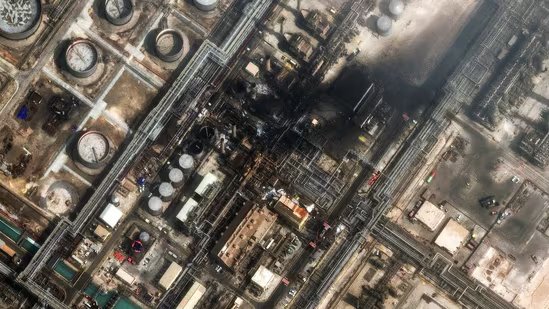
Just three days into the conflict, the Iran war has become attritional. Waves of drone attacks by the Islamic Republic are putting pressure on the defenses of the US and its partners from Bahrain to the United Arab Emirates, depleting weapons stockpiles. The outcome of the fight may depend on which side runs out of munitions first. This satellite image provided by Vantor shows damage after a drone attack at Ras Tanura oil refinery in Saudi Arabia on Monday, 2 March 2026. (AP) Shahed-136 one-way attack drones, small, rudimentary cruise missiles, continued to pound targets across the Middle East on Monday. The drones have in recent days hit US bases, oil infrastructure and civilian buildings, since the US and Israel air strikes on Iran — a barrage of cruise missiles, drones and precision-guided bombs — began on Saturday. US-made Patriot air-defense missiles have been largely successful in stopping the Iranian Shaheds and other ballistic missiles, with interception rates over 90%, according to the UAE. But using $4 million missiles to destroy $20,000 drones illustrates a problem that has haunted Western military planners since early in the Ukraine war: The cheap weapons can chew up resources meant for much more complex threats. The result is that both Iran and the US may run low on weapons in a matter of days or weeks. Whoever can last longer will gain a serious advantage. Iran’s regional proxies were severely weakened by the war in Gaza and its missile capabilities damaged by the earlier Israel-US attacks in a 12-day war in June. Since then the emphasis for Iran has been to escalate its warnings about the consequences and costs of a Trump strike, knowing that his supporters are broadly opposed to drawn-out, messy wars. Iran’s Supreme Leader Ali Khamenei — who died in Saturday’s air strikes — warned that a US attack would lead to wider conflagration embroiling the whole region. “Attrition strategy makes operational sense from Iran’s perspective,” said Kelly Grieco, a senior fellow at the Stimson Center think-tank. “They are calculating the defenders will exhaust their interceptors and the political will of Gulf states will crack and put pressure on the US and Israel to cease operations before they run out of missiles and drones.” Qatar’s stocks of Patriot interceptor missiles will last four days at the current rate of use, according to an internal analysis seen by Bloomberg News. Doha has been privately urging a swift end to the conflict. Iran was estimated to have about 2,000 ballistic missiles after last year’s conflict with Israel. It’s likely to have a much larger number of Shaheds, which Russia, the other main manufacturer, has been able to produce at a rate of several hundred per day, according to analysis by Becca Wasser, defense lead at Bloomberg Economics. Tehran has fired more than 1,200 projectiles since the start of this year’s conflict, with many — perhaps most — of them being Shaheds. That suggests they could be saving more damaging ballistic missiles for sustained attacks, Wasser added. Iran’s military is acting apparently without close or frequent coordination with the civilian leadership including the ministry of foreign affairs, according to Foreign Minister Abbas Araghchi. “Our military units are now in fact independent and somehow isolated and they are acting based on instructions, general instructions given to them in advance,” Araghchi, a veteran of the Islamic Revolutionary Guard Corps, said in an interview to Al Jazeera on Sunday. On the US side, Wasser added, strike planners are unlikely to have moved enough munitions to the region to continue for four weeks, as President Donald Trump has estimated they would. US Defense Secretary Pete Hegseth said at a news conference on Monday that: “This is not Iraq, this is not endless.” Defensively, Iran has little left to fight with. The aerial attacks in the opening hours of the war hit its surface-to-air batteries, the most modern of which were Russian-made S-300s. US and Israeli fighters have been operating in Iranian airspace without any reported difficulties since then. The US and its regional partners mainly use Lockheed Martin Corp. Patriot air-defense systems firing PAC-3 missiles. Although the Pentagon has pushed to increase production, only about 600 PAC-3 missiles were built in 2025, according to Lockheed. Based on how many missiles and drones have been reported shot down, thousands of interceptors have most likely been fired in the Middle East since Saturday. Saudi Arabia and the United Arab Emirates also operate THAAD, a Lockheed system designed to hit more advanced, faster moving missiles at the edges of the atmosphere. Those are unlikely to be used against anything else, and are even more expensive, at about $12 million per missile. The US has also used patrols of fighter jets using Advanced Precision Kill Weapon System missiles, which cost $20,000 to $30,000 each plus the operating cost of the jets. Purpose-built anti-drone defenses are less common in the region. Using lasers, automatic cannons or even other drones can be a cheaper way to protect towns, cities and installations, saving expensive systems for bigger problems. The Iron Beam laser developed by Israeli defense company Rafael Advanced Defense Systems is meant to address this issue, but the Israel Defense Forces said on Monday it had not yet been used in the conflict. If the current intensity of Iranian strikes continues, PAC-3 stockpiles in the region could run dangerously low within days, according to a person familiar with the matter who asked not to be identified discussing sensitive details. If offensive weapons do too, stalemate could take hold. “In the meantime, Iran’s inventory of missiles and drones may draw down and the regime itself might be able to remain intact, if in chaos,” said Ankit Panda, a senior fellow at the Carnegie Endowment for International Peace. “This seems to be a likely outcome based on the first 60 hours of this war.”
LNG prices surge by 50% in Europe after Qatar shuts world’s largest gas plant| Business News
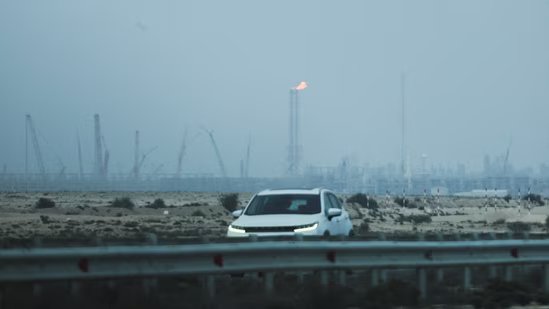
LNG prices in Europe surged more than 50% after Qatar shut down production at the world’s largest export facility after it was targeted in an Iranian drone attack. The unprecedented halt marks a dramatic escalation of the Iran war that now threatens energy security worldwide. A car passes near QatarEnergy’s LNG production facilities, amid the Iran war, in Ras Laffan Industrial City of Qatar on Monday, 2 March 2026. (Reuters) European benchmark gas futures jumped the most in nearly four years, after QatarEnergy confirmed on Monday that output had been suspended. Tankers had already largely stopped transiting the Strait of Hormuz—a critical artery for global fuel shipments. QatarEnergy’s Ras Laffan plant supplies about a fifth of global LNG supply. The situation risks the most serious shock to gas markets since Russia’s invasion of Ukraine four years ago upended global energy trade. While Asian countries buy most of the LNG shipped from the Middle East, any disruption would increase competition for alternative supplies—pushing up prices worldwide, including in Europe. The shutdown of the plant “marks an abrupt acceleration in the energy implications of the situation,” said Simone Tagliapietra, an analyst at Bruegel. “The threat to security of supply is here and now. The extent of it will depend on the duration of the shutdown, but we are now into a new scenario.” Shipping risks are compounding the disruption. The Strait of Hormuz is a key shipping route for energy, carrying about a fifth of the world’s liquefied natural gas exports. The dramatic slowdown of traffic through the waterway has created major bottlenecks potentially causing fuller storage tanks for QatarEnergy. More than half of the world’s largest maritime insurance clubs will stop providing war-risk cover for vessels entering the Persian Gulf starting Thursday, Bloomberg reported, a move likely to deter cargo loadings in the region. On top of that, Israel on Saturday ordered the temporary closure of some gas-producing capacities, including its biggest Leviathan gas field. That prompted major importer Egypt to seek more LNG cargoes. Gas trade disruptions in the Middle East could also eventually raise spot LNG demand from Turkey, according to BloombergNEF, as it imports pipeline fuel from Iran. “The price shock from the loss of Middle East LNG could be similar to 2022, after Russia’s invasion of Ukraine,” said Mike Fulwood, senior research fellow at the Oxford Institute for Energy Studies. Such a surge “could have dire consequences for government budgets in Europe and Asia.” The conflict continues to deepen, with blasts heard across Israel, Saudi Arabia, Qatar and the United Arab Emirates, as states intercepted Iranian missiles launched in response to US-Israeli strikes. US President Donald Trump said the bombing campaign against Iran could last for weeks.
Saudi Aramco shuts down Ras Tanura refinery after drone strike| Business News
Saudi Aramco has shut down its Ras Tanura refinery as a precautionary measure after the facility was hit by a drone, in an escalation of the Iran war that now threatens to ensnare the whole of the Middle East. Crude oil prices surged to $80/barrel on the news. The logo of Saudi Aramco. (REUTERS) Two drones were intercepted at the facility, with the debris causing a limited fire, a spokesperson for the Saudi Defence Ministry said on Al Arabiya TV, adding there were no injuries. The shuttering of Saudi Aramco’s Ras Tanura refinery—among the largest in Saudi Arabia—will likely add to supply worries as the Strait of Hormuz grinds to a near-halt. At least three tankers were attacked in the waterway that carries nearly a fifth of world’s crude oil supply daily. “The attack on Saudi Arabia’s Ras Tanura refinery marks a significant escalation, with Gulf energy infrastructure now squarely in Iran’s sights,” Torbjorn Soltvedt, principal Middle East analyst at risk intelligence firm Verisk Maplecroft, told Reuters. “The attack is also likely to move Saudi Arabia and neighbouring Gulf states closer to joining US and Israeli military operations against Iran.” The Ras Tanura complex, on the kingdom’s Gulf coast, houses one of the Middle East’s largest refineries with a capacity of 550,000 barrels per day (bpd) and serves as a critical export terminal for Saudi crude. Aramco did not immediately respond to an emailed request for comment. The drone strike added to a wave of attacks on the region, including on Abu Dhabi, Dubai, Doha, Manama and Oman’s commercial port of Duqm. Most of oil production in the Kurdistan region of Iraq, which exported around 200,000 bpd in February to Turkey, was shut down over the weekend as a precaution. Saudi Arabia’s heavily fortified energy facilities have been targeted previously, most notably in September 2019 when unprecedented drone and missile attacks on the Abqaiq and Khurais plants temporarily knocked out more than half of the kingdom’s crude production and roiled global markets. Ras Tanura was attacked by Yemen’s Iran-aligned Houthis in 2021, in what Riyadh called a failed assault on global energy security. Crude Oil Prices West Texas Intermediate, the light, sweet crude oil produced in the United States, was selling for $72.79 a barrel early Monday, up 8.6% from its trading price of about $67 on Friday, according to data from CME group. A barrel of Brent crude—the international standard—was trading at $79.41 per barrel early Monday, according to FactSet, up 9% from its trading price of $72.87 on Friday, at the time a seven-month high. Higher global energy prices mean consumers will pay more for gasoline at the pump and have to shell out more for groceries and other goods at a time when many are already feeling the impacts of elevated inflation.
Gulf stocks slide, Kuwait suspends trading as Iran responds to US-Israel attacks| Business News
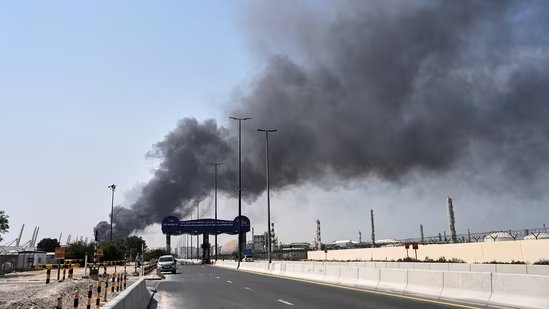
Most Gulf equities fell on Sunday and Boursa Kuwait suspended trading after US and Israeli strikes on Iran prompted retaliatory attacks across nearby US targets in Gulf cities, fanning fears of prolonged regional instability. Smoke rises after an Iranian drone attack in the port area of Dubai on Sunday, 1 March 2026. (AP) Witnesses reported blasts in the Dubai area and over Doha for a second day on Sunday, as Iran’s retaliation for US-Israeli strikes that killed Iran’s Supreme Leader Ayatollah Ali Khamenei forced major regional airports including Dubai to shut, in one of the biggest disruptions to global aviation in years. Trading in Middle East markets is an early indicator of how investors measure any impact on assets from oil to safe-haven currencies and gold. Analysts at Barclays raised their Brent crude forecast to about $100 a barrel on Saturday from an earlier estimate of $80. In a rare move, Boursa Kuwait suspended trade until further notice citing the “exceptional circumstances” the country is facing. In Saudi Arabia, the region’s biggest stock market, the benchmark index pared its losses to trade 2% lower compared with a 4.6% drop early in the session. Al Rajhi Bank fell 2.8% while Saudi National Bank and budget airline Flynas were down 4.8% and 5.8%, respectively. Saudi Aramco advanced 2.6% amid expectations of rising oil prices. The kingdom on Saturday said Iran had attacked Riyadh and the country’s eastern region. “GCC markets are likely to remain under pressure as investors price in a higher and potentially prolonged geopolitical risk premium following recent escalation in the region,” said Tahir Abbas, head of research at Oman’s Ubhar Capital. “While higher oil prices provide a near-term fiscal cushion for regional governments, the more material concern is the risk of affected shipping routes, particularly through the Strait of Hormuz, which would have broader implications for energy flows and trade.” Gulf stock markets face heightened correction risk and volatility as geopolitical tension drives a risk-off mood, pressuring prices and expectations, said XTB MENA Senior Market Analyst Hani Abuagla. Investors will track regional developments and any further escalation or real-economy damage could deepen the selloff, he said. The Muscat stock index trimmed its decline to 1.8% after sliding more than 3% in a broad-based selloff, with heavyweight OQ Base Industries falling 1.3%. Bahrain’s stock index was down 0.9% and Qatar’s stock exchange was closed for a bank holiday. Outside the Gulf, Egypt’s blue-chip index slumped 5.5% in early trade with all of its constituents in the red. Disruption to shipping traffic through the Strait of Hormuz also remains a key risk, weighing on sentiment and disrupting normal operations across a range of sectors, Abuagla said.
Maruti Suzuki up 7.13%, Mahindra up 19%| Business News

Updated on: Mar 01, 2026 12:48:54 PM IST The Maruti Suzuki Victoris, the latest offering from India’s largest carmaker. India’s biggest automakers, including the likes of Maruti Suzuki India Ltd. to Tata Motors Passenger Vehicles Ltd. and Royal Enfield, are reporting their auto sales in February 2026 amid expectations of a double-digit growth. Auto sales in February 2026 likely grew in the teens compares to a year ago, as the tailwinds of a GST rate cut on cars and new models continued to attract buyers to the showroom floor, according to Nuvama Institutional Research. “PV industry volumes likely to rise in teens in February 20226 (over 10% YoY in domestic market) supported by better affordability, new products and adequate financing availability.” Against that backdrop, here’s a look at which automaker sold how much in the month gone by. …Read More “PV industry volumes likely to rise in teens in February 20226 (over 10% YoY in domestic market) supported by better affordability, new products and adequate financing availability.” Against that backdrop, here’s a look at which automaker sold how much in the month gone by. Follow all the updates here: Mar 01, 2026 12:48:54 PM IST Auto sales in February 2026: Hyundai India Hyundai Motor India Ltd. has registered its highest ever February sales on the back of a 25% surge in exports. Hyundai India sales in February 2026 • India sales up 9.8% YoY at 52,407 units • Exports up 24.8% YoY at 13,727 units • Total sales up 12.6% YoY at 66,134 units “We kicked off 2026 with our highest ever monthly sales in January and the momentum continues in February,” Tarun Garg, chief executive officer at Hyundai India, said in a statement. Mar 01, 2026 12:31:15 PM IST Auto sales in February 2026: Mahindra Auto The auto sales of Mahindra & Mahindra Ltd. rose by nearly a fifth in February 2026 as outsized demand for its oversized cars continued unabated. Mahindra Auto sales in February 2026 • SUV sales up 19.03% YoY at 60,018 units • CV sales up 43.70% YoY at 9,190 units • Exports up 10.59% YoY at 3,384 units • Total sales up 18% YoY at 97,177 units Mar 01, 2026 12:16:36 PM IST Maruti Suzuki sales up 7.3% in February 2026 Sales of Maruti Suzuki India Ltd. rose in high single-digit percentages in February 2026, on the back of a surge in exports. Maruti Suzuki sales in February 2026 • Total India sales up 0.13% YoY at 161,000 units • OEM sales down 6.8% YoY at 10,710 units • LCV sales up 15,49% YoY at 3,130 units • Exports up 56.48% YoY at 39,155 units • Total sales up 7.31% YoY at 2,13,995 units
What’s at stake for crude oil markets as Israel, US pile up Iran attacks| Business News
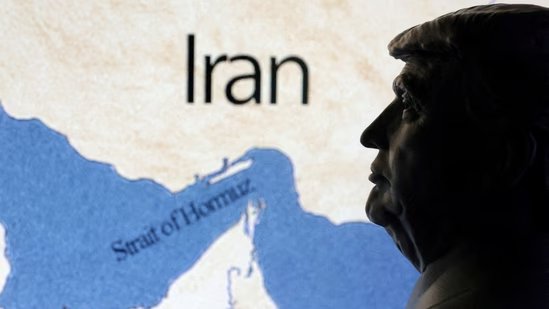
The Iran attacks by the United States and Israel create new risks for a significant chunk of the world’s crude oil supply. The Strait of Hormuz is the chokepoint for bulk of the Persian Gulf’s exports of crude, and also refined fuels like diesel and jet fuel. (Reuters) The Islamic Republic itself pumps about 3.3 million barrels a day, or 3% of global output, making it the fourth-largest producer in OPEC. But the nation wields far greater influence over the world’s energy supplies because of its strategic location. Iran sits on one side of the Strait of Hormuz, the shipping lane for about a fifth of the world’s crude from key suppliers including Saudi Arabia and Iraq. While the waterway remains open, some oil tankers were avoiding sailing through following the attacks and ships were piling up either side of the entrance, tracking data compiled by Bloomberg show. Oil markets are closed for the weekend, and there was no initial information on whether the attacks on Iran and the country’s retaliatory strikes across the region on Saturday targeted any energy assets. Here are the pressure points to watch in oil as events unfold. Iran’s Production Iran produces about 3.3 million barrels of oil a day, up from less than 2 million barrels a day in 2020, despite continued international sanctions. The country has become more adept at skirting these restrictions, sending about 90% of its exports to China. The largest oil deposits are Ahvaz and Marun and the West Karun cluster, all in Khuzestan province. Iran’s main refinery, built at Abadan in 1912, can process more than 500,000 barrels a day. Other key plants include the Bandar Abbas and Persian Gulf Star refineries, which handle crude and condensate, a type of ultra-light oil that’s abundant in Iran. The country’s capital Tehran has its own refinery. For Iran’s overseas shipments, the Kharg Island terminal in the northern Persian Gulf is the main logistical hub. There was an explosion in the island Saturday, according to Iran’s semi-official Mehr news agency, which didn’t provide more details or make any reference to the oil terminal. Kharg Island has numerous loading berths, jetties, remote mooring points and tens of millions of barrels of crude storage capacity. The facilities have handled export volumes exceeding 2 million barrels a day in recent years. US sanctions discourage most potential buyers of Iran’s crude, but private Chinese refiners have remained willing customers, provided they get steep discounts. Tehran relies for its international shipments on a fleet of aging tankers that mostly sail with their transponders deactivated to avoid detection. Earlier this month, Iran was rapidly filling tankers at Kharg Island, probably in an effort to get as much crude on the water and move vessels out of harm’s way in case the facility was attacked. It was a move similar to last June ahead of Israeli and US attacks. Any strike on Kharg Island would be a desperate blow for the country’s economy. Iran’s main natural gas fields are further to the south along the Persian Gulf coast. Facilities at Assaluyeh and Bandar Abbas process, transport and ship gas and condensate for domestic use in power generation, heating, petrochemicals and other industries. The area is the main point for Iran’s condensate exports. During the June war, an attack on a local gas plant sparked jitters among traders, but didn’t cause a lasting spike in oil prices because it didn’t affect any export facilities. Regional Dangers On 1 February, Iran’s supreme leader warned of a “regional war” if his country was attacked by the US. Tehran has claimed that a full closure of the Strait of Hormuz is within its power. It would be an extreme step that the country has never taken, but remains a nightmare scenario for global markets. Hormuz is the chokepoint for bulk of the Persian Gulf’s exports of crude, and also refined fuels like diesel and jet fuel. Qatar, one of world’s biggest liquefied natural gas exporters, also relies on the strait. At least three gas tankers going to or from Qatar had paused voyages following the latest attacks in the region, according to ship-tracking data. While OPEC members Saudi Arabia and the United Arab Emirates have some ability to reroute their shipments via pipelines that avoid Hormuz, closing the strait would still cause a massive disruption to exports and spike crude prices. There were signs of other Gulf producers also accelerating shipments in February. Saudi Arabia’s crude shipments averaged about 7.3 million barrels a day in the first 24 days of the month, the most in almost three years. Combined flows from Iraq, Kuwait and the United Arab Emirates were set to climb almost 600,000 barrels a day from the same period in January, as per data from Vortexa Ltd. In the past, Tehran has made retaliatory strikes on some of its neighbours’ energy assets. In 2019, Saudi Arabia blamed Tehran for a drone attack on its Abqaiq oil processing facility that halted production equivalent to about 7% of global crude supply. Many observers say it’s improbable that Iran could keep Hormuz closed for long, making lower-impact actions like harassment of shipping more likely. During last year’s war with Israel and the US, nearly 1,000 vessels a day were having their GPS signals jammed near Iran’s coast, contributing to one tanker collision. Sea mines are another long-threatened option for deterring shipping. Market Reactions Oil surged the most in more than three years during the June war, with Brent crude rising above $80 a barrel in London. However, the gains quickly faded once it became clear that key regional oil infrastructure hadn’t been damaged. Since then, concerns about an oversupply have dominated global markets, with crude in London ending 2025 about 18% lower than where it started. Despite those fears of a glut, prices have surged 19% this year, partly due to fears of US strikes on Iran. With the main oil futures closed for the weekend, there’s limited insight into how traders are
What a Warner Bros-Paramount colossus would look like| Business News

After months of binge-worthy gamesmanship, a victor has emerged in the saga to buy Warner Bros Discovery. On February 26th Netflix, the world’s biggest streaming company, bowed out of the competition, putting the legacy media giant on a path to merge with Paramount Skydance, controlled by David Ellison and his father Larry, the world’s sixth-richest man. Now, however, comes the hard part. Warner Bros Discovery-Paramount merger to form 210m-subscriber media giant after Netflix bows out Should the deal be consummated, it will create a colossus that includes streaming networks HBO Max and Paramount+, news channels CBS and CNN, and the rights to film franchises from “Harry Potter” to “Transformers”. What would have been a nice addition for Netflix—which coveted Warner’s catalogue and its ability to churn out Oscar-nominated content—is existential for Paramount, notes Robert Fishman of MoffettNathanson, a firm of analysts. On its own, Paramount lacks the scale to survive the streaming wars; with Warner, it stands a much better chance. The combined company will have around 210m streaming subscribers—still far fewer than Netflix, which boasts some 325m, but more than other competitors such as Disney. Even so, it is a bold gamble by the Ellisons and their investment partners. They are shelling out around $111bn to buy Warner, including its debt and a $2.8bn fee owed to Netflix, with which a deal had previously been agreed. That will be funded in part by borrowing $58bn. Adding in the debt already on Paramount’s balance-sheet brings the total pile to more than $70bn. Last year the two companies generated a combined operating profit (before depreciation and amortisation) of just $11bn. That amount of leverage was partly why Warner was initially reluctant to accept the Ellisons’ advances. Raising the price, and offering various guarantees, helped get a deal over the line. Paramount’s promise to release at least 30 films a year in movie theatres didn’t hurt either, given Tinsel Town’s fear of a Netflix-led annihilation of traditional cinema. Nor did signals from Washington that a Paramount takeover, unlike one by Netflix, would be waved through with little objection from trustbusters, thanks perhaps to the Ellisons’ chumminess with Donald Trump. The president recently declined to meet with Ted Sarandos, Netflix’s co-chief, during a White House visit, sending an aide in his stead, and has called on the streaming giant to fire Susan Rice, a board member who served in the Biden administration. The closure of the deal now seems likely, though not certain. Warner’s shareholders will have to approve the takeover at a meeting in April. Attorneys-general in California and other states may put up a fight if they feel that federal regulators failed to do their job. The antitrust police in Europe and elsewhere will also have to give the nod. If the Ellisons prevail, the real work will begin. Paramount Skydance Warner Bros Discovery will be indebted and unwieldy. The Ellisons have already foreshadowed a $6bn “cost-synergy opportunity”, which has Hollywood bracing for job losses. Assets may need to be sold off, too. Laurent Yoon of Bernstein, a broker, reckons that the deal gives the combined company “a shot at greatness”. But history suggests that media mergers often end badly—especially those that involve the studio behind Looney Tunes. This franchise may have another instalment yet.
OpenAI gets $110-billion funding from Nvidia, Amazon, SoftBank ahead of IPO

OpenAI Inc. has raised $110 billion in its biggest funding round yet led by Nvidia Inc., SoftBank Group Corp. and Amazon.com Inc. That pegs the Sam Altman-led company’s valuation at $730 billion ahead of a potential IPO. Sam Altman (PTI) Amazon.com Inc. is investing $50 billion in the financing round, OpenAI said Friday, by far the largest amount the e-commerce giant has put into any company. SoftBank Group Corp. and Nvidia Corp. each invested $30 billion, the company said. The firm’s new $730 billion valuation doesn’t include the money raised. Post-money, it’s now valued at $840 billion. OpenAI and rival Anthropic PBC have ramped up their fundraising this year to support costly bets on chips and data centers to support their artificial intelligence software. Increasingly, the two AI startups have tapped an overlapping group of venture funds and Big Tech investors. The large investment from Amazon, a longtime Anthropic backer, also tightens its relationship with OpenAI. As part of the agreement, OpenAI will use Amazon’s line of in-house AI chips, called Trainium, and jointly develop customized models for Amazon’s own engineering teams. OpenAI will also spend an additional $100 billion on Amazon Web Services over the next eight years. The two companies in November announced a deal under which the model builder would use some $38 billion in AWS services over seven years. “Amazon can deliver so much to us in terms of new demand and opportunities in the market,” OpenAI Chief Executive Officer Sam Altman said in an interview with CNBC on Friday. Andy Jassy, Amazon’s CEO, said the deal “will yield a good return for Amazon over a long period of time.” Microsoft Corp., one of OpenAI’s largest previous backers and formerly an exclusive infrastructure partner, said its relationship with the developer remains strong. “Nothing about today’s announcements in any way changes the terms of the Microsoft and OpenAI relationship,” the companies said in a joint statement Friday. Anthropic raised $30 billion in a funding round earlier this month from investors, including Nvidia and Microsoft. The financing valued Anthropic at $380 billion, including the money raised. The funding commitments mark the latest example of circular financing deals between leading AI startups and suppliers of chips and cloud computing. These tie-ups are intended to ensure the AI sector can meet its immense infrastructure needs, but the risk is such deals can magnify losses if demand for AI fails to match today’s lofty expectations. Altman downplayed the risk of such arrangements in the CNBC interview. “I get where the concern comes from,” Altman said. “This only makes sense if new revenue flows into the whole AI ecosystem.” He said much of his effort goes into trying to get more computing capacity to serve demand for ChatGPT and OpenAI’s other products. This is a developing story. More to come.