Gold stuck in Dubai is being sold at a discount as Iran war widens| Business News

Gold is being offered at a steep discount in Dubai, as the Iran war grounds flights and hampers suppliers’ ability to move bullion out of the key trading hub. People walk at the Dubai Gold market in Dubai on Tuesday, 3 March 2026. (AP) (AP) Many buyers have stepped back from new orders, unwilling to pay exceptionally high shipping and insurance costs with no guarantee of prompt delivery. As a result, rather than paying indefinitely for storage and funding, traders are offering discounts of as much as $30/ounce to the global benchmark in London, according to people with knowledge of the matter, who asked not to be named discussing market information. Many shipments remained stranded on Friday, the people said, although some bullion had been loaded onto flights leaving Dubai from the middle of this week. The United Arab Emirates, and Dubai in particular, is an important centre for refining and exporting bullion to buyers across Asia, as well as a conduit for shipments from Switzerland, the UK and several African countries. Its airspace has been partially closed due to a barrage of Iranian missiles as the US-Israeli war with Tehran extends for a seventh day with no sign of resolution. Gold is typically transported in the cargo holds of passenger aircraft. Even with flights from the UAE severely restricted, traders and logistics firms are reluctant to transport high-value cargoes overland to airports in countries such as Saudi Arabia and Oman, due to the risks and complications involved, particularly when transiting land borders. “Several cargo shipments have been delayed or stranded, leading to short-term tightness in the availability of physical bullion in India,” said Renisha Chainani, head of research at Augmont Enterprises Ltd., one of India’s largest gold dealers. But buyers in India—one of the largest consumers of gold shipped from Dubai—can afford to wait, with near-term demand relatively muted and inventories swollen by a large volume of imports in January, said Chirag Sheth, principal consultant for South Asia at Metals Focus. “As of now, there is ample stock,” he said, “but if this drags on for a few months, then there will be a problem.” Spot gold has gained nearly a fifth so far this year, gaining a footing above $5,000 an ounce, though trading has been choppy and the metal has come under pressure this week as the dollar has strengthened. There are also some signs that refiners are encountering challenges in sourcing doré—semi-refined gold bars typically cast at the mine site. India’s largest precious metals refinery, MMTC-PAMP, gets around 10% of its doré from a mine in the Middle East, but supplies have been disrupted, said Chief Executive Officer and Managing Director Samit Guha. For new contracts supplied from elsewhere, logistics costs have soared by 60% to 70% since the war began, he said.
Oracle layoffs to impact thousands in AI cash crunch| Business News

Oracle Corp. is planning to ax thousands of jobs, among its moves to handle a cash crunch from a massive AI data centre expansion effort. Oracle Chairman Larry Ellison. Last month, Oracle said that it would raise as much as $50 billion in 2026 to fuel its AI data centre plans. (Reuters) The Oracle layoffs will affect divisions across the company and may be implemented as soon as this month, according to people familiar with the matter who asked not to be named discussing the still-private plans. Some of the cuts will be aimed at job categories that the company expects it will need less of due to AI, two of the people said. Led by Chairman Larry Ellison, Oracle is embarking on a historic build-out of data centres to power AI workloads for customers such as OpenAI Inc. The company, long known for its database software, has been making a transition the past few years to bulk up its cloud computing unit with a focus on AI, intending to become a viable competitor to market leaders Amazon.com Inc. and Microsoft Corp. Wall Street projects the expenditures by the cloud unit for data centres to push Oracle’s cash flow negative over the coming years before the spending begins to pay off in 2030, according to data compiled by Bloomberg. Last month, Oracle said that it would raise as much as $50 billion this year through a combination of debt and equity sales. The extent of Oracle layoffs The Oracle layoffs being planned are expected to be wider-reaching than the company’s typical rolling job cuts, according to the people. This week, Oracle announced internally that it would be reviewing many of the open job listings in its cloud division, effectively slowing down or freezing the hiring process, according to people with knowledge of the move. Oracle declined to comment. The company had about 162,000 employees globally as of the end of May 2025. Planning for the workforce reductions is still active and could change, the people said. The cost of AI data centres — human layoffs Oracle’s initial moves as an AI cloud provider drew favour from investors, who boosted the stock 61% in 2024 and 20% last year. But as the costs increased, the market has soured on the company, with the shares falling 54% from their September 2025 high through Wednesday’s close. The high up-front costs of AI have fueled cuts across the tech industry as companies work to balance their budgets. Microsoft fired some 15,000 people last year amid rising spending on data centres and AI software development. Last week Block Inc. announced that it would lay off nearly half of its staff, with co-founder Jack Dorsey citing the efficiency-boosting power of AI. In September, Oracle disclosed in a filing that it was planning its largest-ever restructuring, which will cost as much as $1.6 billion in the current fiscal year ending in May, including severance checks to exiting employees. That was significantly larger than any other similar plan Oracle has disclosed. The company is scheduled to announce its fiscal third-quarter earnings on Tuesday.
Jio IPO to miss timeline due to delay in changes to SEBI listing rules| Business News
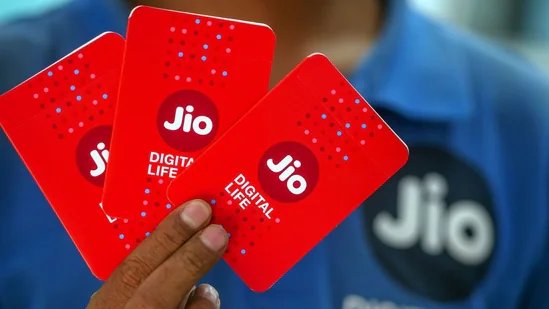
The government’s delays in formalising changes to listing rules are threatening to miss the timeline for Jio Platforms IPO. A Jio Platforms IPO—the first listing of a major Reliance unit in almost 20 years—could be the country’s biggest ever. (Bloomberg) Reliance Industries Ltd., the parent company of Jio Platforms Ltd. is waiting for the government to formalise the changes to appoint bankers and file draft IPO papers, according to people familiar with the matter who asked not to be named because the discussions are private. The company is now aiming to file the draft red-herring prospectus before April, depending on the government notification. Jio, which owns India’s largest wireless operator, is one of the crown jewels of Ambani’s empire. A Jio IPO—the first listing of a major Reliance unit in almost 20 years—could be the country’s biggest ever. Investment bankers have proposed a valuation of as much as $170 billion (about ₹15.5 lakh crore) for the company, which would offer a rare opportunity for investors to buy into one of world’s biggest growth stories of the past decade. During an annual general meeting in August 2025, RIL Chairman Mukesh Ambani had disclosed plans to list Jio Platforms in the first half of 2026. A top-end valuation could raise about $4.3 billion by selling the minimum stake and would place the company among the biggest companies in India by market value. Meta Platforms Inc. and Alphabet Inc. announced investments totaling more than $10 billion in Jio in 2020. Deliberations are ongoing and details of the Jio Platforms IPO, including timing and size, may change, the people said. Reliance Industries declined to immediately comment. Representatives for the finance ministry didn’t immediately respond to requests for comment. In September 2025, the Securities and Exchange Board of India (SEBI) approved amendments to its regulations, allowing companies with a post-issue market capitalisation exceeding ₹5 lakh crore to dilute as little as 2.5% in an IPO, rather than the current minimum of 5%. The rule change is a possible catalyst for mega listings such as Jio and National Stock Exchange of India, but doesn’t yet have final government approval. It’s unclear what the holdup is and there is no indication that the delay is targeting the Jio IPO in particular. The next step, which can usually take as long as a few months depending on government deliberations, is for the finance ministry to formally incorporate the changes and announce them in the Official Gazette, said Sonam Chandwani, managing partner at KS Legal & Associates. “While the regulator has paved the way, the industry is now awaiting the final gazette notification, which we expect to see materialise in the first half of 2026,” said Ankita Singh, founder of law firm Sarvaank Associates. NSE, meanwhile, is proceeding with plans to raise as much as $2.5 billion in an IPO. The company last month invited banks to pitch for roles in the offering. The two share sales would provide a much needed shot in the arm for the Indian market, where listings have struggled to start 2026 after two consecutive years of record fundraising.
Morgan Stanley cuts India exposure on LNG shock from Iran war| Business News
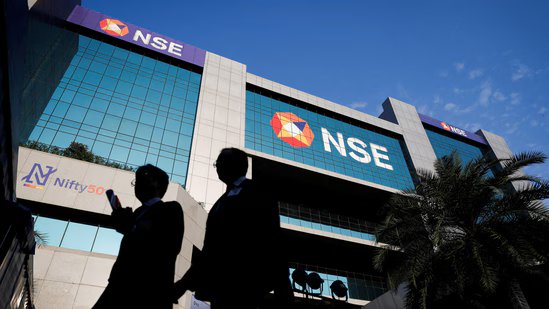
Morgan Stanley is adopting a more cautious stance on Asian equities, trimming its India exposure on concerns that the Iran war may disrupt supply chains if oil flows through the Strait of Hormuz fail to recover. The National Stock Exchange building in Bandra Kurla Complex, Mumbai. Since the Iran war began, foreigners have withdrawn about $1.3 billion from India. (Livemint) “We stay defensive,” Morgan Stanley strategists including Daniel Blake and Jonathan Garner wrote in a note dated 5 March 2026. “Asia remains critically dependent on Middle Eastern supply of crude oil, refined products and LNG and we believe the market is too complacent about supply chain risks.” The strategists downgraded India from overweight to equal-weight in their latest reshuffle, citing the country as one of the Asian markets most exposed to potential Qatari LNG supply disruptions. With uncertainty around AI and high valuations, global investors may wait—possibly until South Korea and Taiwan’s tech cycle peaks—before shifting back toward India, they said. Morgan Stanley’s shift highlights rising geopolitical risks as the Iran war reshapes energy flows and risk premiums. Prolonged disruption in the Strait of Hormuz could lift oil and LNG prices, pressure energy-importing Asia, and trigger earnings downgrades. Concerns are mounting that a sustained supply shock may spark a global economic slowdown, undermining key export industries. Global investors are pulling money out of emerging Asia’s major markets. Since the war began, foreigners have withdrawn about $1.3 billion from India. Taiwan and Korea have seen even larger outflows this week—$7.9 billion pulled from Taiwan, set to mark foreigners’ biggest weekly exodus from the island, and $1.6 billion taken out of Korea. Morgan Stanley’s latest changes come about a week after predicting that emerging markets are poised for their strongest earnings growth stretch since the 2002–2004 super‑cycle, fuelled by surging AI investment. In their latest note, the Morgan Stanley strategists also cut the United Arab Emirates to equal-weight from overweight, while upgrading Taiwan and Saudi Arabia to equal-weight from underweight. South Korea was kept at equal-weight, even as the strategists noted its “powerful thematic drivers”. They also maintained overweight positions in Japan and Singapore. In recent months, Morgan Stanley has added resource‑themed stocks to its recommended list, citing rising prices in copper and other physical assets. Strong AI demand and data‑centre expansion have driven these gains, with Australian materials and Thai energy stocks poised to benefit, Garner said at a conference in Sydney this week.
Adani triples LNG price for industrial users as Iran war disrupts supply| Business News
Adani Total Gas Ltd. has tripled LNG prices for industrial consumers exceeding their daily quota, in what is seen as a direct fallout of an escalating Iran war choking India’s energy supply. The corporate headquarters of Adani Group in Ahmedabad. (Reuters) The city gas distributor—a joint venture between billionaire Gautam Adani’s conglomerate and France’s TotalEnergies SE—raised LNG rates for volumes consumed beyond 40% of daily contracted limits to ₹120 per standard cubic metre from ₹40, Bloomberg reported citing sources. The price revision took effect at 6:00 am on Wednesday. A spokesperson for Adani Total Gas did not immediately respond to Bloomberg’s request for comment. Qatari Supply Crunch The price surge underscores India’s acute vulnerability to maritime disruptions. Domestic consumers are facing a severe supply squeeze after Qatar’s Ras Laffan plant—the world’s largest LNG terminal—halted operations following an Iranian drone strike. The outage is particularly bruising for New Delhi, which relies on imports for half of its natural gas needs, with Qatar accounting for 50% of those overseas shipments. Industrial and commercial units represent roughly 30% of Adani Total’s demand profile. Unlike the residential segment, which receives priority allocation of cheaper domestic gas, this bulk demand is met entirely through expensive LNG imports purchased on the spot market. Force Majeure Risks The crisis is rippling through India’s energy infrastructure. Peers including Petronet LNG Ltd. and Gujarat Gas Ltd. have already invoked force majeure clauses to limit deliveries, citing an inability to secure scheduled shipments. Adani Total currently operates across 53 geographical areas, reaching roughly 14% of India’s population through its direct footprint and a separate venture with Indian Oil Corp. Ltd. The sudden cost escalation is expected to pressure margins for energy-intensive sectors, including ceramics, glass, and chemicals, which rely on the company’s network for steady fuel.
Morgan Stanley cuts 2,500 jobs amid record revenue but the reason is not AI| Business News
Morgan Stanley has effected layoffs to cut about 3% of its workforce, or roughly 2,500 employees, despite a record year for revenue. As on 31 December 2025, Morgan Stanley had 82,992 employees. (Reuters) The job cuts were across the bank’s three major divisions: investment banking and trading, wealth management, and investment management, but do not affect its financial advisors, WSJ reported. The Morgan Stanley layoffs are based on strategy and individual performance, and the bank intends to add headcount in other areas. As on 31 December 2025, Morgan Stanley had 82,992 employees. The Morgan Stanley layoffs come against the backdrop of a record year for revenues the US-based investment bank. It also beat Wall Street estimates for fourth-quarter profit in January, fueled by a 47% jump in investment banking revenue as dealmaking surged and debt underwriting fees nearly doubled. Banking executives had struck an optimistic tone for 2026 on the back of healthy pipelines for M&A deals as well as IPOs. Meanwhile, volatile markets amid worries of AI disruption to legacy technology businesses and geopolitical turmoil continue to boost trading desks as clients reposition portfolios to hedge against risks. There have been massive layoffs across US companies since the start of this year, as they streamline operations amid rising adoption of AI tools.
Xiaomi Vision GT, Stuffcool’s Zeno 65W and rooting Android| Business News

Opening thoughts. Motorola is partnering with GrapheneOS. That’s the headline, which may have probably got more folks to sit up and take notice in 2014 than it does in 2026, but it’s important nonetheless. The Xiaomi Vision Gran Tourismo concept. Clearly, Xiaomi is now making cars that would worry European automakers as well as a brand that seemingly has a superiority complex—Tesla. (Handout) Motorola, a Lenovo company, is well-known in the Android smartphone ecosystem. GrapheneOS Foundation builds what it says is a privacy and security-focused mobile OS that’s based on Android. What does this mean? Future Motorola smartphones will support this OS, if a user wishes to switch. GrapheneOS says the first such Android devices under the Motorola brand name will arrive at some point in 2027, though it isn’t confirmed if anything from the current portfolio will adopt this OS support anytime soon. Are we returning to the days when Android enthusiasts could really tweak their phones? A more refined version of “rooting”, perhaps? EDITOR’S CORNER Xiaomi Vision Gran Tourismo There is something quite crazy happening at the intersection of electric mobility and technology companies, and I’ve a few opinions on that. Xiaomi Corp., along side an impressive 17 Series smartphones as well as a few other product line-ups, also made another move in the automotive space. Even as they confirm that more than 500,000 EVs were delivered by the company in 2025—the company’s EV portfolio includes the SU7 sedan and its variants, the SU7 Ultra high-performance sedan and the YU7 SUV—they clearly are learning fast about making cars that would worry European automakers as well as a brand that seemingly has a superiority complex—Tesla Inc. At the Mobile World Congress, the company showed off their all-electric hypercar concept—the Xiaomi Vision Gran Turismo. Jaw-droppingly impressive. The silhouette, contours, the cutouts and sculpting of finer elements, need to be absorbed and appreciated, rather than just looked at as you typically would in a car. “Electric hypercars must answer a fundamental question. Do we pursue extreme low drag for straight-line speed, or maximum downforce to conquer corners? The optimal solution lies in finding the perfect balance between the two,” Tianyuan Li, design head of Xiaomi EV, said at the unveil. While it is primarily a digital-only concept, Xiaomi has detailed the high-performance architecture underpinning the design. The powertrain is built on Xiaomi’s proprietary 900V Silicon Carbide (SiC) platform, and power levels are expected to be close to 1,900 horsepower—a theoretical beast in the making. The cockpit includes a “sofa racer” driver’s seat and a butterfly-shaped steering wheel with integrated display, as well as a panoramic screen stretching across the dash, and a drive selector styled like an aircraft throttle. The driver will interact with the Xiaomi Pulse system, which uses light and sound. This is a strengthening of Xiaomi’s Human X Car X Home philosophy. And a first for a tech company, that puts it in the same hypercar conversation as the Koenigsegg Jesko Absolut, the Bugatti Tourbillon, the Pagani Zonda as well as the upcoming Ferrari F80 and McLaren W1. That is no mean feat. TECH SPOTLIGHT Stuffcool Zeno 65W There’s an age old adage, good things come in small packages. The smartphone industry doesn’t seem to believe much in that anymore, but the accessory ecosystem surely does. Stuffcool’s latest gallium-nitride (GaN) charger, the Zeno 65W, follows the template of something we’ve had a conversation about earlier, the Zeno 30W charger. The key difference, you’d have perhaps figured this out with the naming scheme itself, is that there’s now more power, which makes this a better fit for fast charging smartphones, tablets and even enough grunt for certain laptops. In terms of size, there’s negligible difference between the siblings, while retaining the uniqueness of a retractable USB-C type cable with the flat design that extends as much as 25 inches. The key is to be gentle with this extension and retraction. This is essentially an incredibly versatile travel accessory and a workstation charger, with the retractable cable plus a USB-C port on the charger itself. Each method will deliver 65W charging speed when used singularly, and will be shared at around 30W when both are in use. At ₹2,999 for the Zeno 65W (this is PD PPS output, or Power Delivery Programmable Power Supply Standard), it is hard to argue against its utility, value and convenience. After an initial surge for a couple of minutes, it is impressive how this compact charger manages to stay cool. If you travel a lot, with a couple of phones or indeed a phone or tablet combination in tow, you would be hard-pressed to find a charger that’s so capable, whilst being this compact. Every gram matters, when you’re lugging that weight around an airport. SECOND THOUGHTS Leica Leitzphone, powered by Xiaomi Those of you who follow my pieces on Hindustan Times regularly would remember what I had written about the Xiaomi 17 Ultra By Leica edition a few weeks ago. That was an early access at the version of the smartphone otherwise meant for China, but, well, the extraordinary camera capabilities don’t change regardless. The same phone will now arrive in some markets, as the Leica Leitzphone powered by Xiaomi. Leica’s heritage doesn’t make its red dot logo available for a product, just like that. In my book, the big takeaway is the evolution (and strengthening of) the Xiaomi and Leica partnership, at a time when OnePlus has lost the Hasselblad ticket and Zeiss’ alignment with Vivo is more about maintaining status quo. All the ingredients are there on the camera front, something I had detailed in my experience piece. The Leica and Xiaomi collective philosophy that tugs at the strings of my heart—hardware and image processing finesse cannot be replaced by AI. And to that point, AI is kept absolutely optional in the Leica Leitzphone powered by Xiaomi. No prizes for guessing, I’d kept it off even at 120X zoom levels. That’s all folks. Stay tuned for next week’s Neural Dispatch
MacBook Neo marks Apple’s bold return to affordable laptops| Business News

The Apple MacBook Neo, not to be confused with a MacBook Air or MacBook Pro, marks the return of a truly affordable laptop to Apple Inc.’s portfolio. The Apple MacBook Neo, with a 13-inch screen, is available in two variants (differentiated between 256GB and 512GB storage), priced at ₹69,900 and ₹79,900, respectively. At $599, or ₹69,900, onwards, the Apple Macbook Neo is very relevant for some markets, including India—the attempt is to compete with the troika of mid-range Windows 11 laptops, Google Chromebooks as well as some Android tablets with a keyboard slapped on. The approach straddles a blend of Apple’s iPad and iPhone elements too, including a foundation provided by the A18 Pro chip that also powers the iPhone 16 Pro series. Apple MacBook Neo: The specifications The MacBook Neo, with a 13-inch screen, is available in two variants (differentiated between 256GB and 512GB storage), priced at ₹69,900 and ₹79,900 respectively. The A18 Pro chip is configured with a 6‑core CPU including 2 performance cores and 4 efficiency cores, a 5‑core GPU, and a 16-core Neural Engine for Apple Intelligence. The suite, along with the Siri voice assistant, is expected to receive significant updates in the coming weeks. “We’re incredibly excited to introduce MacBook Neo, which delivers the magic of the Mac at a breakthrough price,” said John Ternus, Apple’s senior vice president of Hardware Engineering. “There is simply no other laptop like it.” There is an element of historical significance underlining the 2026 return of the MacBook Neo albeit with a modern naming scheme, as it takes forward a legacy of the original polycarbonate MacBook that was sold between 2006 and 2012, and the 12-inch MacBook with the Retina display, that was in the market from 2015 to 2019. The MacBook Neo also has a 13-inch Liquid Retina display with 2408 x 1506 resolution, 500 nits of brightness, and support for 1 billion colours, Apple confirms. The company also claims up to 16 hours battery life with the MacBook Neo, though true to Apple’s style, capacity details haven’t been specified. It’ll ship with a 20-watt USB-C adapter. Focus remains on portability with a fanless design, tipping just 1.22kg on the scales, despite the aluminium chassis. There are two USB-C ports, as well as a 3.5mm headphone jack, while wireless connectivity is ticked off with Wi-Fi 6E. By utilising the A18 Pro silicon, on the 3-nanometer architecture, Apple has repurposed a chip that was otherwise advancing towards being filed as a previous generation spec. Performance will be significantly different from an iPhone, considering the larger chassis it resides in, with an elaborate active and passive cooling architecture in support. Apple’s attempt to offer a more stable and performance oriented experience at price points where Windows laptops tend to offer certain compromises, and Chromebooks as well as Android tablets have platform limitations, may resonate with potential buyers. Apple has Intel in its sights, noting that apps including Messages, WhatsApp, Canva, Excel, Safari, and other everyday tasks, will be up to 50% faster “than the bestselling PC with the latest shipping Intel Core Ultra 5”. “And for more demanding activities, it’s up to 3x faster for on-device AI workloads and up to 2x faster for tasks like photo editing.” There is also the element of colours, something that’s been a regular feature with the iPad and iPhone lines, and further helps with the personalisation aspect. At this time, the MacBook Neo rolls out with the option of Silver, Blush, Citrus, and Indigo. The MacBook’s launch is likely to bookend a slew of announcements by Apple this week, including the iPhone 17e, a refreshed iPad Air, new M5 Pro and M5 Max chips that arrive with the new MacBook Pro range, updates to the Studio Display and Studio Display XDR, as well as the MacBook Air refresh that arrives with the M5 chip. In fact, the recalibrate pricing of the new MacBook Air with M5, at ₹1,19,900 onwards and higher than the ₹99,900 launch price of last year’s M4 chip powered edition, opens a wider window for the new MacBook to slot in to.
Gas shortage hits ceramic hub in Gujarat’s Morbi as Iran war widens| Business News
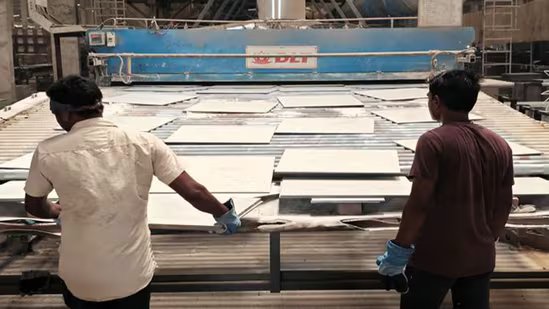
The ceramic industry in Gujarat’s Morbi district is facing a looming production crisis as an escalating Iran war chokes the supply of essential natural gas. A ceramics unit in Morbi. (ANI) “Most of the gas and petroleum products come from GCC countries,” said Manoj Arvadiya, president of Morbi Ceramic Manufacturers Association. “Currently, all vessels passing through are being stopped at an area controlled by Iran. A complete barricade has been erected there.” Shipping through the Strait of Hormuz, which carries nearly nearly half of India’s crude oil and gas supply every day, has come to a halt as the Iran war intensified and spread across the wider Middle East. Tehran’s drone attacks, in retaliation to missile operations by Israel and the United States, have forced Qatar to shut down the world’s largest LNG terminal in Ras Laffan. Separately, Saudi Aramco has closed its Ras Tanura refinery, and Iraq has cut oil production as there’s no way to evacuate the output. Iran war impact on India For the manufacturers in Morbi—the world’s second-largest ceramic hub—the stakes are existential. Arvadiya said the industry is almost entirely dependent on gas-fired kilns. “If the gas supply is not adequate, we anticipate that the entire Morbi Ceramic Industry will have to be shut down,” he said, adding that the gas shortage could lead to a total shutdown if logistics do not improve. New Delhi Projects Calm Despite the industry’s alarm, New Delhi maintains that India’s energy security remains intact. The country holds eight weeks of crude oil and petroleum inventory, including strategic reserves. Officials further downplayed the impact of the Iranian blockade, asserting that only 40% of India’s crude imports transit through the Strait of Hormuz. While the government continues to monitor the situation closely, they insist that diversified sourcing and existing stockpiles leave the country in a “comfortable position” to manage potential supply-side shocks.
PhonePe targets IPO valuation lower than at its last funding round| Business News

PhonePe Ltd., India’s largest payments app controlled by Walmart Inc., is aiming for a valuation of $9 billion-10.5 billion in an IPO in 2026, according to sources. PhonePe is India’s largest UPI app by user base. (HT) That kind of valuation pegs the size of the PhonePe IPO at $900 million to $1.05 billion, but that’s still smaller that the $12-billion valuation that the company enjoyed when it raised $100 million in 2023. Walmart is planning to offload about 12% stake in the PhonePe IPO, which will give an exit to investors Tiger Global and Microsoft Corp, according to a draft red-herring prospectus filed with India’s market regulator. In all, the three companies will sell 50.7 million shares in the PhonePe IPO. No new shares will be on offer. PhonePe, which competes with Google Pay and Paytm in India, filed for its IPO in September 2025 and aims to complete the process by April 2026, sources said. The timeline could shift depending on capital market conditions, including any impact from the ongoing, and escalating, Iran war. PhonePe’s listing would make it India’s second-largest fintech IPO, after Paytm’s $20 billion debut in 2021. Paytm currently trades at a market capitalisation of $7.1 billion. PhonePe financials PhonePe has more than 650 million registered users and processed nearly 10 billion of the 21.7 billion transactions on UPI in January, according to regulatory data. But payments in India remain a low-margin business. India launched UPI in 2016 and barred companies from charging fees for the instant payment service to spur digital payments and reduce cash use in Asia’s No.3 economy. PhonePe’s losses widened to ₹1,444 crore in the six months to 30 September 2025, from ₹1,203 crore a year ago, while revenue rose about 22% to ₹3,918 crore, according to its IPO papers. PhonePe IPO: Valuation Concerns Two portfolio managers, who met the company’s management in IPO roadshows, said excitement around the country’s fintech sector had cooled and that there were lingering questions around PhonePe’s ability to monetise its user base—a key reason it may not achieve a valuation closer to its last funding round. ALSO READ | The need for an urgent rollout of UPI market-share caps “Monetisation remains a question mark. Active users aren’t growing at the same pace so the game is all about upsell and that remains to be seen,” one of the portfolio managers said. Investors also see India’s fintech market as overcrowded with little differentiation among players, said a third source, a banker to the issue.