Screen and real innovation, for your eyes only| Business News
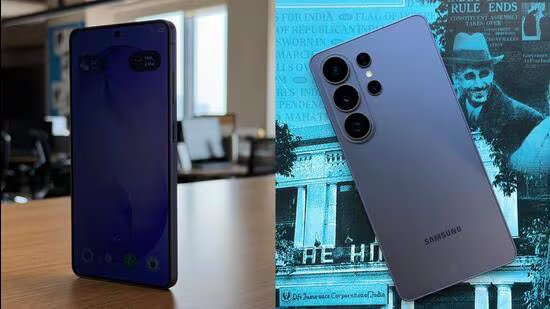
If you contextualise the Samsung Galaxy S26 Ultra as just another flagship generation based on new specs compared with the previous generation, it’d be fallaciously simplistic. There are of course generational steps forward in terms of the hardware and specs, and nothing less is to be expected. However, Samsung’s focus is steadfast on capabilities and finesse that defines experience. Case in point, the Privacy Display. Another case in the same point, Horizontal Lock for video recordings, to keep videos level even if your angles aren’t. One more? The APV video codec, or Advanced Professional Video. To some these may seem a generational given, but switch to another Android flagship and you’ll realise that isn’t the case. This is the world’s first phone with a Privacy Display built at a hardware level. (Vishal Mathur/ HT Photo) As has often been the case with recent Galaxy flagship iterations, including the Galaxy S25 Ultra, Samsung is bumping up the base spec combination from 12GB memory and 256GB storage to 12GB memory and 512GB storage for the entry spec price point of ₹1,39,999 — which they say is for a limited time; good value for early adopters, who have their credit cards dusted off and ready. The top-tier 12GB memory and 1TB storage is priced at ₹1,89,999 at this time. Once the initial base spec bump offer is done with, expect the 256GB storage variants to surface, while the 512GB storage option slots in-between. Chances are, pure spec upgrades may not excite you as much now, and that’s precisely why I shall talk about a feature that does give us a reason. The Privacy Display. It is a hardware innovation with software playing its part. This is the world’s first phone with something built at the hardware level. The magic really resides in the pixel architecture — when this mode is enabled, the pixels mode into something that can be classified as a narrow mode of illumination, straight forward and little escaping on the sides making it difficult to view contents from lateral angles. OLED display technology is meant to disperse light in a broader manner to each pixel, for better angled viewing otherwise. On the face of it, privacy tech may not be cool enough for some, but this is simply an illustration of this era of smartphones, where innovation has largely been spec driven with little else to go with that. The accessory market is full of screen protectors that claim similar privacy from side viewing, but unlike those (which variable results as well), Samsung’s deployment isn’t a forced solution. It can be turned on and off as a user’s will, and even configured for specific apps. Banking apps and two-factor authentication apps, one would assume, immediate beneficiaries. In our experience, this works brilliantly, in default setting as well as the more powerful “maximum privacy protection” setting. There is very little someone sitting beside you can make out about the contents on the screen in the former, and it’s absolutely akin to hitting a wall on the latter. That said, when this is enabled, there is a definite tint that overlays the screen even when looked at straight on, which isn’t great if your search is for colour accuracy or realism while viewing media. Logically, you can’t just turn this on and leave it that way all the time. Unless of course Samsung can optimise this with software updates in the coming months. I fully expect this technology to be available in more Samsung products, particularly the larger screen tablets, soon. It’ll be interesting to see if the Privacy Display also makes it to the company’s foldable phones, which continue to set the benchmark in that category. There are certain improvements across the battery and performance spectrum, as well as some new feature additions to the camera. But design differences, compared with the Galaxy S25 Ultra are minimal, albeit the newer phone is very slightly thinner and lighter (both metrics, not entirely perceptible most of the time). The reason for the additional slimness is also the switch from titanium to aluminium. You’ll have no complaints about performance, with the Qualcomm Snapdragon 8 Elite Gen 5 for Galaxy chip (the “for Galaxy” part is important, marking continued Samsung-specific customisations at chip level) now flanked by an elaborate new Vapor Chamber cooling system. It seems to be working, because the only time the Galaxy S26 Ultra felt somewhat lukewarm was during the initial setup stage, with lots of apps and updates in progress. That’s certainly proving to be a positive for battery stamina as well, with close to 8 hours of screen time and still 30% charge left for the remainder of the day. This is, for most use cases, a very comfortable usage aspect. Mind you, Samsung is still exploring silicon-carbon for smartphone batteries, expected sometime in the future. The moment is right to point out what I’d call Samsung’s obsession with Microsoft apps being pre-installed on the Galaxy S26 Ultra — Outlook, Copilot, OneDrive and a few more that I really cannot bother to remember. Basically, upon setup, made it a point to uninstall all Microsoft apps, since they essentially are forcing their way in on my experience with the phone. Yet, a few hours later, all apps were back — force downloaded in the background without any consent or approval from the user. They were nevertheless uninstalled again, but it is difficult to pinpoint if this is a Galaxy Store behaviour, or these uncalled for updates are being pushed through the Google Play Store. It is understandable that Microsoft may have a watertight deal in place with Samsung, but this needs fixing. Cameras on the Galaxy S26 Ultra represent what we often call, two sides of the same coin. Top notch in terms of the hardware, that is with a 200-megapixel main camera, a 50-megapixel telephoto camera with 5x optical zoom, a 50-megapixel ultra wide camera, and a 10-megapixel telephoto with 3x optical zoom. The main and telephoto cameras specifically
A short guide to email opening lines| Business News

If an alien were shown the typical first sentences of work emails, what might it conclude? Since so many messages start with the hope that the recipient is well, an extraterrestrial might at first assume that most humans are either recovering from illness or about to take to their sickbeds. But even if it were to realise that this was largely a matter of etiquette, it would miss the nuances of each opening gambit. Until now. Representational image. (Pexels/Representational Image) I hope you are well Ostensible meaning: I hope you are well.Actual meaning: None. It’s just throat-clearing. Do not write back and give the other person a bulletin on your health. I hope this email finds you well. Ostensible meaning: I hope you are well.Actual meaning: I have not been in touch for a while and am not even sure you are in the same job. Plus I have a vague idea that this formulation makes me sound professional. Either way, I’m still totally uninterested in your health. Hope all well. Ostensible meaning: I hope you are well.Actual meaning: We both know this sentence is totally formulaic, so I’m cutting it down to the bare minimum. If time is really pushed, I might say “Hope all OK”, and save myself two characters. Nice to e-meet you. Ostensible meaning: We’ve just been introduced by a third party and I’m pleased to make your acquaintance. Actual meaning: No email can substitute for an in-person encounter. Only when we have shaken hands and stared into the whites of each other’s eyes and taken the full measure of each other will we have properly met. I also send e-cards and shop on e-commerce sites and still think of Amazon as an e-tailer. I have clear memories of the 1980s. Nice to “meet” you. Ostensible meaning: We’ve just been introduced by a third party and I’m pleased to make your acquaintance.Actual meaning: I’m an appalling pedant. I have clear memories of the 1970s. I hope you had a good weekend. Ostensible meaning: We’re both well-rounded individuals with fulfilling lives outside work. Actual meaning: It’s Monday morning and I cannot be bothered to write “I hope you are well” for the billionth time. I hope your week is off to a good start. See above, but it’s Monday afternoon. I hope your week is going well. It’s now Tuesday, Wednesday or Thursday. I hope you have had a great week. Guess what? It’s Friday. I hope you’re having a great weekend. See above, but I have no sense of work-life boundaries. I hope this email isn’t interrupting anything urgent. Ostensible meaning: I am respectful of your time.Actual meaning: I have no idea how email works. Apologies for sending you an out-of-the-blue email. Ostensible meaning: This may look an awful lot like spam but is actually a message from a real person who appreciates how busy you are.Actual meaning: This may look an awful lot like a message from a real person who values your time but it’s still spam. I’m going to spare you the preamble and cut to the chase. Ostensible meaning: You’re busy, I’m busy. Let’s behave like the professionals we are and get right down to business. Actual meaning: The expectations of a meaningless first sentence are so deeply embedded that I am going to spend as much time skipping the pleasantries as the pleasantries would have taken. Some emails do genuinely avoid the throat-clearing, and plunge straight in. There are several explanations for this. One is that the correspondents involved are in close contact: they know that the other person is well. Another is that the sender has worked out that the typical first sentence really is unnecessary. Another is that the writer dislikes the recipient but knows that putting “I hope you are unwell” would be taking things too far. Which is it? Even humans struggle to work that one out. Step inside the world of work with our Bartleby newsletter. Each week our white-collar oracle muses on the agonies of office life.
Indian Oil-led refiners snap up 20 million barrels of Russian oil amid Iran war squeeze| Business News

Indian refiners, led by Indian Oil Corp. Ltd. are rushing to secure millions of barrels of prompt Russian crude as New Delhi scrambles to mitigate an energy crisis triggered by an escalating Iran war in the Middle East. As part of the interim India-US trade deal, New Delhi has agreed to abstain from Russian oil imports, which, according to Washington DC, is fuelling Russia’s war in Ukraine. (Reuters) The refiners are pivoting back to Moscow’s barrels after US Treasury Department issued a surprise 30-day waiver on Thursday, according to a Reuters report that quoted at least six people aware of the matter. The temporary licence allows India to purchase Russian oil currently “stranded at sea”, providing a critical lifeline as traditional Gulf supply routes face disruption. A Strategic Pivot under Pressure The waiver represents a temporary thaw in a months-long campaign by Washington to pressure New Delhi into diversifying away from Russian energy. India, which became the top buyer of Russian sea-borne crude following the 2022 invasion of Ukraine, had significantly scaled back purchases in January to comply with US interests. That reduction helped New Delhi avoid 25% tariffs and secure an interim trade deal with the United States. However, the volatility in the Middle East—where India sources approximately 40% of its imports via the Strait of Hormuz—has forced a tactical shift. “To enable oil to keep flowing into the global market, the Treasury Department is issuing a temporary 30-day waiver,” said Treasury Secretary Scott Bessent in a statement. He characterised the move as a “stopgap measure”, noting that it authorises only transactions involving oil already at sea to prevent a significant financial windfall for Moscow. Refiners Return to the Market India’s energy security remains precarious, with domestic crude stocks covering only about 25 days of demand. Fearing a shortage, state refiners including Indian Oil, Bharat Petroleum Corp. Ltd., Hindustan Petroleum Corp. Ltd., and Mangalore Refinery and Petrochemicals Ltd. have re-entered talks with traders for prompt delivery. Sources told Reuters that state-run refiners have already snapped up approximately 20 million barrels of Russian oil. Even Reliance Industries Ltd., India’s largest private refiner, has reportedly approached traders for prompt Russian cargoes. “Indian refiners are back in the market,” said one trader involved in the sales. “Nowadays, more than prices, availability of molecules is the issue.” The Cost of Urgency The desperation for supply has fundamentally altered the economics of the trade. Traders are currently selling Russian Urals to India at a premium of $4 to $5 per barrel relative to Brent on a delivered basis for March and April arrivals. This marks a dramatic swing from February, when cargoes traded at a $13 discount. For comparison, HPCL secured two cargoes at that $13 discount just before the regional conflict intensified on February 28. Washington’s Long-Term Outlook While the Trump administration has granted this reprieve following direct outreach from New Delhi, the long-term expectations in Washington remain unchanged. Secretary Bessent noted that the US expects India to eventually transition toward higher volumes of US oil. For now, however, the priority remains stabilising a market rattled by the Iran conflict. Neither the Indian ministries nor the US White House responded to Reuters’ requests for comment, but the movement of vessels suggests that for India, the immediate need for “molecules” has outweighed the previous diplomatic caution.
India tells refiners to maximise LPG output for domestic sales only| Business News

India has directed all its refiners to maximise LPG production for sale to state-run oil marketing companies, amid a squeeze stemming from the Iran war. India has asked refiners to avoid using propane and butane, which together compose liquified petroeleum gas (LPG), for petrochemical production. (AFP) Only Indian Oil, HPCL and BPCL can buy this LPG, which in turn can be sold only to domestic customers, according to a government order released on Friday (6 March 2026). The order also asked refiners to avoid using propane and butane for petrochemical production. LPG is a combination of propane and butane. India, which imports nearly 85% of its oil and gas needs, is staring at an energy crisis after Qatar closed the world’s largest LNG terminal in Ras Laffan after it faced a drone attack by Iran. Tehran has also blocked the Strait of Hormuz, which carries nearly half of India’s oil and gas imports — every day. To be sure, New Delhi has managed to secure crude oil supply after Indian Oil and others pivoted to Russian oil, after permission from the United States. They have snapped up nearly 20 million barrels of seaborne Russian Urals in less than a day since US Treasury Department allowed India to do so. “To enable oil to keep flowing into the global market, the Treasury Department is issuing a temporary 30-day waiver,” said Treasury Secretary Scott Bessent in a statement on Thursday (5 March 2026). He characterised the move as a “stopgap measure”, noting that it authorises only transactions involving oil already at sea to prevent a significant financial windfall for Moscow. As part of the interim India-US trade deal, New Delhi has agreed to abstain from Russian oil imports, which, according to Washington DC, is fuelling Russia’s war in Ukraine.
Some industry hesitation, but flywheel working again: Xiaomi India| Business News
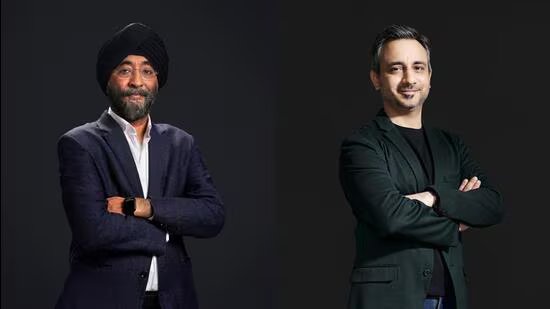
For years, India’s smartphone market operated on a familiar promise — wait a few months, and the same amount of money would buy better specs such as more storage, more memory, better cameras, and a faster chip. That equation is now under pressure as global memory and storage prices rise, driven by relentless AI investments. Sandeep Singh Arora, chief business officer at Xiaomi India, tells HT that after some short-term hesitation, tech companies and consumers are adjusting to this new reality. Sandeep Singh Arora, chief business officer at Xiaomi India and (right) Anuj Sharma, Xiaomi India’s chief marketing officer. (Official image) “We are beginning to see the flywheel work again and demand returning,” he says, adding, “As prices go up across the industry, some customers will wait and watch. But we are also seeing the market start to stabilise as trade and consumers adapt. There is some short-term hesitation in parts of the chain.” Arora is concerned that supply is tightening fast. WD and Seagate say their 2026 enterprise hard-drive capacity is already fully allocated. Meanwhile, Gartner estimates memory and SSD prices could jump 130% by year-end — pushing average PC prices up 17% and smartphone prices up 13%. Research firm IDC expects the PC market to shrink by 11.3%, and the smartphone market to register a 12.9% decline. Xiaomi’s scale in India means component inflation or supply stress can ripple across its portfolio, even as it strengthens smart TV and tablet businesses. Timing is crucial, with the Xiaomi 17 and Xiaomi 17 Ultra flagships launching in India on March 11. They’ll compete with Samsung’s new Galaxy S26 trio, led by the ₹1,39,999 Galaxy S26 Ultra. India pricing for the 17 series is yet to be announced. Anuj Sharma, Xiaomi India’s chief marketing officer, tells HT that though they “started relatively late in the flagship conversation” in India, each generation was built to solve a specific challenge. A key constant is Xiaomi’s partnership with German camera giant Leica. This is in stark contrast to trends within the Android smartphone space. OnePlus no longer has Hasselblad optimisations, while Vivo’s partnership with Zeiss is broadly in a status quo state. “In 2022 and 2023, we pushed large sensors, and in the years after, improved portraiture and telephoto capabilities. This year, the question was — how do we begin approaching what dedicated cameras can do? That’s why we moved from co-engineering to co-creation,” Sharma describes the philosophy. “We want to keep moving closer to what the human eye sees, in dynamic range, detail, and realism,” a clear mandate for Xiaomi and Leica’s engineers. The Xiaomi 17 Ultra’s key imaging upgrade is a new sensor called LOFIC (Lateral Overflow Integration Capacitor). Its core differentiator is that, instead of combining multiple exposures that lead to motion blur, this sensor uses a specialised component to sift excess light from bright areas in a single shot. The result is better balance between shadows and brighter highlights, without blown-out areas, closer to how a human eye perceives a scene. Milestones, and a bumpy road Global supply chain disruptions — enough to derail product roadmaps and pricing plans — come as the company builds momentum in smart TVs, helped by a strong response to its recently launched 75-inch QLED flagship, and expands its tablet lineup with the new Xiaomi Pad 8 series. “Xiaomi has one of the largest user bases in India across categories. A significant number of these users are now ready to upgrade because they’ve had a good experience with our products,” Arora points out, noting momentum with smartphones and tablets. Market data suggests Xiaomi’s push into 43-inch and larger TVs is paying off. It currently holds a 7.9% share, ranking third behind Samsung (23.8%) and LG (16.5%), with estimates projecting this to rise to 12% this year. In tablets too, CyberMedia Research (CMR) data shows Xiaomi at 16%, close to Lenovo’s 19%, though Samsung remains well ahead at 34%. Arora and Sharma insist Xiaomi’s premium push is not just about smartphones, but a broader play across product categories — an extension of the premiumisation journey it began a few years ago. They are confident of building on that momentum.“We believe we’ve met the initial milestones set for ourselves. Now we are accelerating,” he says. “We have stronger channel capability, and we’re seeing growing consumer demand for premium Xiaomi products.” Small details, such as packaging and retail experience, will decide whether this push succeeds. Sharma points to the 75-inch QLED TV that went on sale this month. “In fact, demand is strong enough that we had internal discussions about production and whether we should manage communication until supply catches up,” he says. HT asked Arora how Xiaomi measures that journey, and he outlined a four-part framework. “Our metrics are not just one number. We look at premium contribution within the portfolio, ASP (average selling price) growth, consumer satisfaction, and increasingly cross-category ownership,” he says.