Photography as a human eye sees it| Business News

It is often said that every dark night, is followed by a bright day. For Xiaomi in India, that darkest night is behind them, with the crack of dawn clearly visible. Momentum in the last few quarters, across product categories, strengthens Sandeep Singh Arora’s argument that this is the time to “strengthening the ecosystem.” Arora, the chief business officer at Xiaomi India, tells HT in a conversation that 2026 is the year that the company will build on three foundational strengths — great products, honest pricing and a strong ecosystem presence across categories. “You will see us go deeper across mobile, televisions, tablets, and more premium segments,” he says. A teardown of the LOFIC sensor and the Leica UltraPure optical lens treatment on the Xiaomi 17 Ultra. (Official image) The latest piece in that puzzle for Xiaomi India is the Xiaomi 17 flagship smartphone series, which launches in India soon, and will compete with the recently launched Samsung Galaxy S26 series, as well as the likes of theVivo X300 series and the OnePlus 15. Anuj Sharma, the chief marketing officer at Xiaomi India, insists that the camera is the closest Android flagship photography has come to how the human eye sees reality. Sharma illustrates Xiaomi and Leica’s collective vision, “Our philosophy is simple: physics will always beat software.” The phone maker has just extended their partnership with the German camera giants, at a time when OnePlus phones have lost the Hasselblad edge, while Vivo and Zeiss’ partnership is more a continuation. Arora and Sharma talk to HT about the company’s flagship phone playbook, the premiumisation push in India and how those metrics are shaping up, as well as the complications around memory and storage prices that will force the tech industry to rework larger product plans for 2026. Edited excerpts: Q. What principles defined the Xiaomi 17 series, and how does it fit your view of what a flagship smartphone should be in 2026 and beyond? Did you have to rewrite the flagship playbook? Anuj Sharma: I believe we’ve been rewriting that playbook for the last four years. Every year it becomes a bigger challenge because the bar for what a flagship should be keeps moving — and we’re trying to set that bar ourselves. We started relatively late in the flagship conversation, especially in India. Around 2022, we began this journey seriously, including our partnership with Leica. From day one, that was never meant to be just a marketing or licensing arrangement. It began as co-engineering. The idea was that future flagships would be defined by creation — by imaging, by how we capture moments, and by pushing mobile photography into the next phase. Leica brings unmatched photography expertise, and we bring miniaturisation — how to fit advanced imaging systems into something that still fits in your hand. In 2022 and 2023, we pushed large 1-inch sensors, unseen at the time. In the years after, we improved portraiture and telephoto capabilities. This year, the question became: where do we go next? Iteration alone wasn’t enough. That’s why we moved from co-engineering to co-creation. With the Xiaomi 17 series, especially the 17 Ultra, we asked: how do we move beyond “smartphone photography” and begin approaching what dedicated cameras can do? That is the starting point for our 2026 flagship vision. So you have hit that orbit, and if I could probably put it in a way, that you are at the top of what smartphone photography should be. But to be honest, you still have DSLRs, those large and medium-format cameras that do some things spectacularly. How do you break away from the smartphone game and start approaching that? And that’s where the 2026 lineup, and essentially where the 17 Ultra starts off. A couple of key technologies. On the 17 Ultra, we have a LOFIC sensor. Nobody else in the industry has it. And that is taking a step towards what should be the future of mobile photography. Secondly, we were trying to solve for the space constraints. Last year, we had a 75mm and a 100mm lens. But can’t you keep adding because some sensors that might not do justice to that whole telephotography that you want. And hence, you know, we put in the first 200-megapixel continuous optical zoom, which is a massive innovation. Q. Indian users are heavy multitaskers, increasingly AI-curious, but also very battery-conscious. What user behaviour shaped the Xiaomi 17 series for India? Sandeep Singh Arora: We see two broad kinds of flagship users. The first is the user who wants cutting-edge camera and imaging technology. For them, the Ultra is the clear choice. If someone really cares about imaging and wants a phone camera system that performs at the highest level, that’s who the 17 Ultra is built for. As Anuj talked about the 75mm and 100mm lens and a 1-inch sensor which was unheard of, and yes smartphone cameras have become great. We are confident this camera will perform better than any other flagship. Then there’s a second kind of user, someone looking for the best compact flagship experience with no compromises and covers every base. They want top performance, strong battery life, great imaging, and an all-round premium experience in a more compact form factor. That’s where the Xiaomi 17 fits in. So yes, battery matters, AI curiosity matters, multi-tasking matters — but for us, the lineup is designed around distinct premium user intentions rather than one generic flagship profile. Q. It’s been about two years of a sustained premiumisation push in India. How do you assess progress, and what challenges remain? Sandeep Singh Arora: It is a journey, and we believe we’ve met the initial milestones we set for ourselves. Now we are accelerating on that journey. There have already been multiple launches this year across categories, and there is much more to come. We now have better capability, including stronger channel capability, and we’re seeing growing consumer demand for premium Xiaomi products. There are potentially as many launches
Gold stuck in Dubai is being sold at a discount as Iran war widens| Business News

Gold is being offered at a steep discount in Dubai, as the Iran war grounds flights and hampers suppliers’ ability to move bullion out of the key trading hub. People walk at the Dubai Gold market in Dubai on Tuesday, 3 March 2026. (AP) (AP) Many buyers have stepped back from new orders, unwilling to pay exceptionally high shipping and insurance costs with no guarantee of prompt delivery. As a result, rather than paying indefinitely for storage and funding, traders are offering discounts of as much as $30/ounce to the global benchmark in London, according to people with knowledge of the matter, who asked not to be named discussing market information. Many shipments remained stranded on Friday, the people said, although some bullion had been loaded onto flights leaving Dubai from the middle of this week. The United Arab Emirates, and Dubai in particular, is an important centre for refining and exporting bullion to buyers across Asia, as well as a conduit for shipments from Switzerland, the UK and several African countries. Its airspace has been partially closed due to a barrage of Iranian missiles as the US-Israeli war with Tehran extends for a seventh day with no sign of resolution. Gold is typically transported in the cargo holds of passenger aircraft. Even with flights from the UAE severely restricted, traders and logistics firms are reluctant to transport high-value cargoes overland to airports in countries such as Saudi Arabia and Oman, due to the risks and complications involved, particularly when transiting land borders. “Several cargo shipments have been delayed or stranded, leading to short-term tightness in the availability of physical bullion in India,” said Renisha Chainani, head of research at Augmont Enterprises Ltd., one of India’s largest gold dealers. But buyers in India—one of the largest consumers of gold shipped from Dubai—can afford to wait, with near-term demand relatively muted and inventories swollen by a large volume of imports in January, said Chirag Sheth, principal consultant for South Asia at Metals Focus. “As of now, there is ample stock,” he said, “but if this drags on for a few months, then there will be a problem.” Spot gold has gained nearly a fifth so far this year, gaining a footing above $5,000 an ounce, though trading has been choppy and the metal has come under pressure this week as the dollar has strengthened. There are also some signs that refiners are encountering challenges in sourcing doré—semi-refined gold bars typically cast at the mine site. India’s largest precious metals refinery, MMTC-PAMP, gets around 10% of its doré from a mine in the Middle East, but supplies have been disrupted, said Chief Executive Officer and Managing Director Samit Guha. For new contracts supplied from elsewhere, logistics costs have soared by 60% to 70% since the war began, he said.
Oracle layoffs to impact thousands in AI cash crunch| Business News
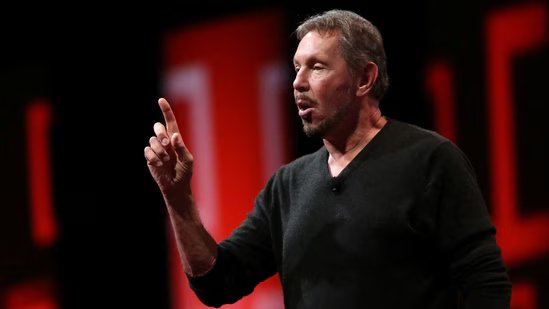
Oracle Corp. is planning to ax thousands of jobs, among its moves to handle a cash crunch from a massive AI data centre expansion effort. Oracle Chairman Larry Ellison. Last month, Oracle said that it would raise as much as $50 billion in 2026 to fuel its AI data centre plans. (Reuters) The Oracle layoffs will affect divisions across the company and may be implemented as soon as this month, according to people familiar with the matter who asked not to be named discussing the still-private plans. Some of the cuts will be aimed at job categories that the company expects it will need less of due to AI, two of the people said. Led by Chairman Larry Ellison, Oracle is embarking on a historic build-out of data centres to power AI workloads for customers such as OpenAI Inc. The company, long known for its database software, has been making a transition the past few years to bulk up its cloud computing unit with a focus on AI, intending to become a viable competitor to market leaders Amazon.com Inc. and Microsoft Corp. Wall Street projects the expenditures by the cloud unit for data centres to push Oracle’s cash flow negative over the coming years before the spending begins to pay off in 2030, according to data compiled by Bloomberg. Last month, Oracle said that it would raise as much as $50 billion this year through a combination of debt and equity sales. The extent of Oracle layoffs The Oracle layoffs being planned are expected to be wider-reaching than the company’s typical rolling job cuts, according to the people. This week, Oracle announced internally that it would be reviewing many of the open job listings in its cloud division, effectively slowing down or freezing the hiring process, according to people with knowledge of the move. Oracle declined to comment. The company had about 162,000 employees globally as of the end of May 2025. Planning for the workforce reductions is still active and could change, the people said. The cost of AI data centres — human layoffs Oracle’s initial moves as an AI cloud provider drew favour from investors, who boosted the stock 61% in 2024 and 20% last year. But as the costs increased, the market has soured on the company, with the shares falling 54% from their September 2025 high through Wednesday’s close. The high up-front costs of AI have fueled cuts across the tech industry as companies work to balance their budgets. Microsoft fired some 15,000 people last year amid rising spending on data centres and AI software development. Last week Block Inc. announced that it would lay off nearly half of its staff, with co-founder Jack Dorsey citing the efficiency-boosting power of AI. In September, Oracle disclosed in a filing that it was planning its largest-ever restructuring, which will cost as much as $1.6 billion in the current fiscal year ending in May, including severance checks to exiting employees. That was significantly larger than any other similar plan Oracle has disclosed. The company is scheduled to announce its fiscal third-quarter earnings on Tuesday.
Jio IPO to miss timeline due to delay in changes to SEBI listing rules| Business News

The government’s delays in formalising changes to listing rules are threatening to miss the timeline for Jio Platforms IPO. A Jio Platforms IPO—the first listing of a major Reliance unit in almost 20 years—could be the country’s biggest ever. (Bloomberg) Reliance Industries Ltd., the parent company of Jio Platforms Ltd. is waiting for the government to formalise the changes to appoint bankers and file draft IPO papers, according to people familiar with the matter who asked not to be named because the discussions are private. The company is now aiming to file the draft red-herring prospectus before April, depending on the government notification. Jio, which owns India’s largest wireless operator, is one of the crown jewels of Ambani’s empire. A Jio IPO—the first listing of a major Reliance unit in almost 20 years—could be the country’s biggest ever. Investment bankers have proposed a valuation of as much as $170 billion (about ₹15.5 lakh crore) for the company, which would offer a rare opportunity for investors to buy into one of world’s biggest growth stories of the past decade. During an annual general meeting in August 2025, RIL Chairman Mukesh Ambani had disclosed plans to list Jio Platforms in the first half of 2026. A top-end valuation could raise about $4.3 billion by selling the minimum stake and would place the company among the biggest companies in India by market value. Meta Platforms Inc. and Alphabet Inc. announced investments totaling more than $10 billion in Jio in 2020. Deliberations are ongoing and details of the Jio Platforms IPO, including timing and size, may change, the people said. Reliance Industries declined to immediately comment. Representatives for the finance ministry didn’t immediately respond to requests for comment. In September 2025, the Securities and Exchange Board of India (SEBI) approved amendments to its regulations, allowing companies with a post-issue market capitalisation exceeding ₹5 lakh crore to dilute as little as 2.5% in an IPO, rather than the current minimum of 5%. The rule change is a possible catalyst for mega listings such as Jio and National Stock Exchange of India, but doesn’t yet have final government approval. It’s unclear what the holdup is and there is no indication that the delay is targeting the Jio IPO in particular. The next step, which can usually take as long as a few months depending on government deliberations, is for the finance ministry to formally incorporate the changes and announce them in the Official Gazette, said Sonam Chandwani, managing partner at KS Legal & Associates. “While the regulator has paved the way, the industry is now awaiting the final gazette notification, which we expect to see materialise in the first half of 2026,” said Ankita Singh, founder of law firm Sarvaank Associates. NSE, meanwhile, is proceeding with plans to raise as much as $2.5 billion in an IPO. The company last month invited banks to pitch for roles in the offering. The two share sales would provide a much needed shot in the arm for the Indian market, where listings have struggled to start 2026 after two consecutive years of record fundraising.
Morgan Stanley cuts India exposure on LNG shock from Iran war| Business News
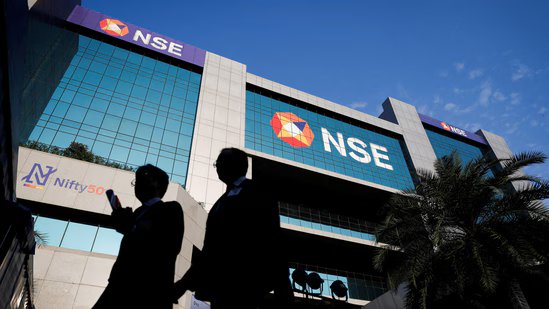
Morgan Stanley is adopting a more cautious stance on Asian equities, trimming its India exposure on concerns that the Iran war may disrupt supply chains if oil flows through the Strait of Hormuz fail to recover. The National Stock Exchange building in Bandra Kurla Complex, Mumbai. Since the Iran war began, foreigners have withdrawn about $1.3 billion from India. (Livemint) “We stay defensive,” Morgan Stanley strategists including Daniel Blake and Jonathan Garner wrote in a note dated 5 March 2026. “Asia remains critically dependent on Middle Eastern supply of crude oil, refined products and LNG and we believe the market is too complacent about supply chain risks.” The strategists downgraded India from overweight to equal-weight in their latest reshuffle, citing the country as one of the Asian markets most exposed to potential Qatari LNG supply disruptions. With uncertainty around AI and high valuations, global investors may wait—possibly until South Korea and Taiwan’s tech cycle peaks—before shifting back toward India, they said. Morgan Stanley’s shift highlights rising geopolitical risks as the Iran war reshapes energy flows and risk premiums. Prolonged disruption in the Strait of Hormuz could lift oil and LNG prices, pressure energy-importing Asia, and trigger earnings downgrades. Concerns are mounting that a sustained supply shock may spark a global economic slowdown, undermining key export industries. Global investors are pulling money out of emerging Asia’s major markets. Since the war began, foreigners have withdrawn about $1.3 billion from India. Taiwan and Korea have seen even larger outflows this week—$7.9 billion pulled from Taiwan, set to mark foreigners’ biggest weekly exodus from the island, and $1.6 billion taken out of Korea. Morgan Stanley’s latest changes come about a week after predicting that emerging markets are poised for their strongest earnings growth stretch since the 2002–2004 super‑cycle, fuelled by surging AI investment. In their latest note, the Morgan Stanley strategists also cut the United Arab Emirates to equal-weight from overweight, while upgrading Taiwan and Saudi Arabia to equal-weight from underweight. South Korea was kept at equal-weight, even as the strategists noted its “powerful thematic drivers”. They also maintained overweight positions in Japan and Singapore. In recent months, Morgan Stanley has added resource‑themed stocks to its recommended list, citing rising prices in copper and other physical assets. Strong AI demand and data‑centre expansion have driven these gains, with Australian materials and Thai energy stocks poised to benefit, Garner said at a conference in Sydney this week.