What’s at stake for crude oil markets as Israel, US pile up Iran attacks| Business News
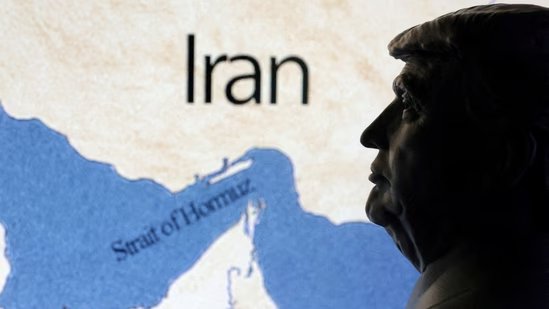
The Iran attacks by the United States and Israel create new risks for a significant chunk of the world’s crude oil supply. The Strait of Hormuz is the chokepoint for bulk of the Persian Gulf’s exports of crude, and also refined fuels like diesel and jet fuel. (Reuters) The Islamic Republic itself pumps about 3.3 million barrels a day, or 3% of global output, making it the fourth-largest producer in OPEC. But the nation wields far greater influence over the world’s energy supplies because of its strategic location. Iran sits on one side of the Strait of Hormuz, the shipping lane for about a fifth of the world’s crude from key suppliers including Saudi Arabia and Iraq. While the waterway remains open, some oil tankers were avoiding sailing through following the attacks and ships were piling up either side of the entrance, tracking data compiled by Bloomberg show. Oil markets are closed for the weekend, and there was no initial information on whether the attacks on Iran and the country’s retaliatory strikes across the region on Saturday targeted any energy assets. Here are the pressure points to watch in oil as events unfold. Iran’s Production Iran produces about 3.3 million barrels of oil a day, up from less than 2 million barrels a day in 2020, despite continued international sanctions. The country has become more adept at skirting these restrictions, sending about 90% of its exports to China. The largest oil deposits are Ahvaz and Marun and the West Karun cluster, all in Khuzestan province. Iran’s main refinery, built at Abadan in 1912, can process more than 500,000 barrels a day. Other key plants include the Bandar Abbas and Persian Gulf Star refineries, which handle crude and condensate, a type of ultra-light oil that’s abundant in Iran. The country’s capital Tehran has its own refinery. For Iran’s overseas shipments, the Kharg Island terminal in the northern Persian Gulf is the main logistical hub. There was an explosion in the island Saturday, according to Iran’s semi-official Mehr news agency, which didn’t provide more details or make any reference to the oil terminal. Kharg Island has numerous loading berths, jetties, remote mooring points and tens of millions of barrels of crude storage capacity. The facilities have handled export volumes exceeding 2 million barrels a day in recent years. US sanctions discourage most potential buyers of Iran’s crude, but private Chinese refiners have remained willing customers, provided they get steep discounts. Tehran relies for its international shipments on a fleet of aging tankers that mostly sail with their transponders deactivated to avoid detection. Earlier this month, Iran was rapidly filling tankers at Kharg Island, probably in an effort to get as much crude on the water and move vessels out of harm’s way in case the facility was attacked. It was a move similar to last June ahead of Israeli and US attacks. Any strike on Kharg Island would be a desperate blow for the country’s economy. Iran’s main natural gas fields are further to the south along the Persian Gulf coast. Facilities at Assaluyeh and Bandar Abbas process, transport and ship gas and condensate for domestic use in power generation, heating, petrochemicals and other industries. The area is the main point for Iran’s condensate exports. During the June war, an attack on a local gas plant sparked jitters among traders, but didn’t cause a lasting spike in oil prices because it didn’t affect any export facilities. Regional Dangers On 1 February, Iran’s supreme leader warned of a “regional war” if his country was attacked by the US. Tehran has claimed that a full closure of the Strait of Hormuz is within its power. It would be an extreme step that the country has never taken, but remains a nightmare scenario for global markets. Hormuz is the chokepoint for bulk of the Persian Gulf’s exports of crude, and also refined fuels like diesel and jet fuel. Qatar, one of world’s biggest liquefied natural gas exporters, also relies on the strait. At least three gas tankers going to or from Qatar had paused voyages following the latest attacks in the region, according to ship-tracking data. While OPEC members Saudi Arabia and the United Arab Emirates have some ability to reroute their shipments via pipelines that avoid Hormuz, closing the strait would still cause a massive disruption to exports and spike crude prices. There were signs of other Gulf producers also accelerating shipments in February. Saudi Arabia’s crude shipments averaged about 7.3 million barrels a day in the first 24 days of the month, the most in almost three years. Combined flows from Iraq, Kuwait and the United Arab Emirates were set to climb almost 600,000 barrels a day from the same period in January, as per data from Vortexa Ltd. In the past, Tehran has made retaliatory strikes on some of its neighbours’ energy assets. In 2019, Saudi Arabia blamed Tehran for a drone attack on its Abqaiq oil processing facility that halted production equivalent to about 7% of global crude supply. Many observers say it’s improbable that Iran could keep Hormuz closed for long, making lower-impact actions like harassment of shipping more likely. During last year’s war with Israel and the US, nearly 1,000 vessels a day were having their GPS signals jammed near Iran’s coast, contributing to one tanker collision. Sea mines are another long-threatened option for deterring shipping. Market Reactions Oil surged the most in more than three years during the June war, with Brent crude rising above $80 a barrel in London. However, the gains quickly faded once it became clear that key regional oil infrastructure hadn’t been damaged. Since then, concerns about an oversupply have dominated global markets, with crude in London ending 2025 about 18% lower than where it started. Despite those fears of a glut, prices have surged 19% this year, partly due to fears of US strikes on Iran. With the main oil futures closed for the weekend, there’s limited insight into how traders are
What a Warner Bros-Paramount colossus would look like| Business News

After months of binge-worthy gamesmanship, a victor has emerged in the saga to buy Warner Bros Discovery. On February 26th Netflix, the world’s biggest streaming company, bowed out of the competition, putting the legacy media giant on a path to merge with Paramount Skydance, controlled by David Ellison and his father Larry, the world’s sixth-richest man. Now, however, comes the hard part. Warner Bros Discovery-Paramount merger to form 210m-subscriber media giant after Netflix bows out Should the deal be consummated, it will create a colossus that includes streaming networks HBO Max and Paramount+, news channels CBS and CNN, and the rights to film franchises from “Harry Potter” to “Transformers”. What would have been a nice addition for Netflix—which coveted Warner’s catalogue and its ability to churn out Oscar-nominated content—is existential for Paramount, notes Robert Fishman of MoffettNathanson, a firm of analysts. On its own, Paramount lacks the scale to survive the streaming wars; with Warner, it stands a much better chance. The combined company will have around 210m streaming subscribers—still far fewer than Netflix, which boasts some 325m, but more than other competitors such as Disney. Even so, it is a bold gamble by the Ellisons and their investment partners. They are shelling out around $111bn to buy Warner, including its debt and a $2.8bn fee owed to Netflix, with which a deal had previously been agreed. That will be funded in part by borrowing $58bn. Adding in the debt already on Paramount’s balance-sheet brings the total pile to more than $70bn. Last year the two companies generated a combined operating profit (before depreciation and amortisation) of just $11bn. That amount of leverage was partly why Warner was initially reluctant to accept the Ellisons’ advances. Raising the price, and offering various guarantees, helped get a deal over the line. Paramount’s promise to release at least 30 films a year in movie theatres didn’t hurt either, given Tinsel Town’s fear of a Netflix-led annihilation of traditional cinema. Nor did signals from Washington that a Paramount takeover, unlike one by Netflix, would be waved through with little objection from trustbusters, thanks perhaps to the Ellisons’ chumminess with Donald Trump. The president recently declined to meet with Ted Sarandos, Netflix’s co-chief, during a White House visit, sending an aide in his stead, and has called on the streaming giant to fire Susan Rice, a board member who served in the Biden administration. The closure of the deal now seems likely, though not certain. Warner’s shareholders will have to approve the takeover at a meeting in April. Attorneys-general in California and other states may put up a fight if they feel that federal regulators failed to do their job. The antitrust police in Europe and elsewhere will also have to give the nod. If the Ellisons prevail, the real work will begin. Paramount Skydance Warner Bros Discovery will be indebted and unwieldy. The Ellisons have already foreshadowed a $6bn “cost-synergy opportunity”, which has Hollywood bracing for job losses. Assets may need to be sold off, too. Laurent Yoon of Bernstein, a broker, reckons that the deal gives the combined company “a shot at greatness”. But history suggests that media mergers often end badly—especially those that involve the studio behind Looney Tunes. This franchise may have another instalment yet.