
OpenAI gets $110-billion funding from Nvidia, Amazon, SoftBank ahead of IPO

OpenAI Inc. has raised $110 billion in its biggest funding round yet led by Nvidia Inc., SoftBank Group Corp. and Amazon.com Inc. That pegs the Sam Altman-led company’s valuation at $730 billion ahead of a potential IPO. Sam Altman (PTI) Amazon.com Inc. is investing $50 billion in the financing round, OpenAI said Friday, by far the largest amount the e-commerce giant has put into any company. SoftBank Group Corp. and Nvidia Corp. each invested $30 billion, the company said. The firm’s new $730 billion valuation doesn’t include the money raised. Post-money, it’s now valued at $840 billion. OpenAI and rival Anthropic PBC have ramped up their fundraising this year to support costly bets on chips and data centers to support their artificial intelligence software. Increasingly, the two AI startups have tapped an overlapping group of venture funds and Big Tech investors. The large investment from Amazon, a longtime Anthropic backer, also tightens its relationship with OpenAI. As part of the agreement, OpenAI will use Amazon’s line of in-house AI chips, called Trainium, and jointly develop customized models for Amazon’s own engineering teams. OpenAI will also spend an additional $100 billion on Amazon Web Services over the next eight years. The two companies in November announced a deal under which the model builder would use some $38 billion in AWS services over seven years. “Amazon can deliver so much to us in terms of new demand and opportunities in the market,” OpenAI Chief Executive Officer Sam Altman said in an interview with CNBC on Friday. Andy Jassy, Amazon’s CEO, said the deal “will yield a good return for Amazon over a long period of time.” Microsoft Corp., one of OpenAI’s largest previous backers and formerly an exclusive infrastructure partner, said its relationship with the developer remains strong. “Nothing about today’s announcements in any way changes the terms of the Microsoft and OpenAI relationship,” the companies said in a joint statement Friday. Anthropic raised $30 billion in a funding round earlier this month from investors, including Nvidia and Microsoft. The financing valued Anthropic at $380 billion, including the money raised. The funding commitments mark the latest example of circular financing deals between leading AI startups and suppliers of chips and cloud computing. These tie-ups are intended to ensure the AI sector can meet its immense infrastructure needs, but the risk is such deals can magnify losses if demand for AI fails to match today’s lofty expectations. Altman downplayed the risk of such arrangements in the CNBC interview. “I get where the concern comes from,” Altman said. “This only makes sense if new revenue flows into the whole AI ecosystem.” He said much of his effort goes into trying to get more computing capacity to serve demand for ChatGPT and OpenAI’s other products. This is a developing story. More to come.
Oppo Pad 5’s early yet restrained Android tablet bet, lands well enough| Business News
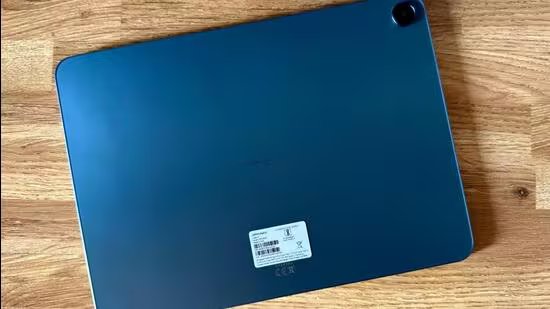
There is, increasingly so, a case for Android tablets. As entertainment hubs. As secondary work machines. Now even as primary work machines, though this holds true if your workflow fits within perceived boundaries of capabilities (it’s still a subjective hit or miss). The OPPO Pad 5 seems to be on absolutely the right track from the outset, which includes an affordable price positioning, an ecosystem play, and the promise that artificial intelligence (AI) will play a useful enough role in your work. While I wouldn’t recommend buying any device based on perceived AI promises, you should base your decision on the Oppo Pad 5’s hardware foundation, which is mostly on point. The choice of the MediaTek Dimensity 7300-Ultra is not entirely surprising, but there is come curiosity. (HT photo } Vishal Mathur) For starters, Oppo gained the first mover’s advantage in the early 2026 Android tablet battles, with the Xiaomi Pad 8 following soon after. Secondly, things have been kept simple yet versatile, with the Wi-Fi and 5G versions available (that’s something the otherwise impressive Xiaomi Pad 7 misses out). I’d recommend the 5G variant if the budget allows it, for you’ll realise the benefits of this convenience, inevitably when you start travelling more with the tablet. Prices start at ₹26,999 for the 8GB memory and 128GB storage variant with Wi-Fi only, while the 5G spec that also bumps up storage to 256GB will cost ₹32,999. One could disagree with the choice of 128GB as the base storage spec (it should have been 256GB ideally), but thanks to the AI slop filling our social media feeds, memory and storage prices are through the roof. Two key specifications really work in the Oppo Pad 5’s favour. The 12.1-inch display real estate is ideal for two windows side by side as you get some work done, working on spreadsheets, and finally once done for the day, it is immersive enough for catching up on TV shows or some sports highlights. This is a bright and vivid screen with 12-bit colour depth, and you’d appreciate the 7:5 aspect ratio which is a bit squarer than the typical 16:9, making it fit windows with PDF documents or books better. Brightness changes are flicker free, at least to the eyes as you use the tablet, and this screen simply works across usage scenarios. The other is the fact that the OPPO Pad 5 has a large 10,050mAh battery, which lasts close to 18 hours on a single charge. Considering this may not often be used as a primary laptop-replacement device for 9 hours a day straight, you will need to deploy the 33-watt charger only once every few days to juice this up completely. There are absolutely no complaints about this, especially considering the price point for the 5G option. The choice of the MediaTek Dimensity 7300-Ultra is not entirely surprising, but there is come curiosity. This chip is a couple of steps behind the Xiaomi Pad 7’s Qualcomm Snapdragon 7 Plus Gen 3 in terms of raw performance, and will certainly fall a further step behind the Snapdragon 8s Gen 4 that’ll power the upcoming Xiaomi Pad 8. This is not a good look in the face of direct competition, and this leads me to believe that you’ll soon start seeing significant market price corrections to tweak the perceived value. For specific workflows, this may struggle somewhat if your intended usage includes a fair bit of time on serious video editing apps, but the likes of Adobe Lightroom and Express should be fine on this. Of course any tablet being sold in this day and age must claim a number of AI insertions within the interface and the apps, with the OPPO Pad 5 being no different. Some stand out ones include an AI Writer, a translator, a voice recorder with transcription and of course, Google’s Gemini integrations. Oppo has integrated something called Circle to Note, which requires the Oppo Pencil 2R (that’s a separate accessory; ₹2,999) — highlight or mark any text on a web page, document or file and drag it into the notes app. This negates the need for cluttering the gallery with umpteen screenshots (often, one forgets particular relevance or context). Speaking of the gallery, that too has AI based clarity enhancer, unblur and reflection removal options, though mileage will vary depending on complexity of a photo. If you are buying an Android tablet in 2026 and want one that’ll competently handle documents, video calls, video streaming, reading and entertainment needs for frequent travel without introducing too many compromises, the Oppo Pad 5 deserves to be high on the shortlist. It does not win the raw-power argument, and serious creators may outgrow it sooner than they’d like. But the combination of a very good 12.1-inch display, dependable battery life and the availability of a 5G variant at this price gives it a real-world advantage that matters to a much larger demographic of potential buyers. Just that you may want to weigh the Xiaomi Pad 8 and how the Xiaomi Pad 7 pricing shapes up, before making a definitive decision.
Xiaomi X Pro QLED 75 is quite simply a TV flex that rivals cannot match| Business News

A few years ago, almost everyone who made a tech product of some sort thought it was easy to make good TVs and sell them at price tags that held a convincing ‘value’ argument. Search “4K TV”, adjust the price band to under ₹1,00,000 on Amazon or Flipkart, and you’ll witness an illustration. Turns out, it isn’t as easy as it sounds. Only a few have successfully found a workable recipe, and Xiaomi resoundingly leads that set with a very impressive X Pro QLED range. This ushered in a Filmmaker Mode, something similar to what Sony delivers on TVs that cost significantly more. Now, this portfolio gets widened with the addition of a 75-inch screen size. The Xiaomi X Pro QLED 75, now becomes the flagship TV for the company. (Vishal Mathur | HT Photo) The Xiaomi X Pro QLED 75, now becomes the flagship, taking over from the 65-inch ( ₹57,999) as well as 55-inch ( ₹39,999) options that are already on sale. This is the company’s largest QLED TV yet. Headline specs are the QLED (Quantum dot LED) display panel of course, support for Apple AirPlay 2 and Google Cast streaming standards, 34-watt speakers with Dolby Audio, and of course the Filmmaker Mode. To be fair, the price tag of ₹69,999 (before you factor in credit card or EMI discounts) for a screen size as large as this, underlines tremendous value. I could complain the table top stands don’t align with the premium-ness you’d associate with a TV of this size. From the get go, the Xiaomi X Pro QLED 75 looks part of the family, right down to how the table top stands position themselves and a continuity with the wireless remote. Power this on, and setup takes a few minutes with typical Google TV steps that must be navigated. For some reason, this TV feels snappier during the initial setup and subsequent app usage, contrasting with the sluggishness I’d noted when reviewing the 65-inch version last year. Attempts to optimise the hardware (the A55 quad core chip with 2GB memory) and software are greatly appreciated. Once you get to the Home Screen, is where the experiential brilliance really starts to unveil itself. The QLED panel and enhancement film which has a slight matte-ish thing about it, combine for excellent display quality which also holds its own when viewed at from an angle, or if there is a room light reflecting off the screen to an extent. Little things do matter. This is a bright panel, as well as one that reproduces vivid colours. Spend some time tweaking the picture parameters, and you can get this absolutely to your liking. I’m not a huge fan of the separated basic and advanced picture setting layout, but well, no important options seem to be missing. While this panel errs towards a softer picture look at default, adjusting the sharpness settings brings out just the right level of crispness and detailing you’d expect from a large screen 4K TV. The tuning seems even further improved in some ways, not just with more perceptibly precise dimming when that is required, and also in terms of picture crispness as well as details for lower quality content. Both aspects, the way they are currently, are incredibly useful for a genuinely large panel size where even the smallest of imperfections would otherwise loom large. Blacks are really deep, which helps with contrast and colour across the spectrum. In the time I spent which included a mix of Live cricket broadcasts in Full HD, Netflix and JioHotstar in 4K streaming (Dolby Vision and HDR10+ are supported), as well as gaming on the PlayStation, there wasn’t a single scenario or content type where the Xiaomi X Pro QLED 75 looked even remotely uncomfortable. Apart from the app sluggishness aspect which has now been resoundingly resolved, I had also pointed out with the 2025 TVs that sound could have and should have been better. Changes here, at least they certainly do feel like changes to an extent, are slightly positive — the built-in speakers which are rated at 34-watt, have now been tuned for perceptibly clear audio and less jarring sharpness. They can go really loud, without doubt, and are perhaps adequate for watching cricket matches or Formula 1 races. But for the regular movies and TV show binge sessions? Not so much, get a soundbar. At this point, I must note that this TV was perhaps ripe for a soundbar-esque speaker array, something Haier and OnePlus have done with success, previously. The Filmmaker mode, which really is the party piece of the X Pro QLED 75, is Xiaomi’s biggest flex in terms of how well it can get the very fine optimisation details absolutely spot on. Some movies you watch would demand you hand over the realtime post processing tasks to the TV to judge, including noise reduction, contrast and colour, to get the sort of experience the movie’s makers intended. The fact that Sony, and now Xiaomi have been able to consistently do this while everyone else is still trying to catch up, shows it isn’t an easy feat to achieve. I’ve said it before and I’ll say it again, not all TVs around the same price points, are equals. Xiaomi marked a big step forward with the 2025 X Pro QLED line-up, and this time around, the addition of the X Pro QLED 75 as the biggest QLED TV they’ve ever made, adds weight to an argument that they know what they’re doing. Everything else comes together very nicely around this anchor, including a QLED panel that has been beautifully optimised, improved performance, a vibrant set of functionality, and a remote layout that has finally grown on me. That said, I could perhaps keep complaining that the quality of the table top stand has taken a slight reversal, but is that perhaps because accountants stepped into the room, holding up the bill of materials?
World’s top-gaining stock is a Korean broker riding SpaceX IPO hype| Business News
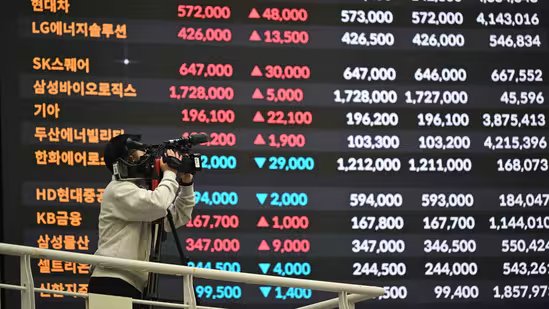
Mirae Asset Securities Co. shares have more than tripled this year as a proxy bet on Elon Musk’s SpaceX ahead of its potential blockbuster initial public offering. The KOSPI dashboard at the Korea Exchange in Seoul. (AFP) That makes the Seoul-based brokerage the top performer on MSCI Inc.’s broadest index of global stocks so far in 2026. It’s also risen the most among 2,245 stocks in Bloomberg’s World Index. Mirae Asset has invested a total of over $400 million in SpaceX and sister firm xAI, according to analyst reports. The surge in Mirae Asset’s stock shows how investors are scrambling to get exposure to the planned listing of the combined SpaceX and xAI, which is valued at $1.25 trillion. It also highlights continued gains in South Korean stocks on optimism over AI-driven chip demand and governance reforms under President Lee Jae Myung. Mirae Asset’s fundamentals are improving due to the strong Korean stock market, while its SpaceX stake provides an additional catalyst, “allowing investors to capture two sources of value simultaneously”, said Ha SeokKeun, chief investment officer at Eugene Asset Management Co. Brokers have been among the top performers this year on the Kospi, the world’s best-performing stock index, amid government efforts to raise equity valuations and attract retail investors. SK Securities Co. has also gained around 190% this year, while Hanwha Investment & Securities Co. has advanced nearly 100%. Mirae Asset has benefited from the “heavy exposure to space and AI names” in its $7.5 billion portfolio, according to NH Investment & Securities Co. analyst Yoon Yoodong. Its investments also include US-based Perplexity AI Inc. and Chinese drone-maker DJI Technology Co., she added. The firm’s results are improving as well. Mirae Asset’s brokerage revenue reached a new record in 2025, up 43% over the previous year, the company said in its earnings call last week. Still, some say the stock has gotten ahead of fundamentals, trading at 21 times forward earnings estimates, triple its five-year average. Kang Seunggun, an analyst at KB Securities Co., cautions that the stock’s valuations are stretched and the benefits of its high portfolio valuations are unclear. “Most of the earnings increase is unrealised gains at consolidated funds, limiting direct impact on standalone capital,” Kang wrote in a 9 February note. “Thus, we see greater uncertainty in translation of valuation gains to shareholder return.”