Noel Tata’s tough stance on Tata Sons IPO stalled chairman’s reappointment| Business News
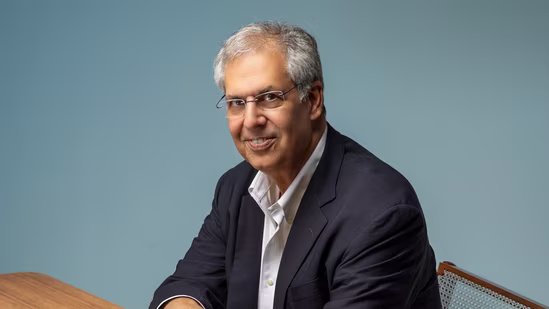
An early agenda item for Tata Sons Pvt.’s six board directors when they convened at 11:30 am on Tuesday at Bombay House—the group’s storied headquarters—was expected to be straightforward: approving a third term for Natarajan Chandrasekaran as chairman. Tata Trusts Chairman Noel Tata. As the first non-family, non-heir chairman at Tata Sons, Chandra faces mounting pressure from Noel—a Tata family scion intent on asserting greater influence over how the group is run. (PTI) Within two hours, the conversation had veered off course. What had looked like a done deal, with Tata Trusts itself recommending the reappointment just months ago, quickly unraveled. Noel Tata, the head of Tata Trusts, began pressing Chandra—as he’s widely known—with tough questions. Most critically, Noel sought assurances that the group’s holding company could avoid a public listing, people familiar with the matter said, asking not to be named as the discussions were private. Tata Trusts is a collective of 13 charities, which together control two-thirds of Tata Sons. Noel also laid down several conditions: restraining debt levels, stemming losses—especially at Air India, and reaching a swift settlement with Tata Sons’ largest minority shareholder—Shapoorji Pallonji Group, the people said. The SP Group, which owns about 18.4% stake, was locked in a corporate and legal battle with Tata Sons for years and is still looking to monetise a part of its stake. While some of Noel’s demands were negotiable, discussions hit a wall when Chandra said he could not guarantee a waiver from India’s banking regulator on the listing issue—since that decision lay outside his control, the people added. Preserve Stability By 3:30 pm in Mumbai, Chandra had left the board meeting. As he waded through a swarm of TV cameras outside Bombay House, he offered a brief response to questions about what transpired at the board meeting: “I recommended that it should be deferred.” By deferring a decision on his own reappointment, Chandra signalled that consensus between Tata Sons and Tata Trusts was essential to preserve stability at the salt-to-software conglomerate already battling headwinds in multiple sectors. It also reflected a hard-earned learning for the group after it was rocked by a scathing courtroom and boardroom battle in 2016. The group “has historically placed a premium on unanimity in key board decisions, and the absence of that consensus appears to be driving the deferral,” Utkarsh Sinha, managing director at boutique investment banking firm Bexley Advisors, told Bloomberg News. Chandra’s current terms runs until February 2027, ensuring no immediate leadership vacuum at the $180 billion Tata Group. Yet the day’s events had stoked the possibility that another power tussle may be brewing. As the first non-family, non-heir chairman at Tata Sons, Chandra faces mounting pressure from Noel—a Tata family scion intent on asserting greater influence over how the group is run. Representatives for Tata Trusts and Tata Sons did not immediately respond to an emailed request for comments. ‘Realigning Stakeholders’ “There are no credible successor names being floated at this stage,” Sinha said. “That suggests the delay is less about transition planning and more about aligning key stakeholders on capital structure, strategic priorities, and the pace of investment across new businesses.” If Chandra is eventually reappointed, it would provide continuity as the group pursues ambitious projects from semiconductors to mobile manufacturing. But Noel’s stance makes clear that the balance of power between the Tata Trusts and the holding company remains unsettled, reviving echoes of the board battles that shook the group a decade ago. In 2016, Tata Sons abruptly ousted then-chairman Cyrus Mistry. The move, orchestrated by Ratan Tata—the then head of Tata Trusts—shattered the group’s reputation for quiet consensus and turned its leadership transition into a public spectacle. Tata Trusts holds a 66% stake in the closely held Tata Sons, the holding company governing the group’s largest listed entities, including Tata Consultancy Services Ltd., Tata Steel Ltd., and Tata Motors Passenger Vehicles Ltd.—owner of Jaguar Land Rover. Tata Sons’ potential listing stems from a regulatory classification. In 2022, the Reserve Bank of India designated the company as an “upper-layer” non-banking financial institution—a category that requires firms to go public within three years to enhance transparency and governance. That meant a deadline of September 2025 for Tata Sons to list its shares. There has been no update from the RBI or Tata Sons on the state of play on this front. Despite the mandate, Tata Sons has made no immediate preparations for this share sale. Its leadership believes the regulator will extend the deadline, and after recent engagements with officials, expects formal communication from the RBI granting more time. Chandra has made clear that while he personally favours keeping Tata Sons private, he cannot offer an absolute guarantee. Should the RBI insist on a listing, compliance would take precedence over internal preferences, the people said, citing Chandra as having informed the directors. That uncertainty weighs heavily on the Shapoorji Pallonji Group. Any delay for a Tata Sons IPO effectively closes off a potential liquidity window for the debt-laden conglomerate, which has struggled with financial stress exacerbated by the pandemic. Its stake in Tata Sons remains illiquid, making a resolution critical to its debt-reduction plans. While Chandra enjoys strong support from the Indian government—earned through execution of high-stakes national projects such as semiconductor fabrication and mobile manufacturing—Noel Tata draws strength from a different source: the deep-rooted confidence and blessings of the Parsi community whose members have controlled the Tata Group since its inception in 1868. Appointed in 2017 to steady the ship after the ouster of Cyrus Mistry, Chandra has done more than just restore confidence. Under his leadership, revenue for the group’s 15 largest listed entities has nearly doubled while their profits have more than doubled. His tenure is also defined by high-stakes ambition, from launching India’s first homegrown semiconductor plant to navigating TCS through the volatile rise of AI to turning around the unprofitable carrier, Air India. “Nothing changes,” Chandra said on Tuesday, when asked about the immediate impact on Tata Group’s leadership, before his car
TCS is not afraid of AI, revenue cannibalisation, CEO Krithi Krithivasan says| Business News
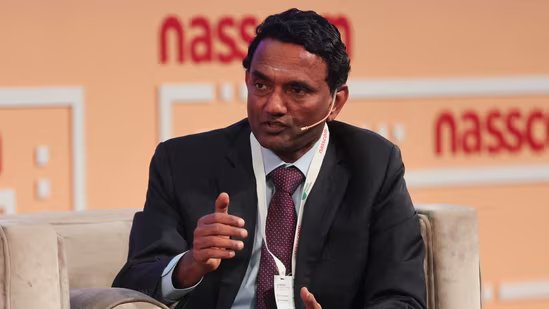
Tata Consultancy Services Ltd. is “not afraid” of AI or “revenue cannibalisation” due to AI tools used by clients. In fact, India’s largest IT services firm is pushing employees to use AI tools to deliver work faster and cheaper. TCS CEO Krithi Krithivasan at the Nasscom Technology and Leadership forum in Mumbai on Wednesday, 25 February 2026. (Reuters) “We are telling associates that if you find that you can do something faster, better, cheaper with AI, you should probably go and tell your customers (about that) even if it cannibalises revenue,” TCS CEO Krithi Krithivasan said at the Nasscom Technology and Leadership Forum in Mumbai. “We are not afraid this technology will take away our livelihood. We believe it’s going to open up more, so you enjoy the benefits the more you do, and not by resisting the change.” Krithivasan’s take on AI comes even as the Nifty IT index has declined nearly 21% in February so far, putting the gauge of India’s top IT stocks on track for the worst monthly performance in nearly 23 years.