Tata Sons defers vote on Chairman Chandra’s new term in sign of power tussle| Business News
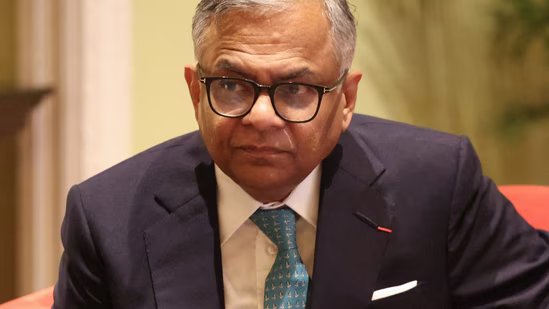
The board of Tata Sons Pvt. Ltd. deferred a decision on granting a third term to Chairman Natarajan Chandrasekaran, people familiar said, in the latest sign that another leadership tussle could be brewing at India’s oldest conglomerate. If Tata Sons Chairman Natarajan Chandrasekaran gets reappointed, it would provide leadership continuity for the group as it navigates headwinds across sectors. (AFP) The board of directors at Tata Group’s holding company discussed the reappointment in a meeting on Tuesday but did not take a final call as the current term runs till February next year, said the people, who asked not to be identified as the information is not yet public. The deferment follows a difference of opinion among board of directors regarding financial losses of certain business units, one person said. The Economic Times had reported this development earlier on Tuesday, days after the publication said Chandrasekaran was likely to get a third term. The decision signals another round of power struggle at the coffee-to-cars group that was shaken a decade back when its patriarch Ratan Tata came back from retirement to oust his successor Cyrus Mistry, triggering the country’s worst corporate battle. A spokesperson for Tata Sons did not immediately respond to an email seeking comment. Tata Group had a tumultuous time last year with multiple crises including a deadly Air India crash, a Jaguar Land Rover cyberattack, and renewed tensions at Tata Sons’ majority shareholder Tata Trusts, which is now led by Ratan’s half-brother Noel Tata. If the 62-year-old Chandrasekaran—the first non-family, non-heir chairman at Tata Sons—eventually gets reappointed, it would provide leadership continuity for the group as it navigates headwinds across sectors. For much of its 156-year history, Tata Group enjoyed unusually steady leadership, with chairmen drawn from within its trusted circle and transitions managed quietly. That calm was shattered in 2016, when Tata Sons abruptly ousted then-chairman Mistry in a boardroom coup led by Ratan Tata—a lifelong bachelor, who had no children to install in the role. The episode also raised questions about succession planning and the balance of power between Tata Sons and Tata Trusts, the charitable collective that controls two-thirds of the holding company. Chandra’s appointment in 2017 was meant to steady the ship and restore confidence. Under Chandra, Tata Group’s 15 largest listed companies almost doubled revenue and profits. His tenure has been defined by ambitious bets—from building India’s first homegrown semiconductor factory to steering cash-cow Tata Consultancy Services Ltd. through the disruption of artificial intelligence. The chairmanship decision will also show how Noel Tata is asserting himself after he took over Tata Trusts in 2024. Uncertainty is growing over how aggressively Noel plans to position himself and his children in the Tata power structure. His son, Neville, was appointed as a Tata Trusts trustee late last year while Mehli Mistry, an outspoken adversary, stepped down as a fellow trustee.
Money ‘will come back’: Haryana CM’s assurance after ₹590-cr ‘fraud’ in govt accounts at IDFC First Bank | Explained
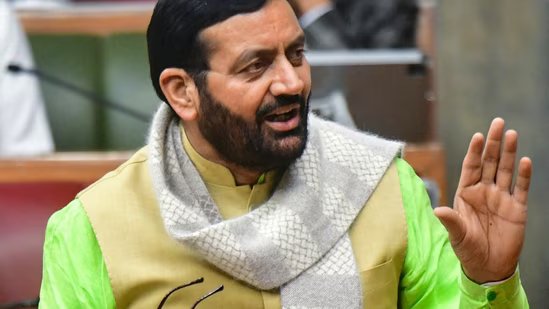
Haryana chief minister Nayab Singh Saini and Reserve Bank of India (RBI) governor Sanjay Malhotra on Monday gave assurances that the money is safe, after an alleged ₹590-crore fraud involving state government accounts came to light at IDFC First Bank. Haryana CM Nayab Singh Saini speaks during the ongoing budget session of the state assembly in Chandigarh on Monday, Feb 23, 2026. (PTI Photo) CM Saini told the Vidhan Sabha in Chandigarh that the money involved in the IDFC First Bank case “will definitely come back”. He also informed the House that the matter has been handed over to the Anti-Corruption Bureau (ACB) and the vigilance department, news agency PTI reported. He further noted that IDFC First Bank had communicated with the Securities and Exchange Board of India (SEBI) claiming an employee was responsible for the irregularities. In New Delhi, RBI governor Sanjay Malhotra said the central bank is “watching the development” surrounding the case but assured the public that “there is no systemic issue”. He clarified, thus, that the fraudulent activity was confined to a specific set of accounts and did not indicate a broader failure within the national banking system. The RBI’s statement followed a disclosure by IDFC First Bank reported on Sunday regarding the irregularities found at its Chandigarh branch. Nub of ₹590-crore question The suspected fraud was first detected when a Haryana government department requested to close its account at a Chandigarh branch of IDFC First Bank and transfer the balance to another institution, reports said. As reported by the Hindustan Times, the bank observed a significant difference between the balance reported by the department and the actual funds held in the account. Initial assessments by the bank identified a shortfall of ₹490 crore. Further internal reviews conducted by the lender identified an additional ₹100 crore in irregularities, bringing the total estimated discrepancy to ₹590 crore.”>approximately ₹590 crore. The bank’s regulatory filing to the National Stock Exchange (NSE) and the Bombay Stock Exchange (BSE) specified that these irregularities were limited to a specific group of government-linked accounts and did not impact other branch customers, HT has reported. How was ‘fraud’ carried out? The mechanics of the alleged fraud were detailed by IDFC First Bank managing director and CEO V Vaidyanathan during a conference call with investors, PTI reported. Vaidyanathan described the incident as a case of “employee fraud” involving the connivance of bank staff and external parties. The fraudulent activity utilised physical transactions involving cheques, he said. The CEO noted that the bank’s internal “fingerprints” and data clearly indicated the involvement of external entities. The bank management has currently found no evidence of involvement by its senior leadership, he added. Action and reaction so far Following the detection of the irregularities, the Haryana government is reported to have taken immediate administrative action. On February 18, the state’s finance department issued instructions to de-empanel IDFC First Bank and AU Small Finance Bank with immediate effect. These instructions were issued by the relevant additional chief secretary, and directed all state departments, boards, and public sector undertakings to cease all business with the two banks. While the initial instructions from the finance department did not state a reason for the move, Saini confirmed in the assembly that the de-empanelment was a direct response to the detected fraud. IDFC First Bank has suspended four officials suspected of involvement in the fraudulent transactions. The bank has also filed a formal police complaint and informed the banking regulator. To ensure an objective investigation, the bank is appointing an independent external agency to conduct a forensic audit, it has said. The bank’s regulatory filing noted that its statutory auditors have been informed of the discrepancies. Internal oversight committees, including the Special Committee of the Board for Monitoring and Follow-up of Cases of Frauds, met on February 20, followed by meetings of the audit committee and the board of directors on February 21, it explained. The disclosure of the alleged fraud had an immediate impact on the stock market, as shares of IDFC First Bank tumbled by around 20% on Monday, hitting the lower circuit limit of ₹66.85 on the BSE. AU Small Finance Bank, which was also named in the state government’s de-empanelment order, saw its shares fall by 7.6% to an intra-day low of ₹950.50. Political demands for accountability The issue became a point of debate in the Haryana assembly on Monday, where Leader of the Opposition and Congress MLA Bhupinder Hooda raised concerns about the security of state funds. Hooda noted that while the bank had detected the irregularities, the government must provide a full account of the actions taken to protect the public exchequer. In response to the opposition, Saini reiterated that the state government’s investigation is being conducted with transparency. He confirmed that the state crime branch is investigating the matter alongside the ACB. Saini assured the members that the government would not take the issue lightly and that any employee found to be involved would face strict consequences.