An explainer on Pax Silica, which gets India and boxes out China| Business News
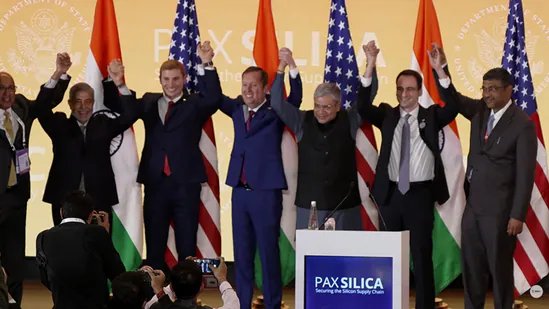
If the 20th century was defined by oil and steel, the 21st is forged in silicon. On Friday, India formally joined the Pax Silica—a US-led geopolitical and economic alliance designed to secure the global supply chain for AI, semiconductors, and critical minerals — sectors where China enjoys a near monopoly. India formally joined the US-led Pax Silica on Friday, 20 December 2026. (HT) Brokered by the US State Department, the alliance is an initiative to decouple from China. For India, joining the Pax Silica represents a strategic pivot—a chance to lock in billions in tech investments and cement its role as the primary alternative to China. The architecture of Pax Silica Launched in December 2025, Pax Silica is a nod to Pax Americana—a G7 of sorts for the AI age. The foundational premise is that today, economic security is now inseparable from compute power. Unlike previous, narrower chip pacts, Pax Silica takes an end-to-end approach. It coordinates policy across the entire technology stack—from the mining and refining of rare earth elements to fabrication of chips and their use in AI foundation models and data centres. The grouping includes Australia, Israel, Japan, the Netherlands, Singapore, South Korea, the United States and the United Kingdom, with Taiwan observing. Recent additions like the UAE and Qatar bring cheap energy to the table. And India, the demographic dividend of being the world’s populous country. And of course data generated by 1.45 billion citizens. The China Problem While the bloc’s official language emphasises positive-sum partnerships, the subtext is entirely focused on China. Beijing currently controls more than 60% of global rare earth processing and dominates legacy chip manufacturing. Pax Silica embodies Washington’s “moving gap” doctrine to maintain a permanent technological lead over China in AI and semiconductors. By coordinating export controls, subsidy, and capital flows among allied nations, Pax Silica attempts to weaponise interdependence. It effectively draws a “silicon curtain” across the global economy, restricting China’s access to the critical tools required to train AI models while subsidising capacity building in allied states. India’s entry into Pax Silica India’s formal inclusion this week—coinciding with the India AI Impact Summit in New Delhi—comes after two months of being left out in the cold. When Pax Silica was unveiled in late 2025, India was notably absent. While India boasts a massive engineering talent pool and a rapidly growing AI market, it lacks the fab chops of a Taiwan or a South Korea. But, things change. The India-US trade deal—an initial framework for which was signed earlier this month—has resulted in a thaw in relations. For Pax Silica to succeed it needs India’s raw potential, domestic market size, and growing mineral ambitions—as proposed in Union Budget 2026. US Ambassador to India Sergio Gor’s accelerated invitation to New Delhi underscores a pragmatic realisation: India is indispensable to any viable “China Plus One” strategy. Free Market Friction To be sure, the membership won’t be without friction. Entering Pax Silica opens the door for India Inc.—like Tata Group, which is rapidly expanding its semiconductor footprint—to deepen joint ventures with global chip giants like Micron and Applied Materials. It also provides New Delhi with a seat at the table in shaping global digital governance. Yet, India’s domestic industrial policy could clash with the bloc’s ethos. New Delhi relies heavily on protectionist measures, massive domestic subsidy, and import regulations to shield its nascent tech sector. Integrating these policies with Pax Silica’s free-market orientation and coordinated anti-dumping measures will require delicate diplomatic footwork. Ultimately, India’s accession to Pax Silica is a watershed moment. It signals that New Delhi is willing to trade a degree of strategic ambiguity for a permanent seat in the elite coalition defining the future of global technology. In the high-stakes contest for AI supremacy, the battle lines are now clearly drawn.
What happens to India, and India-US trade deal| Business News
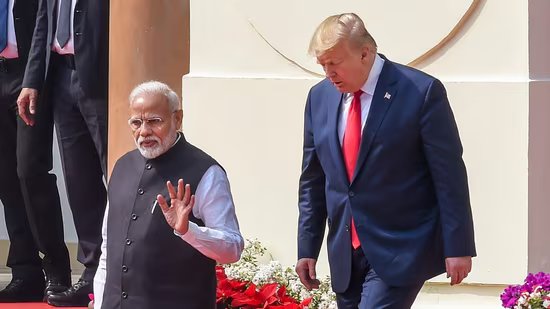
The US Supreme Court has dismantled President Donald Trump’s protectionist agenda, striking down his sweeping global tariffs. That potentially signals a reset for India’s exports to the US and complicates the India-US trade deal. Prime Minister Narendra Modi and US President Donald Trump at Hyderabad House in Delhi (PTI File Photo) In a 6-3 ruling, the US Supreme Court found that Trump administration exceeded its constitutional authority by using a 1977 emergency-powers law to unilaterally overhaul the nation’s trade policy. Chief Justice John Roberts stated that while the International Emergency Economic Powers Act allows the US President to respond to foreign threats, it does not grant a “blank check” to impose indefinite, across-the-board taxes. “The power to levy duties on commerce resides with Congress,” Roberts wrote. “The president cannot simply declare a trade deficit an ‘emergency’ to seize that mantle.” The India Reset While the interim India-US trade deal reduced US tariffs on India to 18% from 50% through most of last year, the SCOTUS verdict effectively dissolves the legal foundation for the original emergency tariffs. Economists at the Penn-Wharton Budget Model estimate the US may now be forced to refund upwards of $175 billion collected in tariffs under the invalidated IEEPA authority—a significant portion of which would return to Indian exporters in the textile, chemical, and engineering sectors. “For Indian industry, this ruling provides immediate relief from the overhang of high reciprocal duties, particularly in our labour-intensive sectors such as textiles, engineering, and chemicals,” Saurabh Agarwal, Tax Partner at EY India, told Hindustan Times over WhatsApp. That said, US import duty under Section 232 still continue impacting sectors such as steel, aluminium, automobiles, etc. India-US trade deal The decision complicates the finalisation of a broader India-US trade deal, which was scheduled to be effective in April. Under the framework agreed upon earlier this month, India had committed to a $500 billion “Buy American” program for energy and technology in exchange for tariff relief. Now, after the SCOTUS ruling on Trump tariffs, New Delhi has a bargaining chip. It can seek some concessions on Russian oil imports, as well as negotiate broader contours of the deal involving textiles and agri-products. “While we have already proactively secured our interests through the interim bilateral agreement, this judicial correction in the US further strengthens our negotiating hand,” Agarwal said. “The interim pact serves as a critical ‘stability bridge,’ protecting Indian exporters from sudden volatility while tariff-level negotiations continue.” “We see this as a net positive; it allows India to double down on its manufacturing momentum without the immediate threat of arbitrary trade barriers.” To be sure, the Trump White House still has legal recourse, including Section 122 of the 1974 Trade Act to maintain its “America First” reciprocity agenda. Market Reaction US stocks rose while bonds fell alongside the dollar after the SCOTUS order, with investors trying to figure out how much the ruling changes US trade policy. An MSCI Inc. gauge of developing-nation currencies rose 0.1% as of 10:20 am in New York Friday. Latin American currencies and South African rand immediately climbed to session highs following the 6-3 decision by the court. “This should be marginally positive for EMFX, mostly because it underscores the policy uncertainty out of the US,” said Alvaro Vivanco, emerging markets macro strategist at Wells Fargo. It “gives a push to the diversification theme.” “It seemed like only the administration was holding out expectations that IEEPA tariffs would be upheld,” said Brian Jacobsen at Annex Wealth Management. “This just means the Trump Administration will pivot to country-specific and sector-specific tariffs. Those take longer to impose.”
Accenture LearnVantage, at AI Summit, showcases building ai capability beyond the hype| Business News

Accenture LearnVantage, Accenture’s learning and skilling business, participated in the India AI Impact Summit that took place at the Bharat Mandapam in Delhi this week to demonstrate how enterprises and institutions can build AIready talent at scale – responsibly, inclusively, and with measurable outcomes. Delegates at AI-Summit at Bharat Mandapam, in New Delhi, (Sanjeev Verma/Hindustan Times) At the summit, LearnVantage showcased how learning must evolve – from episodic training to continuous, AI-enabled learning; from degree-centric education to skills-led talent creation; from isolated pilots to enterprise-wide workforce transformation. The LearnVantage booth highlighted how learning must be embedded in the flow of work, enabling people and AI to learn and evolve together. This shift is critical as AI reshapes roles, workflows, and decision-making across industries. Building AIReady talent; from early curiosity to mastery LearnVantage showcased a full talent pipeline, starting early and scaling through careers, it said. One example highlighted at the booth is the National AI Olympiad, a national-scale initiative designed to benchmark AI readiness across school students, college learners, and early professionals; build early awareness of AI concepts and responsible AI use; identify and nurture future AI talent through structured pathways. A core message at the booth was that AI reinvention is fundamentally a talent challenge. LearnVantage showcased how organisations can redesign work around skills rather than static job roles, prepare leaders and managers to govern and scale AI responsibly, move from AI pilots to measurable business impact LearnVantage also demonstrated how schools, colleges, and universities must evolve to remain relevant in an AI-driven economy. The focus was on aligning curriculum with real-world industry needs, enabling faculty and institutions with AIled learning models, creating employability-focused pathways, not just credentials. At the LearnVantage Experience Zone, visitors explored AI readiness and skills academies for enterprises, leadership and management capability programmes for AI-driven organisations among other interesting things. Accenture LearnVantage also contributed to the summit’s knowledge agenda through two panel discussions that examined how generative AI is structurally redesigning work, skills, and leadership, and why organisations must rethink talent strategy, not just adopt new tools to succeed at scale. One discussion focused on how educational institutions must evolve from traditional education models to skills-led talent creation systems, aligned with the future of work.
At India AI Impact Summit, Intel showcases its AI PCs and cost-efficient Frugal AI| Business News
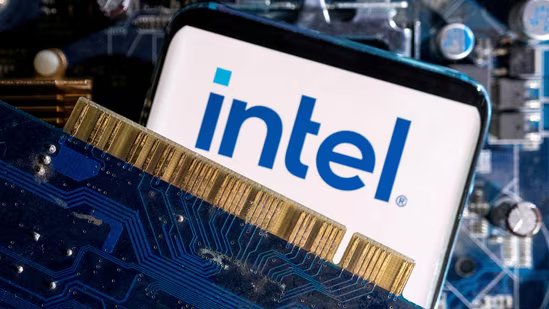
At the India AI Impact Summit 2026, where many pathbreaking technologies made their debut, Intel highlighted its “Frugal AI” approach, designed with an aim of making artificial intelligence practical, efficient, and scalable across India. Intel showcases frugal AI solutions at India AI Impact Summit 2026 in New Delhi (REUTERS FILE) The company said the right infrastructure must match the workloads it supports. Its Frugal AI approach focuses on distributed computing across PCs, edge devices, and localized systems instead of relying solely on centralised cloud infrastructure. According to Intel, the AI uses heterogeneous architectures combining CPUs, GPUs, NPUs, and other accelerators, designed to improve performance per watt and per rupee. Intel’s silicon-to-system strategy, the release added, optimises performance and power efficiency, making AI adoption practical and resource-conscious for India while enabling sustainable scaling within cost and infrastructure limits. AI PCs for active creation Intel, which has been present in India for 37 years and operates its largest engineering center outside the United States in the country, said it is playing a key role in designing next-generation AI-ready client platforms. These devices allow on-device AI processing with improvements of 50 per cent or more in CPU and graphics performance, along with significantly higher NPU efficiency—making AI workloads feasible without discrete GPUs. On-device AI also supports privacy-preserving, real-time inferencing, reducing dependence on the cloud. Intel noted that AI PCs can power emerging use cases, including agentic AI, deepfake detection, AI-driven content creation, and custom AI assistants. Lower system costs and power requirements, it added, make scalable AI adoption more accessible for students, enterprises, and developers. Expanding access for education Intel highlighted the gap in India between connectivity and digital fluency. While smartphone penetration is at 95 per cent, PC penetration is only about 9.9 per cent, limiting hands-on learning, coding, design, and AI experimentation. Only around 20 percent of Indians are proficient in computer use. The company said that moving from digital literacy to digital fluency requires consistent access to PCs in classrooms and homes. Collaboration across OEMs, ISVs, educators, and edtech partners is crucial to make AI-powered learning personalised, vernacular, and outcome-driven. Intel further said that expanding affordable PC access is key to democratizing education and building India’s future-ready talent pipeline.
Niral Networks unveils AI-integrated Edge platform at India AI Summit| Business News

Bengaluru-based Niral Networks showcased its latest advancements in cyber-resilient infrastructure at the India AI Impact Summit 2026, with a presentation centered on NiralOS, a comprehensive suite designed to bridge the gap between high-speed 5G connectivity and localized artificial intelligence. Visitors at the India AI Impact Summit at Bharat Mandapam, in New Delhi, India, on Monday, 16 February 2026. (Sanjeev Verma/HT) The “Bare-Metal” Edge of Industrial AI At the heart of Niral’s showcase was the NiralOS EDGE, a next-generation Type-1 hypervisor engineered for the grueling demands of industrial environments. Unlike legacy systems that often struggle with vendor lock-in and high latency, NiralOS EDGE offers bare-metal performance with low operational complexity. A key highlight was the platform’s mediated GPU support, which allows a single physical GPU to be partitioned into multiple isolated instances. This “slicing” capability enables high-performance AI workloads—such as machine vision for quality control and predictive maintenance—to run simultaneously on virtual machines without sacrificing speed or security. Orchestrating Complexity via AI Niral Networks addressed the growing difficulty of managing decentralized networks with its NiralOS Controller. Leveraging Software Defined Networking (SDN) and AI, the controller provides a “single window” dashboard for orchestrating resources across multiple sites. The Summit audience was introduced to several AI-enhanced features designed to automate the “lifecycle” of industrial digital transformation: AI-Assisted VM Creation: Optimizes resource allocation during virtual machine setup. Predictive Maintenance: Uses system monitoring to anticipate maintenance needs before downtime occurs. Self-Healing Clusters: Built-in high availability ensures that if a node fails, the system recovers automatically with zero downtime. From Open-Cast Mines to Smart Cities Niral’s presence at the summit wasn’t merely theoretical. The company highlighted over 60 successful deployments across three geographies, proving the versatility of its “Private 5G + Edge” model. Real-world applications displayed included: Mining & Energy: Deployed 5G roaming for unmanned vehicles in open-cast and underground mines. Logistics & Ports: Real-time inventory management using Autonomous Guided Vehicles (AGVs) and drone surveillance. Smart Factories: Integration of AR/VR for remote support and employee training. Securing the “Air Gap” As industrial cyber-attacks become more sophisticated, Niral emphasized its Air Gapped network architecture. By keeping critical operations on a closed private 5G network—isolated from the public internet by a physical and digital air gap—NiralOS ensures that sensitive industrial data remains protected from external cyber-threats. With 25+ partnerships and a robust integration ecosystem involving over 20 radio partners, Niral Networks is positioning itself as the primary architect for India’s autonomous future.
SCOTUS ruling on Trump tariffs kicks off messy fight over $170 billion in refunds| Business News
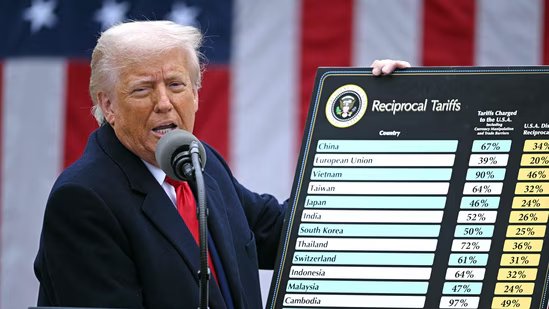
Tariff refunds for companies that paid tens of billions were left unresolved by the Supreme Court, which ruled on Friday that President Donald Trump didn’t have legal authority to impose the duties under an emergency law. (File) US President Donald Trump holds a chart as he delivers remarks on reciprocal tariffs during an event in the Rose Garden entitled “Make America Wealthy Again” at the White House in Washington DC, on 2 April 2025. (AFP) The ruling will kick off what can be a prolonged battle for importers and retailers to try to recoup as much as $170 billion in tariffs they have already paid to the US government. Among the major questions left unanswered for US importers are the prospects and the process for recouping the money the government collected over the past year under the International Emergency Economic Powers Act. The vote was 6-3 against the Trump administration, with Justice Brett Kavanaugh writing in dissent. “The court says nothing today about whether, and if so how, the government should go about returning the billions of dollars that it has collected from importers,” Kavanaugh wrote. “But that process is likely to be a ‘mess,’ as was acknowledged” during the court’s oral arguments in November. US Customs and Border Protection so far has collected an estimated $170 billion in tariffs imposed by Trump using the International Emergency Economic Powers Act, the law at the center of the case, as of 14 December. The court ruled that using IEEPA to impose tariffs wasn’t lawful, but the justices didn’t address whether importers are entitled to refunds, leaving it to a lower court to sort out those issues. The litigation will return to the US Court of International Trade for the next round of legal wrangling. While waiting for the justices to rule, more than 1,500 companies have filed their own tariff lawsuits in the trade court to put themselves in line for tariff refunds, according to a Bloomberg analysis. The trade court in recent months has pressed the Justice Department for at least a hint of how it plans to handle the refund issue if it lost at the Supreme Court. In written submissions, government lawyers have said that the administration won’t fight the court’s authority to order officials to recalculate tariffs, but left open the possibility that it might try to limit which importers are eligible. The US trade court has experience managing a mass refund process. After the Supreme Court struck down a harbour maintenance tax on exporters in 1998, the court created a claims process. That fight involved approximately 4,000 cases and $750 million in taxes paid, according to court records and reports at the time. The scale of Trump’s contested tariffs is far larger—by the end of 2025, the govt told the trade court that more than 300,000 importers had paid the contested tariffs so far. “For importers, it means that there is a refund potential,” said Ted Murphy, a partner at Sidley Austin LLP. What the refund process will be and how long it will take “is a big issue,” he added. The 1977 emergency powers law doesn’t mention tariffs, and had never before been used to impose the duties. Companies are still subject to other tariff measures. With nearly $774 billion cash on hand, the US Treasury has more than enough cash on hand to return IEEPA revenue if ordered to, according to Secretary Scott Bessent, though that could happen over weeks or months and “may take over a year,” he said in a Reuters interview last week. Bessent also suggested that refunds may amount to a “corporate boondoggle” for companies that passed on the tariff burden. “Costco, who’s suing the U.S. government, are they going to give the money back to their clients?” Some industries stand to receive a bigger share of the duties collected under IEEPA as of Dec. 14. According to an analysis from Bloomberg Economics, textiles, toys and food and beverages industries top the list of industries that import final goods, including wholesalers, retailers and manufacturers with factories outside the US. For those that import tariff-hit components needed to manufacture goods domestically, it’s machinery, electronics and autos that stand out. “The construction industry—from its purchases of electrical equipment and appliances, possibly to be fitted in new buildings—also appears particularly exposed,” BE’s Nicole Gorton-Caratelli and Chris Kennedy wrote. Firm size will also play a role in who sees the biggest refunds, they said. Because any refunds would go to the importers-of-record who paid the duties, larger companies that import goods themselves are more likely to receive refunds directly than smaller firms that buy from wholesale importers. Customs brokers and lawyers are advising companies that the administration could make it difficult to obtain refunds, potentially requiring proof that they didn’t pass the cost on, or demanding extensive paperwork for each shipment. For now, importers are being told to at least have their import records in order for a refund push, even if they don’t know what it’ll look like yet. CBP recently announced that starting 6 February, the US Treasury would no longer issue CBP refunds via paper check, instead moving to electronic payments.
GIFT Nifty surges 400 points after SCOTUS outlaws Trump tariffs| Business News

GIFT Nifty surged nearly 400 points from an intraday low on Friday, after the US Supreme Court outlawed US President Donald Trump’s global tariffs—a move that gives New Delhi a bargaining chip in negotiating the India-US trade deal. The narrative of India’s stock market over the last year has been a volatile tug-of-war between protectionist “tariff shocks” and the relief of a long-awaited trade deal. While the market was severely battered throughout 2025, the recent breakthrough on February 2, 2026, has sparked a massive recovery. During the height of the trade tensions in late 2025, the Sensex and Nifty corrected by nearly 3% in a single month, with FIIs (Foreign Institutional Investors) pulling out over $22 billion in 2025 alone. The rupee plunged to record lows multiple times over. Analysts estimated that Indian equities underperformed their emerging market peers by nearly 40% during this period due to the lack of trade clarity.