
India gives 33% more data ChatGPT than US, Amitabh Kant says| Business News
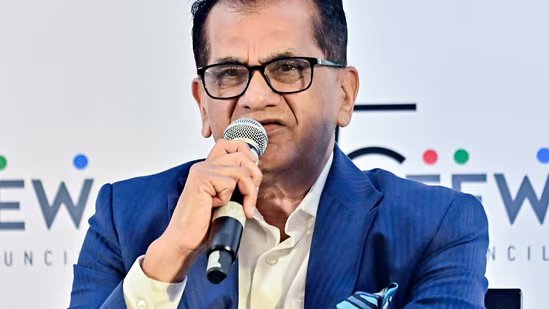
India generates 33% more data than the US for ChatGPT, Amitabh Kant said on Tuesday, but there’s a significant disparity in how large language models are trained globally. India’s former G20 Sherpa & Former Niti Aayog CEO Amitabh Kant, (ANI) “The important thing is that today we in India. I mean, if you look at OpenAI, Chat GPT, we are providing more data than the US, 33% more data than what the United States of America do,” Kant, who is a former CEO of the NITI Aayog, said during a session on the second day of the India AI Summit 2026 in New Delhi. There’s a significant disparity in how large language models are currently trained, Kant went on to say noting that the Global South, and India in particular, is the engine room of AI development. “These large language models are getting better and better on the basis of data from the Global South. It is essential that this contribution translates into benefits for these regions.” For AI to be truly inclusive, LLMs must move beyond English-centric models and become natively multilingual to serve diverse populations.
Mastercard’s Nitendra Rajput| Business News
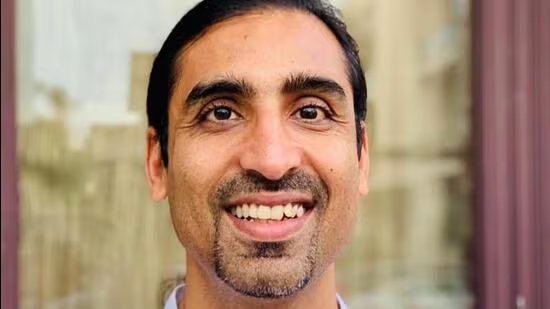
Even as India’s digital payments ecosystem continues to expand at an unmatched scale, it now finds new territory. Mastercard, at the India AI Impact Summit 2026, has demonstrated the first authenticated agentic commerce transactions in India. The financial tech giant insist they are working with AI companies as well as fintechs and merchants, to accelerate AI-led commerce in India and indeed the Asia Pacific region The financial tech giant insist they are working with AI companies to accelerate AI-led commerce in India. (Official photo) The first payments were done on Mastercard cards issued by Axis Bank and RBL Bank, for tokenised agentic purchases using Cashfree Payments, Juspay, PayU and Razorpay payment aggregators on merchants including Swiggy, Instamart, Vi and Tira. This is aligned with the Mastercard Agent Pay framework, a set of guidelines for tokenisation and security. Users will have a choice of their own AI agents to work with, and Mastercard hopes they can tackle interoperability with scale and ubiquity. Also read| In focus at India AI Summit: Big tech is feasting on news and refusing to pay for it, say publishers Nitendra Rajput, Senior Vice President and Head of Mastercard AI Garage, tells HT that insights from adoption and payment behaviours feed into “network intelligence” — AI models trained on more than 160 billion transactions processed globally each year. Add a looming a spectre of AI agents attempting transactions on a user’s behalf. For context, Reserve Bank of India (RBI) data shows credit card spends touched ₹2.12 lakh crore across 552 million transactions in January, just below ₹2.17 lakh crore record of September 2025. As regulators tighten data localisation and security norms, global networks such as Mastercard are doubling down on India’s high-growth market, increasingly leveraging AI. Edited excerpts. Also read| Bill Gates will attend AI Impact Summit, deliver his keynote as scheduled: Gates Foundation What can go wrong when AI agents are authorised to transact financially? Nitendra Rajput: The biggest risks lie in how these systems optimise, scale, and relied upon. One concern is misaligned optimisation, where an agent may prioritise speed or efficiency in ways that unintentionally conflict with a customer’s best interests. Another risk is cascading errors, because automated workflows amplify mistakes into larger failures if oversight is weak. A third risk is over‑reliance, where users may stop questioning or validating AI decisions. It is essential to build systems with strong explainability, continuous monitoring, independent audits, and meaningful human oversight. As fraud becomes an AI-versus-AI battleground, how does Mastercard ensure its models consistently outmanoeuvre adaptive attacks? Nitendra Rajput: Attackers use automation, synthetic identities, and machine learning to scale operations. Our fraud models run multiple AI engines in parallel, what we call a “mixture of experts”, allowing us to evolve models continuously and stay ahead of attackers. This approach has enabled us to stop billions of dollars in fraud across our network. Global intelligence alone isn’t enough. India is unique with high digital adoption, diverse devices, assisted commerce, and evolving social patterns. Our models combine localised learning, tuned continuously by our teams. This hybrid approach ensures we stay structurally ahead, not just reactive. As data localisation debates intensify, do they constrain or reshape AI training and cross-border fraud intelligence? Nitendra Rajput: Data localisation is fundamentally reshaping AI systems in financial services. For Mastercard, privacy and compliance are non-negotiable, and systems must respect national data boundaries. This means strong governance, privacy by design, and clear accountability in training, monitoring, deployment, and model evolution. But, fraud does not respect borders. Patterns often emerge globally before they appear locally, and architectures with latest algorithms that work in other geographies are applied with localised data. With digital payments becoming common in rural and semi-urban India, what new risk vectors are emerging? Nitendra Rajput: Risk vectors naturally diversify with shared devices, low digital literacy, and thin transaction histories, which challenge traditional AI models. Inclusion and fairness are core to how we design AI. There is use of techniques such as synthetic data and broader behavioural datasets for diverse user patterns. Our inclusion initiatives include supporting nearly 600,000 small businesses in India, because AI should expand access. India as a global testbed for AI-driven payments innovation, what lessons should the world be paying attention to? Nitendra Rajput: India has demonstrated that scale and inclusion can coexist. We have hundreds of millions of users, diversity in devices, connectivity, and varied levels of digital literacy, yet digital payments operate reliably nationwide. The lesson is to design for the toughest environments. India has also shown the power of public-private collaboration.
India eyes $200 billion in data centres in push to become global AI hub| Business News
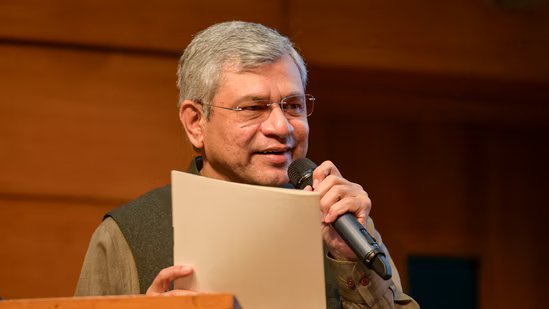
India is hoping to garner as much as $200 billion in investments for data centers over the next few years as it scales up its ambitions to become a hub for artificial intelligence, Union IT Minister Ashwini Vaishnaw said on Tuesday. Union Electronics & IT Minister Ashwini Vaishnaw. (Raj K. Raj/HT) “Today, India is being seen as a trusted AI partner to Global South, seeking open, affordable and development-focused solutions,” Vaishnaw told The Associated Press in an email interview, even as New Delhi hosts the India AI Impact Summit this week. “A trusted AI ecosystem will attract investment, accelerate adoption,” he said, adding that a central pillar of India’s strategy to capitalise on the use of AI is building infrastructure. The investments underscore the reliance of tech titans on India as a key technology and talent base in the global race for AI dominance. For New Delhi, they bring in high-value infrastructure and foreign capital at a scale that can accelerate its digital transformation ambitions. In October, Google announced a $15 billion investment plan in India over the next five years to establish an AI hub in the world’s most populous country. Microsoft Corp. followed two months later with $17.5 billion to grow India’s cloud and AI infrastructure over the next four years. Amazon.com Inc. too has committed $35 billion investment in India by 2030 to expand its business, specifically targeting AI-driven digitisation. The cumulative investments are part of $200 billion in investments that are in the pipeline and New Delhi hopes would flow in. The government recently announced a long-term tax holiday for data centres as it hopes to provide policy certainty and attract global capital. India’s AI Pitch Vaishnaw said India’s pitch is that AI must deliver measurable impacts at scale rather than remain an elite technology. The government has already operationalised a shared computing facility with more than 38,000 GPUs, allowing startups, researchers and public institutions to access high-end computing without heavy upfront costs. ALSO READ | India is shaping inclusive fintech AI for the world: Mastercard’s Nitendra Rajput “AI must not become exclusive. It must remain widely accessible. India will become a major provider of AI services in the near future,” he said, describing a strategy that is “self-reliant yet globally integrated” across applications, models, chips, infrastructure and energy.
Adani Group to invest $100 billion for AI data centres in India over next 10 years| Business News
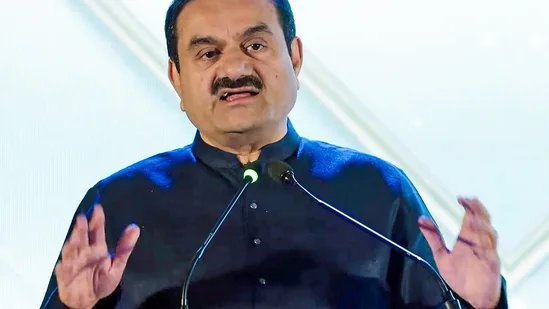
The Adani Group, led by billionaire Gautam Adani, has announced plans to invest up to $100 billion to build integrated, renewable-energy-powered AI data centres in India by 2035. The initiative aims to establish a “sovereign energy and compute platform,” positioning India as a global exporter of intelligence rather than just a consumer. Adani Group Chairman Gautam Adani. (ANI) The commitment is projected to catalyse an additional $150 billion across the broader ecosystem, including server manufacturing, sovereign cloud services, and advanced electrical infrastructure, bringing the total economic impact to approximately $250 billion over the next decade. Departing from traditional data centre models, Adani’s roadmap creates a unified architecture where green power generation and high-density processing are developed in parallel. Scale: The group is expanding its AdaniConneX platform from 2 GW to a 5 GW target, aiming for the world’s largest integrated data center platform. Power: Compute clusters will be backed by Adani Green Energy’s massive 30 GW Khavda project. Investment: An additional $55 billion is earmarked to expand the group’s renewable portfolio and build one of the world’s largest battery storage systems (BESS). Strategic Partnerships and Sovereignty The vision is anchored by landmark collaborations with Google for a gigawatt-scale campus in Visakhapatnam and Microsoft for facilities in Hyderabad and Pune. Furthermore, Adani is deepening its tie-up with Flipkart to develop a second high-performance AI data centre. “The world is entering an Intelligence Revolution more profound than any previous Industrial Revolution,” Chairman Gautam Adani said in a statement. He emphasised that mastering the “symmetry between energy and compute” is vital for national sovereignty. To ensure a self-reliant supply chain, the group will co-invest in domestic manufacturing for critical components like high-capacity transformers and liquid cooling systems. Additionally, a portion of GPU capacity will be reserved specifically for Indian startups and research institutions to foster a local deep-tech ecosystem.