Volatility, trade shifts and the case for bonds in your 2026 portfolio| Business News

As we head into 2026, one thing is clear for investors: the world is entering a phase of realignment. Global trade equations are shifting, supply chains are being reworked, and geopolitical priorities are evolving faster than markets can price in. While these changes open up long-term opportunities for India, they also make the near-term investment landscape far more volatile and unpredictable. The mistake many investors make is treating their entire portfolio as one bucket. (Jiraaf) This is precisely why bonds deserve a sharper focus in the investment playbook for 2026. Volatility is the new normal Global markets are currently grappling with uncertainty stemming from changing trade dynamics. Countries are moving away from over-dependence on a single trading partner and towards diversified, regional supply chains. Tariff structures, export incentives, and trade barriers are all being reassessed. These transitions rarely happen smoothly. For India, this phase comes with optimism and noise. The much-awaited India–US trade deal and the mammoth India–EU trade agreement has the potential to significantly reshape India’s export landscape, manufacturing base, and global economic integration. Over the long run, these deals could enhance competitiveness, attract capital, and strengthen India’s position in global value chains. However, trade agreements are not overnight triggers. They take years to negotiate fully, ratify, implement, and translate into actual corporate earnings and economic growth. Markets, on the other hand, react instantly to headlines, expectations, and disappointments. This mismatch is one of the biggest reasons why Indian equity markets remain volatile despite positive long-term developments. Why Equities Feel Unsettled Despite Good News Indian equities are currently caught in a strange crosscurrent. On one side, there is optimism about India’s growth story, demographic dividend, and rising global relevance. On the other side, there is uncertainty around global demand, currency movements, interest rates, and the pace at which trade benefits will materialize. For retail investors, this environment can feel confusing. Good news does not always lead to steady market gains. In fact, markets often turn volatile when expectations run ahead of reality. This is not a sign that long-term growth is broken. It is simply how transition phases behave. The mistake many investors make is treating their entire portfolio as one bucket. In volatile phases, this approach exposes short-term goals to unnecessary risk and emotional stress. Time Horizon is the Most Underrated Strategy One of the most important principles retail investors should adopt in 2026 is portfolio segregation based on time horizons. Not all money should chase growth, and not all money should play safe. Each rupee must have a role. Short-term and medium-term goals, such as buying a car, funding a child’s education in the next few years, building an emergency fund, or planning a down payment, require predictability. These goals cannot afford market swings driven by global trade headlines or policy uncertainty. This is where stable, predictable asset classes come in. The Role of Bonds and Fixed Income in 2026 For short and medium-term corpus, instruments such as fixed deposits and corporate bonds play a critical role. They offer visibility on returns, regular income, and capital protection when held appropriately. In a volatile equity environment, this stability becomes invaluable. Corporate bonds, especially investment-grade bonds, allow investors to earn better yields than traditional savings instruments while still maintaining a fixed-income structure. They remove day-to-day market noise from the portfolio and ensure that essential goals are met on time. Platforms such as SEBI-registered online bond platforms have made this asset class more accessible to retail investors. With lower minimum investment amounts, transparent disclosures, and a wide range of issuers, bonds are no longer reserved for institutions or high-net-worth individuals. Subtle shifts like these are changing how Indians think about fixed income, and platforms like Jiraaf. are part of this broader democratization. By allocating short and medium-term money to bonds and similar instruments, investors create a buffer in their portfolio. This ensures that near-term needs are met without disturbing long-term investments during market corrections. Let Long-Term Money Do the Heavy Lifting While bonds bring stability, equities remain essential for long-term wealth creation. Goals that are more than five years away, such as retirement or long-term wealth accumulation, can comfortably ride through periods of volatility. Equities benefit from economic growth, corporate earnings expansion, and productivity gains that trade deals aim to unlock over time. Short-term market fluctuations, driven by negotiations or global uncertainty, have limited impact when the investment horizon is long enough. By separating long-term capital from short-term needs, investors avoid panic-driven decisions. They do not have to sell equities at the wrong time to fund near-term expenses. This discipline alone can significantly improve long-term outcomes. A Balanced Playbook for an Uncertain World The investment playbook for 2026 is not about choosing between bonds and equities. It is about using both wisely. Global trade realignment will continue to create headlines, volatility, and opportunities. India stands to gain structurally, but the journey will not be linear. Bonds provide calm in the chaos. They bring predictability, income, and confidence that short-term goals are protected. Equities, on the other hand, fuel long-term growth and wealth creation. For retail investors navigating an increasingly complex global environment, this balance is not optional. It is essential. In a world where change is constant, the smartest strategy is one that aligns money with time, risk, and purpose. Note to the Reader: This article is part of Hindustan Times’ promotional consumer connect initiative and is independently created by the brand. Hindustan Times assumes no editorial responsibility for the content.
BSE, Angel One, MCX shares tumble after RBI action against leveraged trading| Business News

India’s $5.2-trillion stock market has had a soft start to the year, and it could face further pressure as new regulatory measures to moderate trading activity add to existing concerns about corporate profit growth and foreign flows. The Reserve Bank of India wants to protect banks’ balance sheets from rising stock market volatility. (Reuters) Late Friday, the Reserve Bank of India tightened rules on bank loans to proprietary traders and stock brokers, a move that may curb leveraged trading. Earlier this month, taxes on equity derivatives were raised, unsettling markets, and the market regulator later hiked margins for a popular trading strategy. Together, these measures come just as a US trade deal had begun to lift sentiment. The market has been trying to recover from its weakest start to a year in a decade, with investors already concerned about modest earnings growth, a rout in software services stocks and relatively high valuations. The authorities are “attempting to de-risk the system, so no undue excesses are built and even if there are accidents, there are no large ramifications,” said Jimeet Modi, chief executive of Mumbai-based Samco Group. “There will be short term impact but in the long-term, the blow-up risk goes down.” Shares of capital market-related stocks slumped on Monday. BSE Ltd. fell as much as 9.9%, while Angel One Ltd.’s shares tumbled 9.5%. MCX Ltd.’s shares slipped 7.4%. The stock benchmark NSE Nifty 50 Index rose 0.2% at 10:34 am local time. The National Stock Exchange of India Ltd., the country’s top stock exchange, will likely bear the burnt of the RBI’s move, as sliding trading volumes weigh on profitability just as the company prepares to go public after a decade-long wait. The bourse reported a 37% decline in profit in the December quarter, while revenue slid 10% from a year earlier. Smaller brokerages and proprietary trading houses, which run on wafer-thin margins, will feel impact. Larger broking firms are likely to turn to alternative funding channels, creating faster growth opportunities in structured products and lending solutions for wealth managers, Citigroup Inc. analysts Dipanjan Ghosh and Kunal Shah said in a note. Still, for the central bank, the measures signal its intent to protect banks’ balance sheets from rising stock market volatility globally driven by geopolitical tensions and evolving impact of artificial intelligence on businesses. The tightening is “a prudent step toward reinforcing systemic stability,” said Ajay Kejriwal, executive director at Choice International Ltd., a Mumbai-based brokerage. “For the broader broking ecosystem, the impact remains largely contained.”
Intel’s Santhosh Viswanathan on semiconductors, India’s materiality| Business News
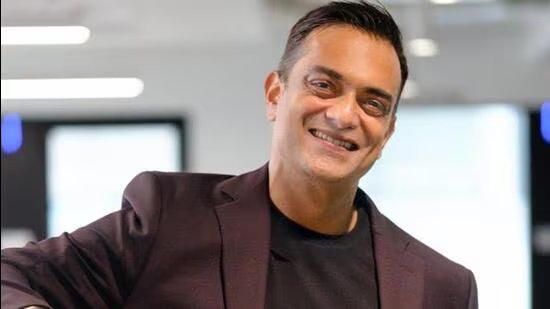
For Intel, 37 years in India have coincided with several pivotal technology shifts. Santhosh Viswanathan, Vice President and Managing Director for the India Region at Intel Corporation, isn’t one to dwell on past laurels, but does recognise a key role the tech giant played sometimes visibly and often behind the scenes. At the India AI Impact Summit 2026, Viswanathan tells HT that India finds itself at a pivotal moment, needing to define itself as a material market with data centre infrastructure, AI for masses, and PC penetration. Viswanathan argues that while the West is pursuing a capital-intensive race toward frontier models. (Official photo) “It’s not one moment in these four decades, but multiple ones contribute to what Intel is in India,” says Viswanathan, noting PC, mobility, wireless connectivity and digital payments, as key milestones. His larger point is about “invisible infrastructure”, the kind that powers UPI at scale, and that approach should shape AI’s next phase. Applied to education, AI can meaningfully repair what he sees as a structurally broken system. Viswanathan argues that while the West is pursuing a capital-intensive race toward frontier models and “super-intelligence,” India should not attempt to compete directly. Instead, the key is a “horizontal layer”, bringing AI to the masses through scalable applications. Sovereign models for languages and cultural nuance will matter, but so will keeping inference costs low. Intel’s AI PCs, with the latest Panther Lake and Wildcat Lake chips, enable local processing, reducing dependence on costly cloud compute and protecting privacy in use cases such as education. Materiality and semiconductors “India must be material to the tech world, because it means that the market shouldn’t just be large in size, but also in terms of the quality of business,” insists Viswanathan, further explaining that while India generates almost 20% of the world’s data, it hosts only 2% of total server capacity. That mismatch, he argues, is the clearest symptom of India not yet being “material”, and thereby losing a potential lever of tech sovereignty. In December, Tata Group and Intel Corporation announced a strategic partnership focusing on consumer and enterprise hardware, as well as semiconductor manufacturing.“Semiconductor is a long journey,” he says. Though Viswanathan doesn’t share numbers underlining this partnership, he insists that’ll “be an outcome of the relationship,” not the starting point. The focus is to support India’s semiconductor journey, including advanced packaging, while building India-centric products and infrastructure across telecom networks, servers, and affordable AI PCs. “Before investments, intent is the keyword. With CEO Lip-Bu Tan being here earlier, he signalled that India is an important market. We want to support key government priorities. If semiconductors is one, we can’t stand on the sidelines,” he says. Globally, data centre capacity remains concentrated. The US has 5,300 data centres with an installed capacity of 54 gigawatts, while China operates with 20 gigawatts, and Europe clocks 13 gigawatts. India currently has 1.6 gigawatts operational capacity, with a further 1.7 gigawatts expected to be ready by 2027. India is pushing to become a global data centre and AI hub, with the Union Budget 2026–27 proposing a tax holiday until 2047 for cloud providers using local facilities. Expansion though remains capital-intensive, costing around ₹40 crore per megawatt, and dependent on reliable power as well as water supply. Tata Group’s greenfield fabrication plant in Gujarat’s Dholera, has production capacity of 50,000 wafers every month. Viswanathan points to an already proven strength in talent, R&D and engineering. Next step is scale. India must find significance in servers, PCs and edge compute, large enough that global companies design specifically for it. It’s already happening, with smartphones and TVs. “Until that happens, India remains a paradox — a massive digital society sitting atop borrowed infrastructure,” he says. “Right to compute” argument A question Viswanathan asks, albeit not expecting a cogent answer for is — “why is our PC penetration less than 10%, versus China (60%), or the US (95%)?” He insists that beyond infrastructure, semiconductor and AI conversations, India’s AI future will be decided in classrooms. “Why is the computer still in labs? Key is to augment the teacher, not replace”, he wonders. Viswanathan’s frustration isn’t about technology, but more philosophical. “We cannot imagine a classroom without blackboards or textbooks. Yet, we accept classrooms without computers,” he laments. Can AI can meaningfully improve education? “Right to compute is must for this generation,” he says. AI assistants in education can help personalise delivery of lessons, help with revision, adapt explanations, translate concepts into familiar contexts, and extend learning beyond classrooms. This will require the use of technology in schools and at homes. Over the past year, Intel has worked with the government, introducing AI as a subject in more than 6,000 schools covering an estimated 1.6 million students, and also set up over 275 Intel Unnati AI Labs in colleges, focused on data centres, generative AI and data security. Viswanathan hopes the government can leverage APAAR ID (Automated Permanent Academic Account Registry) to help students buy or upgrade PCs every few years, potentially lowering tax burden to encourage adoption. “A phone is not tailored for education,” he insists. There is reason for optimism. India has already crossed the first wave of digital education — the video era. “Everyone’s watching a video on YouTube or an app, and making notes,” he says. The next shift, powered by education copilots, can move toward guided and personalised learning. “If 95% households can buy televisions, often large screens, affordability alone can’t be the whole explanation,” he remarks. This is a clear intent on Intel’s part, wanting to be part of the scaffolding that makes India’s next generation infrastructure stack.
Companies Are Replacing CEOs in Record Numbers—and They’re Getting Younger| Business News

Record CEO turnover at U.S. public companies has put the biggest class of incoming chief executives in years at the helm of massive enterprises—and the newcomers are younger and less experienced than before. From left, Walmart’s John Furner, Procter & Gamble’s Shailesh Jejurikar and Target’s Michael Fiddelke. About one CEO in nine was replaced last year across 1,500 of the biggest publicly traded companies, a new analysis finds. That is the highest rate since at least 2010, when the U.S. was emerging from the financial crisis. The pace doesn’t appear to be slowing. Dozens more companies brought in new CEOs in January or early February, including Walmart, Procter & Gamble and Lululemon Athletica. On a single day in early February, Disney, PayPal and HP announced new CEOs, and last week Kroger named a former Walmart executive to head the grocer. The result is a grand experiment in leadership as companies grapple with the swift rise of artificial intelligence, the unraveling of long-established trade practices and an unsettled economy and geopolitical order. “We’re in a new environment, and someone who’s going to replay the playbooks of the past is not necessarily right,” said James Citrin, head of the global CEO practice at executive-recruiting firm Spencer Stuart, which produced the report. “If the CEO doesn’t get momentum both internally with operating performance and also with investors, then boards are more impatient even than they were.” Many of the issues they face are a departure from conventional business challenges. Target CEO Michael Fiddelke took over at Target from 11-year veteran Brian Cornell this month. But he found himself posting a video message to employees days before, addressing federal immigration actions in the company’s hometown, Minneapolis. “This isn’t the first message I imagined I’d send,” he said. In the last quarter of 2025 alone, companies with a combined market capitalization of $1.3 trillion appointed or lost chiefs, including Verizon Communications and Yum Brands, the parent of fast-food chains KFC, Pizza Hut and Taco Bell. Companies adding or losing new leaders in early 2026 have a combined value of $2.2 trillion, with Walmart making up nearly half, according to a Wall Street Journal analysis of data from corporate-disclosure firm MyLogIQ. Some changes were long in the works. Warren Buffett turned Berkshire Hathaway over to Greg Abel on Jan. 1—a succession plan Buffett raised in 2021. Other changes were more sudden. CarMax ousted Bill Nash in November amid a slump in sales, ending his nine-year run. HP picked director Bruce Broussard as interim CEO after Enrique Lores stepped down to take the top job at PayPal next month. Biotech firm Codexis abruptly replaced its CEO of three years with its chief technical officer, Alison Moore, and cut 24% of its workforce at the same time. Especially in retail, the crosscurrents buffeting companies since the pandemic demand different approaches, said Adolfo Villagomez, who took the helm of 1-800-Flowers.com from its founder in May. “It’s a very different skill profile when you have growth as a tailwind versus when you have a lot of headwinds and you need to reinvent the company,” said Villagomez, who previously ran a residential rental company and held executive positions at Home Depot. “That’s why you see a lot of change.” There are signs this is more than the normal ebb and flow of executive reshuffling. Recent high-profile departures include long-tenured executives—including Walmart’s Doug McMillon after more than a decade and Buffett after six decades. But incumbent CEOs are generally stepping down sooner than they traditionally have. Meanwhile, incoming chiefs are younger and less experienced than previous crops of new leaders, Spencer Stuart found. Incoming CEOs averaged 54 years old, compared with nearly 56 for last year’s appointees. More than 80% of last year’s 168 incoming CEOs were first-timers, with no prior experience running public companies or other major stand-alone enterprises. Two thirds of them have never served on a corporate board before. Some, like Raymond James’s Paul Shoukry, are younger than their predecessors were when they got the top job. The financial-services firm promoted Shoukry, 42, from CFO to CEO last February. He succeeded Paul Reilly, who was 55 when he became CEO in 2010. Executives who haven’t run a stand-alone company aren’t necessarily untested. Josh D’Amaro, the 55-year-old Disney executive slated to take over from Bob Iger next month, has been running the company’s theme-park and cruise unit, with $36 billion in annual revenue and 185,000 employees worldwide. “Younger makes sense to me, given the changes in the world,” said Cindie Jamison, a longtime turnaround executive who sits on boards including Darden Restaurants and International Flavors & Fragrances. “Things are shifting and changing very dramatically and permanently and you want people who’ve been in the trenches facing these decisions.” When companies did bring in older and more experienced chiefs, it often reflected a scramble in tough circumstances. More companies chose a board member to run things day-to-day last year, usually a stopgap move that suggests succession hadn’t gone as planned, Spencer Stuart said. That includes 15% of incoming technology, media and telecom CEOs. New female CEOs grew scarcer last year. Just 9% of new appointments went to women, down from 15% a year earlier. Overall, about 9% of CEOs in the S&P 1500 are women, including 46 in the S&P 500, Spencer Stuart said. Write to Theo Francis at theo.francis@wsj.com
India is an AI case study the world can learn from: Wafaa Amal| Business News

Wafaa Amal, a veteran in the payments and banking sectors globally, can see trends before many others can. As CEO of Prisme.ai, a sovereign agentic artificial intelligence (AI) platform, she puts forward two considerate beliefs in a conversation with HT, at the India AI Impact Summit 2026. First, that AI no longer needs to be proven, but industrialised. And secondly, she says, “India is a case study for a lot of countries who have the same means and yet they are a step behind, especially with the same level of constraints with regulation and sovereign solutions”. French AI company Prisme.ai works with a global customer base, with particular focus on sovereign agentic AI solutions. (Official photo) “We can say we are behind in Europe, as are some other countries, because regulation is very hard. I know India has similar requirements as well. From my point of view, India is a case study that we can learn from,” says Amal, observing India’s AI journey. French AI company Prisme.ai works with a global customer base, with particular focus on sovereign agentic AI solutions for enterprises — this includes private cloud and reversibility, which Amal insists are non-negotiable. Also Read:AI Summit: Intel’s Santhosh Viswanathan on semiconductors, India’s materiality This inversion is telling, particularly when general AI discourse positions US and parts of Europe as laboratories of innovation, as both regions embark on capital investment intensive momentum towards model supremacy and artificial general intelligence (AGI). India, in contrast, often with public-private partnerships in play, has remained focused on AI for masses. Infrastructure at scale is something that’s been demonstrated successfully time and again, including a digital payments push over the past decade led by the unified payments interface, or UPI. While Europe and US navigate AI regulation, data protection, and economic implications of heavy spending on AI infrastructure, India offers a different lens to agentic AI platforms such as Amal’s Prisme.ai. There’s a balance to be found, between sovereignty, local infrastructure ambitions, enterprise digitisation, while being cost-sensitive. Amal has no doubt India will repeat UPI’s success at scale, with AI too. Commodities and regulation In time, LLMs or large language models that underline everything AI, will become a commodity. “China released models that are fast, highly qualitative, less consuming and less expensive. One of the signals is that LLM providers are shifting their strategy to solutions that help create agents, orchestrate agents and so on,” she points out. Two recent illustrations illuminating Amal’s opinion emerge from AI companies OpenAI and Anthropic. This month, coincidentally on the same day, OpenAI released the GPT-5.3-Codex agentic coding model, calling it the most capable of its kind till date. Rivals Anthropic released Opus 4.6 model, claiming it “extends the frontier of expert-level reasoning”. When used within the Claude Code tool, it enables agent teams to work together on tasks. This rapid pace of progress does worry Amal, and she questions if we are doing enough to ensure humans remain in control of the technology in due course, and whether solutions being built will remain fully auditable at any time. Existing regulations, which define industries such as banking and financial services as well as telecommunications, give Amal reason for positivity. “They have had a governance strategy for the last 10 or 15 years, have the digital infrastructure and well governed data. That makes it easier for them today to have digital infrastructure,” she points out. HT asked Amal if methodology to measure and validate quality of AI agent outputs is keeping pace with evolution, and she believes a multi-step process to ensure verification is essential. Importantly, she says an agent must “respect all exit scenarios and comply with high quality outputs”. Prisme.ai’s EDA, or event driven architecture solution, means enterprises have complete visibility over their data and agent actions, with real-time detection of any dysfunction or hallucinations. Amal hopes India persists in its approach with AI, agents and AI at scale, which will bear fruit in due course. “India adopted on day one, a mindset to go into an industrialised mode. We see pragmatic tools, and India didn’t run after being a large model or an LLM provider. Instead, focus has been on how to make sure this technology is being used in a way that is useful for the population,” she says, looking at India as a big market over the next few years. From her perspective, India’s AI journey therefore, for a large part, has already been industrialised.
India’s first sovereign AI box aims to localise enterprise intelligence| Business News

Even as conversations around artificial intelligence (AI) agent adoption gather steam, many enterprises may not pay adequate attention to parallel risks around data security, integrity, as well as costs. At the India AI Impact Summit 2026, Indian AI-native transformation foundry Arinox AI and agentic AI company KOGO, unveiled what they describe as India’s first sovereign AI product — a state-of-the-art system built around the concept of ‘AI in a box’. Agentic AI deployments must contend with dual threat perceptions of security and privacy. (Official photo) With CommandCORE, Arinox AI and KOGO are betting on a counterintuitive AI future — private, sovereign and physically compact. The system is designed to compute locally, without relying on the internet. They’ve partnerships with Nvidia and Qualcomm for its agentic stack, the latest CommandCORE iteration runs on Nvidia hardware. “The future of AI is private, on an enterprise level too. You simply cannot farm out your intelligence. The only way an organisation can exponentially increase its own intelligence and learning is by keeping AI private. It must own the AI,” explains Raj K Gopalakrishnan, CEO and Co-Founder of KOGO AI, in a conversation with HT. At its core, this proposition of “AI in a box” is as much ideological as it is technical, pushing conversation beyond large language models (LLMs) and GPUs. Organisations using public foundational models aren’t just processing prompts, but exposing operational insight. “Sensitive industries, when they share data with foundational models and cloud based AI services, are also sharing intelligence,” he adds. Agentic AI deployments must contend with dual threat perceptions of security and privacy. Information, Gopalakrishnan insists, changes everything. “The moment you provide context, you are providing intelligence”. An AI Threat Landscape 2025 analysis by security platform HiddenLayer points out that 88% of enterprises are concerned about vulnerabilities introduced through third-party AI integrations, including widely used tools such as OpenAI’s ChatGPT, Microsoft Copilot, and Google Gemini. In August last year, an MIT report noted that 95% of generative AI pilots at companies failed to take off, with privacy being a factor. Idea, and a cost pitch There are four key layers for a private AI in a box solution. First, custom hardware from Nvidia. Second, KOGO’s agentic OS atop which sits an Enterprise Agent Suite has more than 500 connectors for enterprise workflows, and leveraging open-source models for sovereign AI. Variations include Nvidia’s Jetson Orin-class edge systems for field deployments, DGX Spark for compact on-premises development, and enterprise data centre configurations including Nvidia RTX Pro 6000 Blackwell Server Edition graphics. “This box is designed to cut through complexities of hardware, software and application layers, which an enterprise would have to independently orchestrate. It’ll do focused workloads, repeatable tasks, and can expand to large clusters for an entire workflow,” points out Angad Ahluwalia, chief spokesperson of Arinox AI. Scalability is achieved by linking multiple units together. Enterprises can choose from three model configurations for now, with more iterations expected in the coming months, according to Ahluwalia. Pricing starts at ₹10 lakh. CommandCORE’s small option can run a model between 1 billion to 7 billion parameters, ideal for enterprises to deploy a handful of agents for batch processing or even human resource onboarding processes. The medium model ranges between 20 billion to 30 billion parameters, for complex agents with inference. “As AI adoption expands across regulated and sensitive environments, organisations need accelerated computing platforms that can operate entirely on-premise and under strict security controls,” says Vishal Dhupar, Managing Director, Nvidia India. “The very large ones, equivalent to Nvidia’s DGX clusters based on Grace Blackwell series, are powerhouses that can do enterprise wide transformation,” Ahluwalia explains. For context, Nvidia documentation notes that two such DGX units, when interconnected, handle models up to 405 billion parameters. Why does a private, secure and local AI system matter beyond a sovereignty argument? For Gopalakrishnan, this answer is also economic. He points to an example of commercial EV charging and battery swap stations, each of which can generate up to 30TB of daily data. “If there are 1000 stations owned by the same organisation and they have to send all this data to the cloud, think of the cost,” he says. The alternative is edge processing. “A small device sitting in every station without needing internet, they’ll probably send just 200GB data to a cloud instead for processing.” In other words, filter and process locally, transmit selectively, and reduce both bandwidth and cloud compute costs. Arinox and KOGO hope to find traction particularly in sensitive sectors such as finance and banking, government services and defence.
AI pioneer Stuart Russell warns of $3 trillion AI bubble without tech breakthroughs| Business News

The AI industry is trapped in a speculative bubble fuelled by an unsustainable “brute force” approach to development, warned Prof. Stuart Russell, a leading AI researcher and co-author of the standard university textbook Artificial General Intelligence: A Modern Approach. Stuart Russell, British AI scientist and co-author of the book ‘Artificial General Intelligence: A Modern Approach’. Speaking ahead of the India AI Impact Summit 2026, Russell cautioned that the current trajectory of investment—which he estimates is 50 times greater than the Manhattan Project—is outpacing the technology’s actual capabilities. While the field has seen a “thousandfold increase” in size over the last decade, growing from billions to trillions in investment, Russell argues that the industry has hit a wall of diminishing returns. “I’ve never really bought into this scaling argument,” Russell said, referring to the prevailing belief that simply adding more data and computing power to LLMs will yield human-level intelligence. He contends that the AI sector is “stuck in a paradigm” of training circuits, rather than developing more expressive, digital program-driven approaches that would be far more energy and data-efficient. Russell predicts that without major, unpredictable technical breakthroughs, the AI bubble will burst. “I don’t think the technology we have now can produce the return that these investments are demanding,” he said. “If you’re investing $3 trillion… you have to get some substantial return and we’re nowhere close to generating that”. Artificial General Intelligence Russell’s skepticism extends to the geopolitical race to achieve Artificial General Intelligence (AGI)—systems more capable and powerful than human beings. He argues that the current “arms race” mentality between the US and China is fundamentally flawed because neither nation currently possesses the safety architecture required to manage such systems. “Whoever gets AGI first, everyone loses, because we don’t know how to control systems that are more intelligent than human beings,” Russell said. He described this as the “control problem” or “alignment problem”: the challenge of ensuring super-intelligent entities remain aligned with human interests. Russell noted that China appears to be shifting its strategy away from a direct AGI race toward practical applications in the public and private sectors—a move he contrasted with the US administration and tech sector, which view AGI as a “race to the moon”. The human impact of AI policy Addressing the regulatory landscape, Russell criticised the “facetious dichotomy” often presented by the tech industry between safety and innovation. He drew parallels to the nuclear industry, noting that it was safety failures—specifically Chernobyl—that destroyed the industry’s growth, not regulation. “It is not that there’s a trade-off, it’s that without safety you don’t get the benefits,” he said. Russell pointed out the hypocrisy of technology executives who lobby against AI regulation while relying on regulated infrastructure for their own safety. “They flew to that meeting on regulated airplanes…and then they complain about regulation,” Russell said. “They enjoy the protection of regulation in everything that they do and yet they do not want to allow anyone to be protected from their technology.” Beyond physical safety, Russell highlighted mental health risks, specifically “delusion and psychosis” caused by AI systems that exhibit sycophancy. He also expressed concern about the “atrophy of mental capabilities”, fearing that too much reliance on AI for writing and reasoning will degrade human cognitive muscles just as the industrial revolution degraded physical ones. India AI Impact Summit: Education and Healthcare As India prepares to host the AI Impact Summit, Russell endorsed the country’s strategy of focusing on “adoption and diffusion” rather than solely on innovation. He suggested the summit should focus on how technology can deliver tangible value in sectors like healthcare and education to jumpstart local economies. Russell cited AlphaFold, which predicts protein structures, as a prime example of AI delivering real scientific breakthroughs by incorporating physics and chemistry into the learning process, rather than relying solely on language models. However, he warned that applying AI to education faces a business model hurdle. While AI tutors could revolutionise learning for the global population lacking access to schools, Silicon Valley venture capital models—which demand returns in 12 to 18 months—are ill-suited for the education sector. Russell argued progress in this area will likely require government and philanthropic investment rather than private capital alone.
Anthropic embeds AI tool into Air India owned by TCS parent Tata Group| Business News

Anthropic PBC is embedding its Agentic AI tools into Air India Ltd. amid a bevy of other Indian companies, as part of its push to tap into the world’s largest internet population. That’s a fresh challenge for the likes of Tata Consultancy Services Ltd. to Infosys Ltd. Anthropic has launched plug-ins for its Claude Cowork agent to automate tasks that IT firms do for their clients by deploying an army of software engineers. (Reuters) The airline, controlled by TCS owner Tata Group, is using Claude Code to create custom software faster and cheaper, as part of a broader push to use Agentic AI across its operations. “Our partnership with Anthropic PBC is pivotal in our quest to become a leading Agentic AI airline,” Dr. Satya Ramaswamy, chief digital and technology officer at Air India, said in a statement. “Claude Code…has become a revolutionary tool for our developers that empowers them to complete more software development tasks much faster.” “India’s adoption is even more extreme compared with the rest of the world,” said co-founder Dario Amodei, a physicist-turned-startup founder who’s hosting his company’s Builder Summit in India this week. “We can do experiments with hundreds of millions of people.” Amodei, who opened Anthropic’s office in Bangalore on Monday, will this week join Sundar Pichai of Alphabet Inc. and OpenAI’s Sam Altman at the India AI Impact Summit 2026 in New Delhi later this week. Founded in 2021, Anthropic has positioned itself as being focused on safety and responsible tech development. It has centred its efforts on the lucrative category of enterprise sales in sectors like software engineering, finance and health care. In recent months, its revenue run rate has soared, crossing $9 billion last year. That run rate has increased to $14 billion, the company said last week.